If I were to sum up the stylistic forces at work in the design world over the last year, it wouldn’t be too far off to dub 2014 the year of the postmodern revival. In graphic design, in fashion, and even in architecture we’ve seen a return to the period’s signature formal tropes and a renewed debate over the worthiness of their preservation.
On the day I arrive at Peter Shire’s Echo Park studio, a pile of fall fruit perches on a countertop. Bright orange persimmons and crimson pomegranates compete with the full spectrum of riotous color in the artist’s workshop. Racks are filled with multi-hued ceramics, and metal sculptures powder-coated in vivid green, blue, and violet hang from the ceiling. And then there’s Shire himself. He’s dressed in a tangerine t-shirt, a red apron, gray shorts, and lime and purple striped socks. Read More …
“Could life be more beautiful?” wrote Deborah Sussman on 1 November 1954 in a letter home to her parents. A young designer living in the Eames house and working for the office, she would become the environmental designer responsible for the iconic colourful graphics of the 1984 Los Angeles Olympics and countless bold visions, including the cartoonish lettering used on the billboard for the 1972 documentary Reyner Banham Loves Los Angeles.
Sussman passed away in August. Sharply present on the LA scene, even at 83, she had been quietly fighting breast cancer over the last year and news of her death was a sad shock to the design and architecture community. How could someone so vital be gone? Graphic designer April Greiman recalled a story of petite Sussman introducing herself by saying, “I’m kinda a big deal”. Read More …
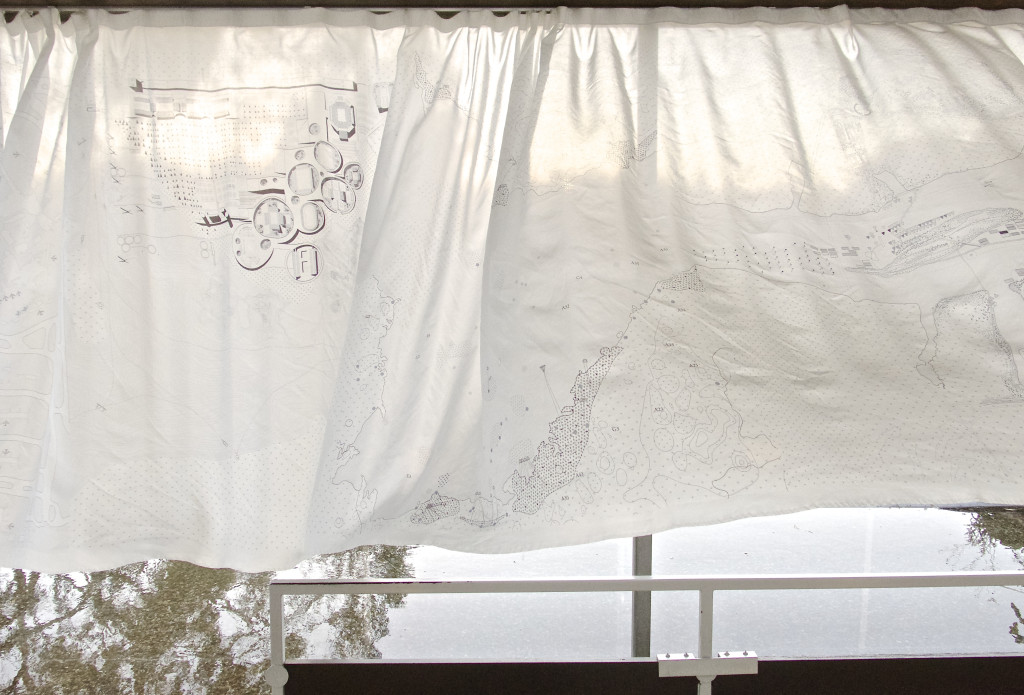
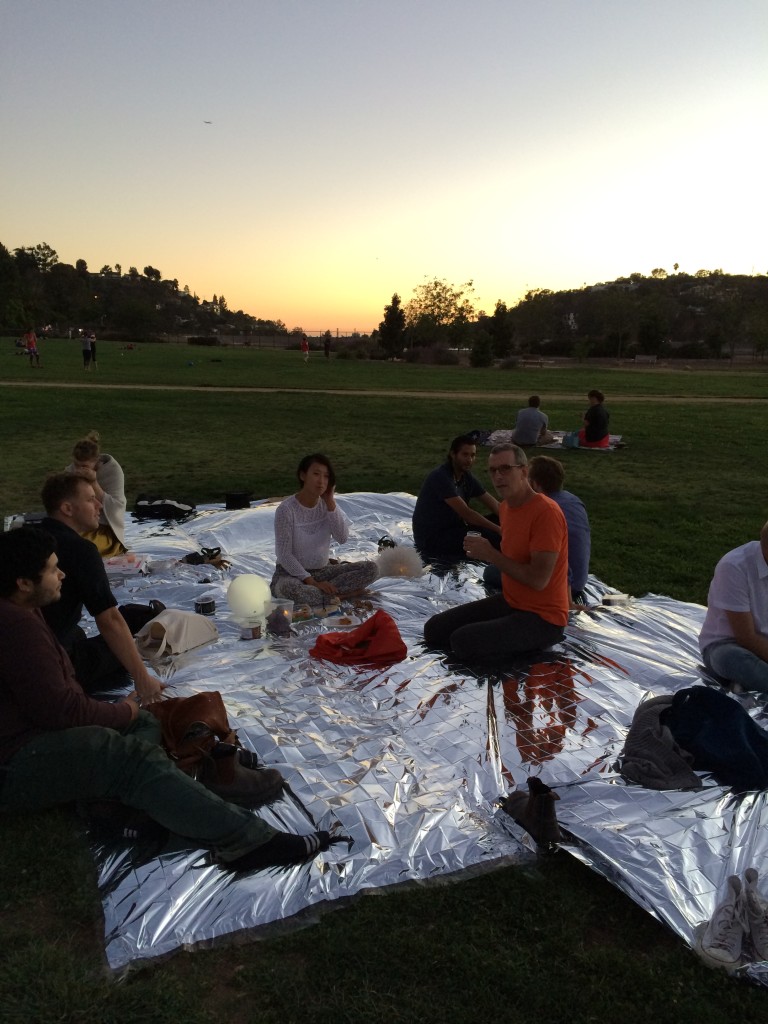
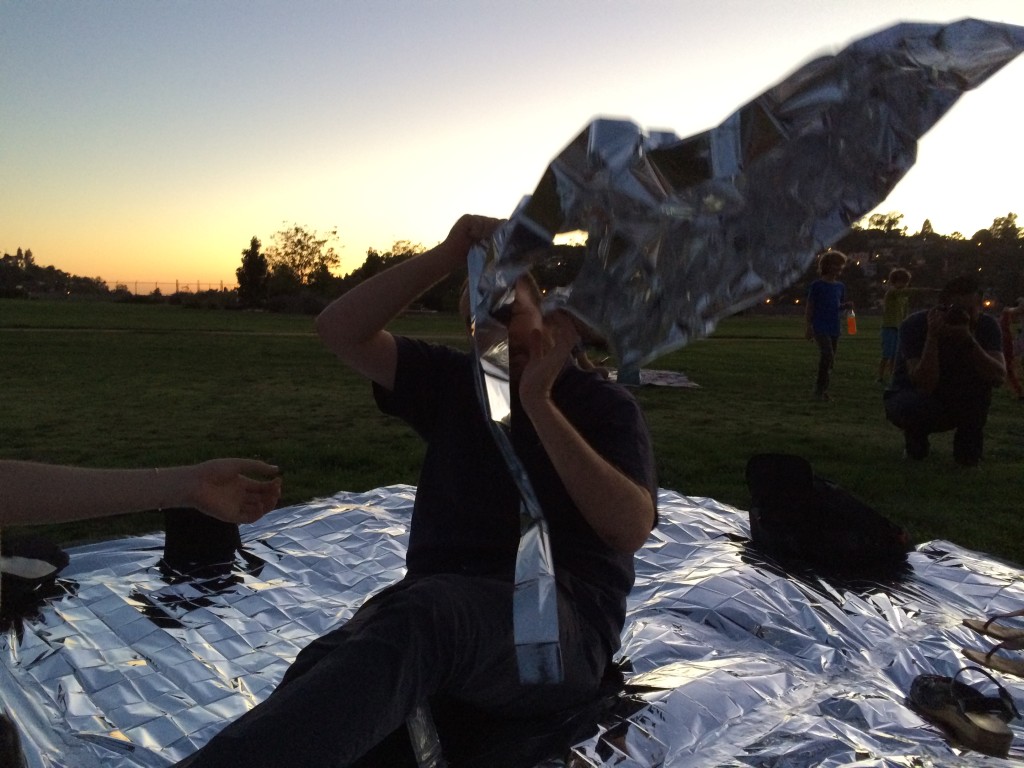

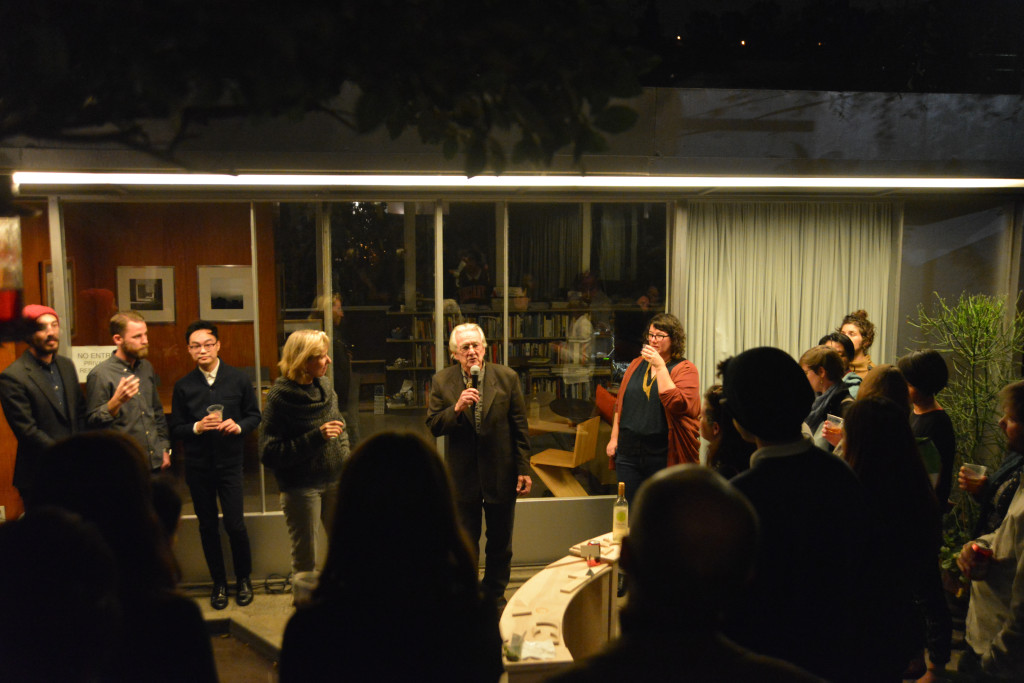
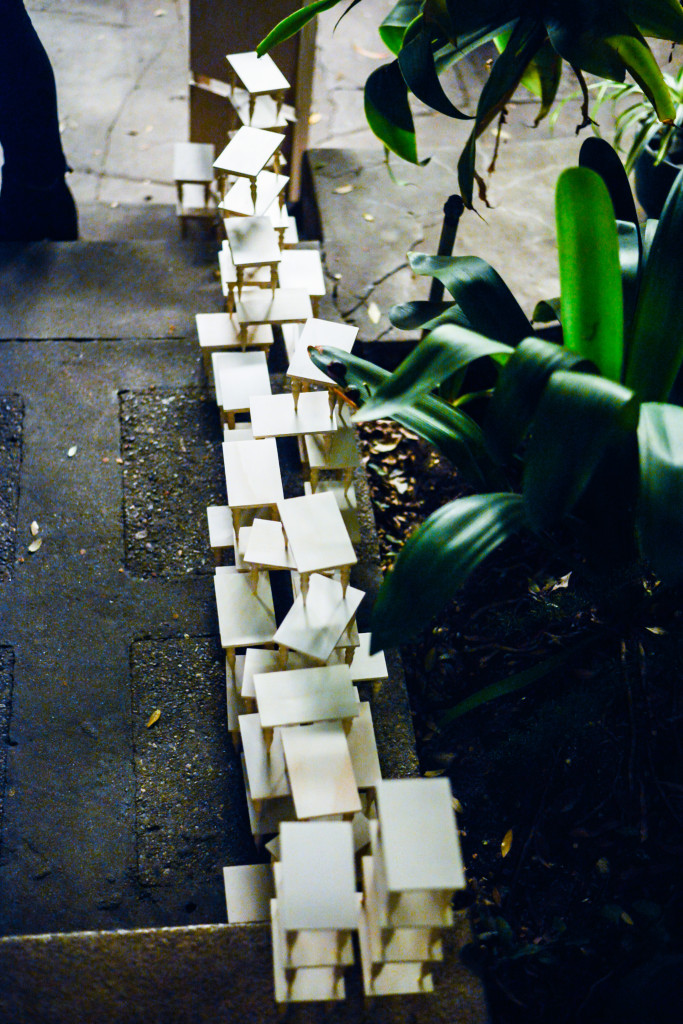
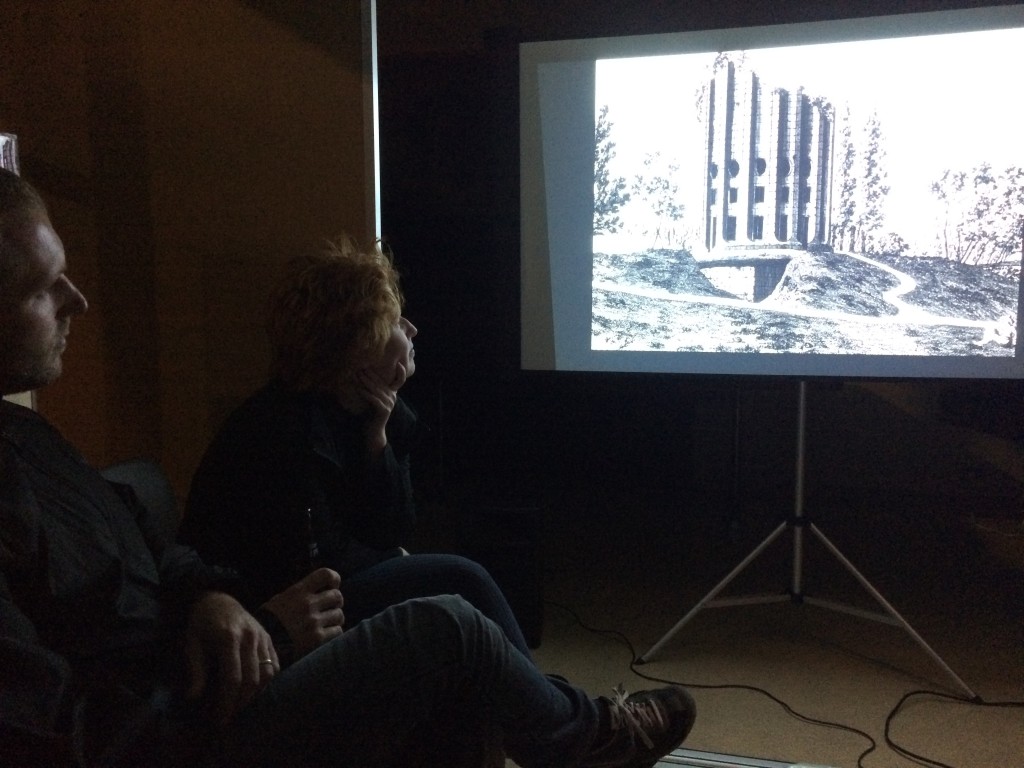
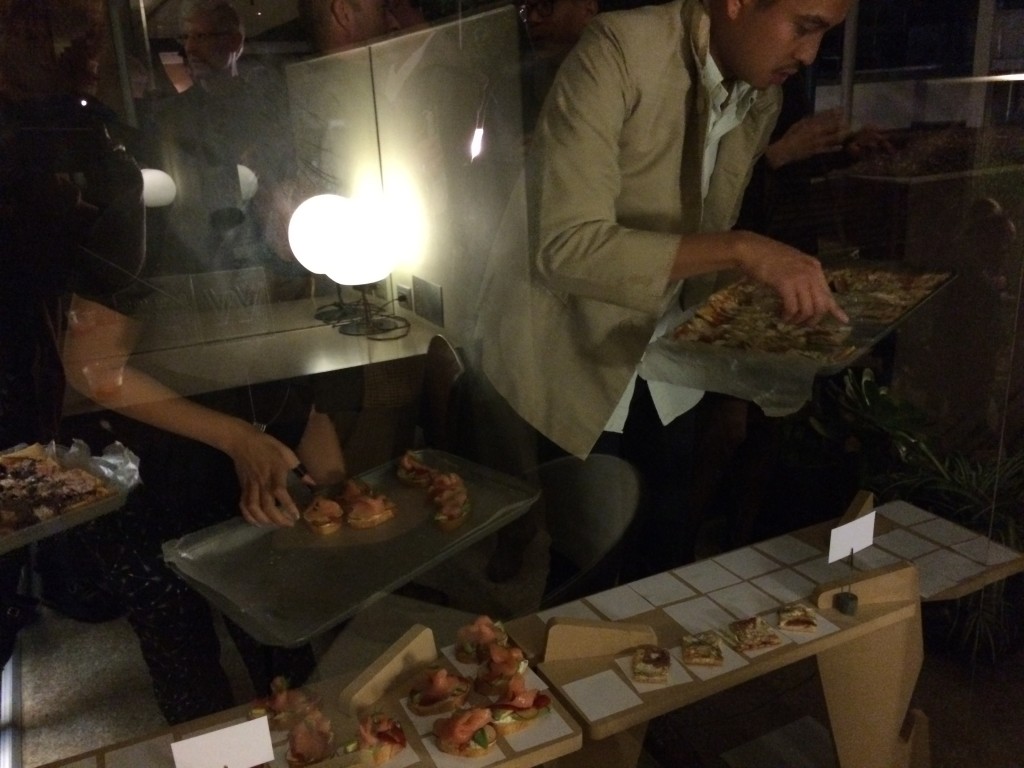
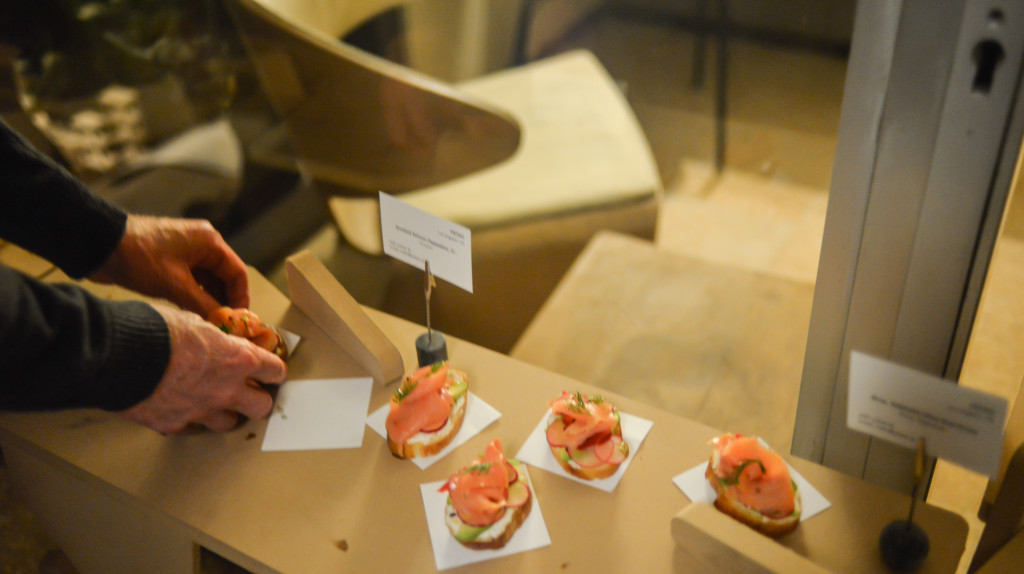

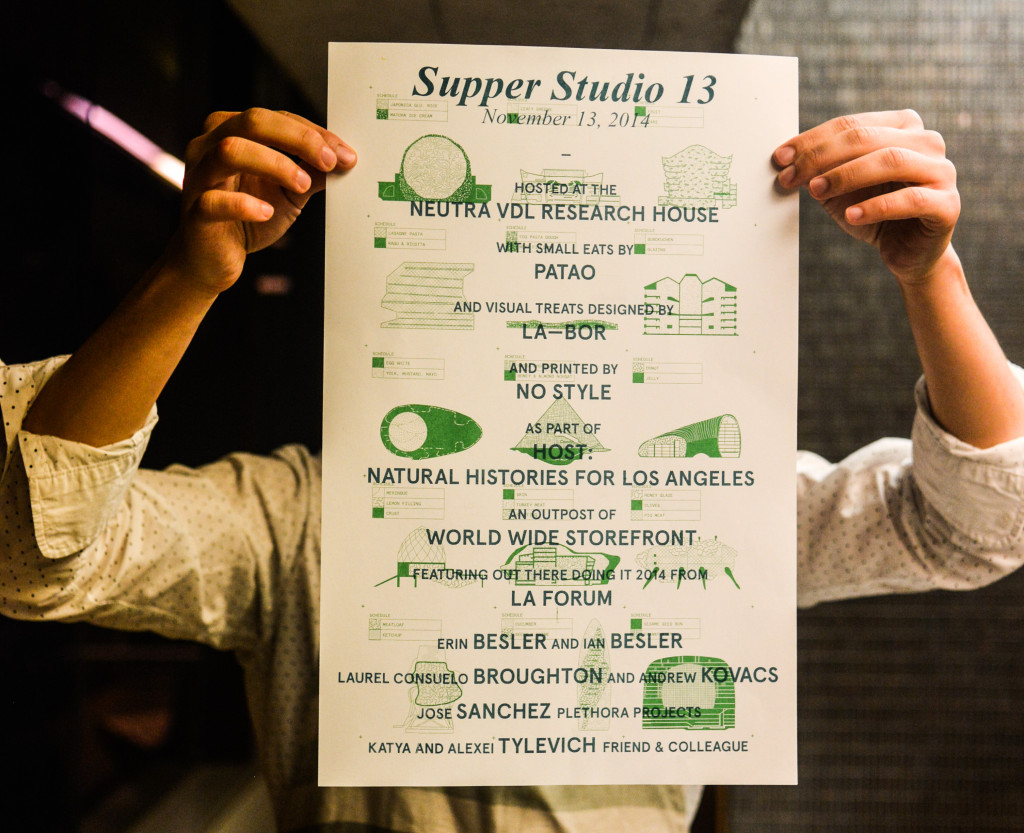
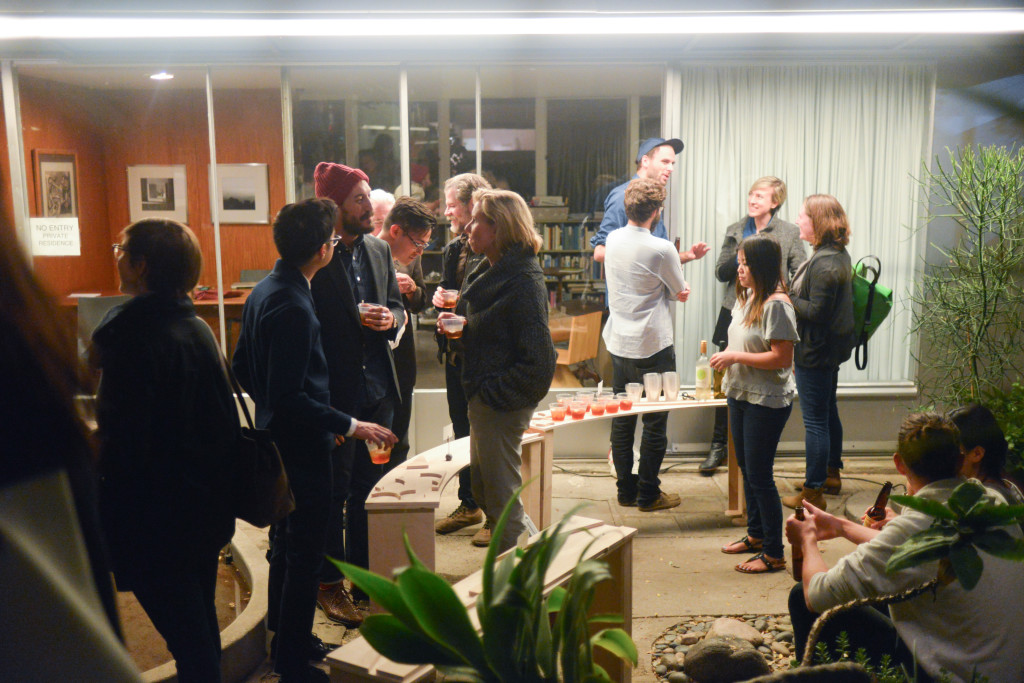
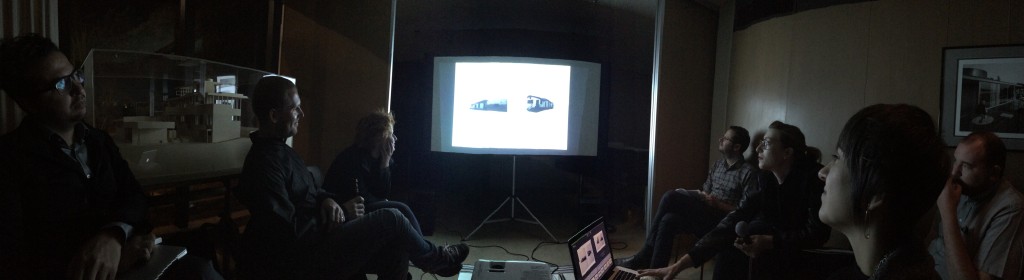
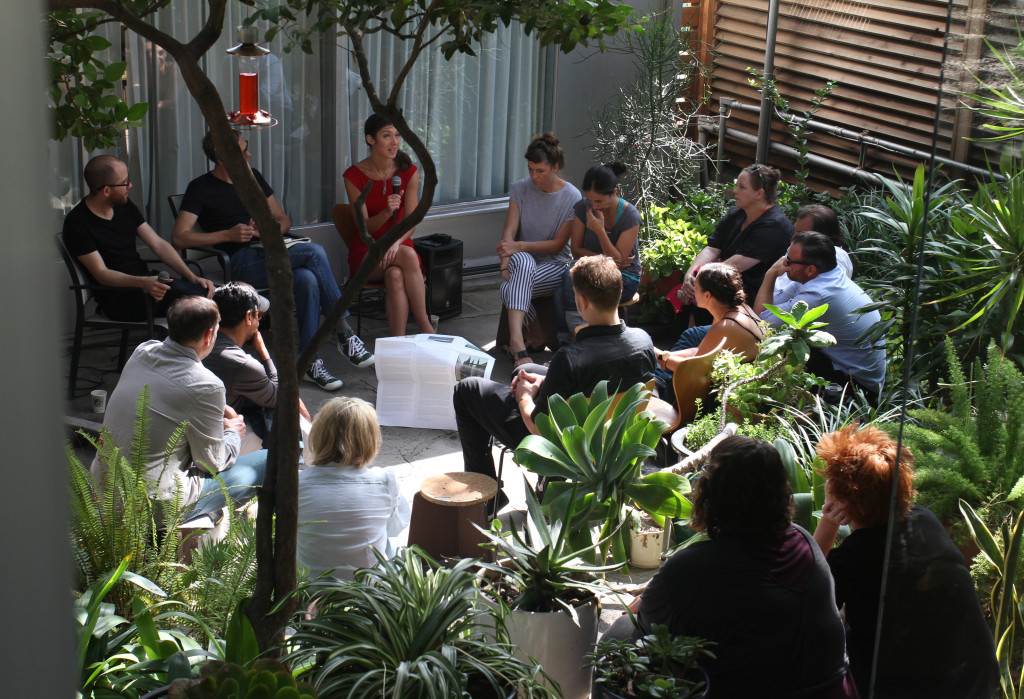
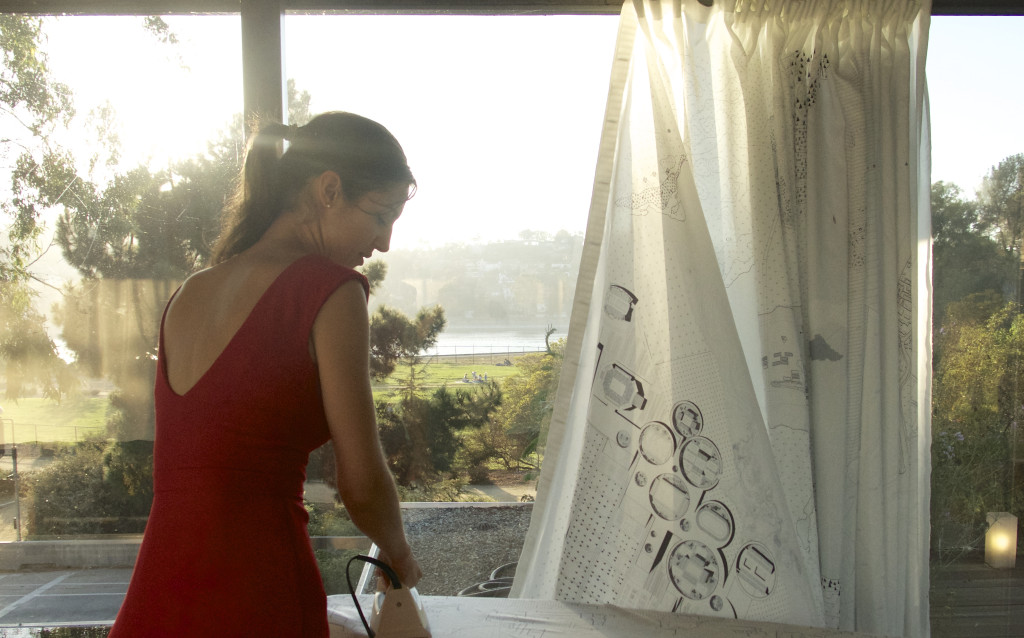
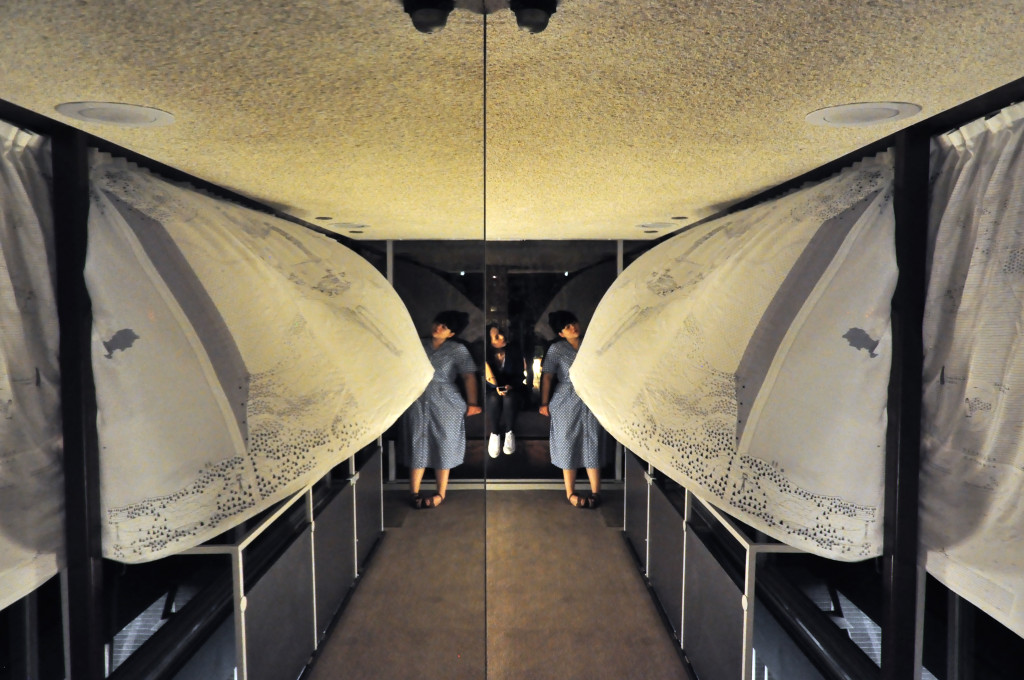
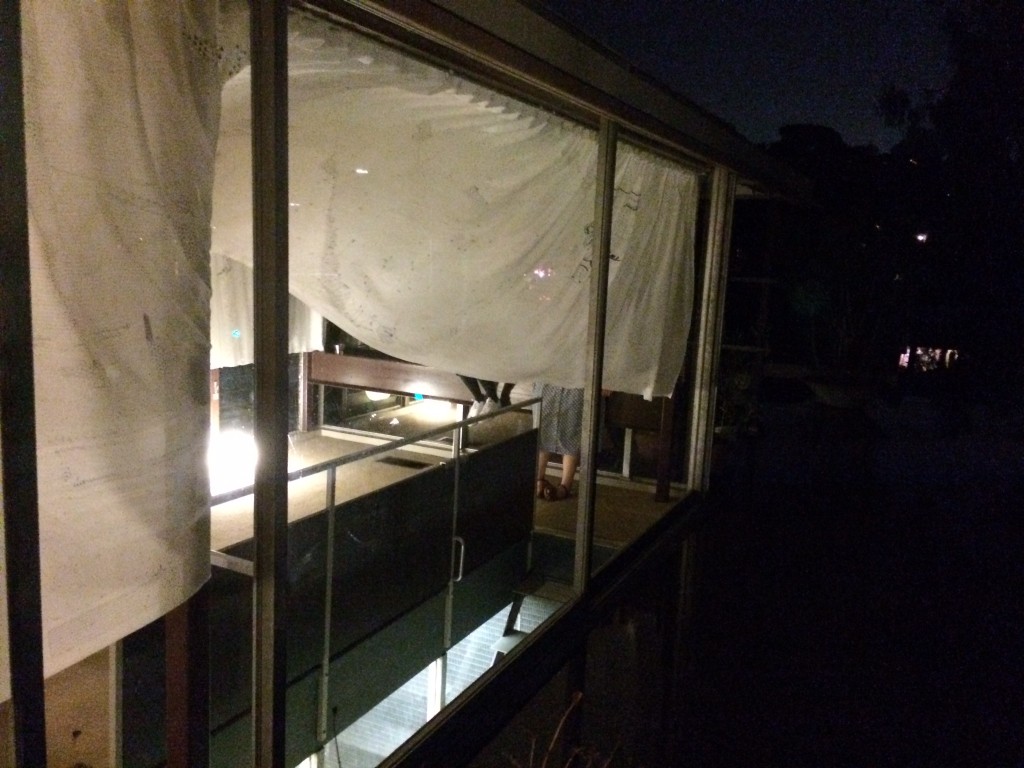
Host curators are Mimi Zeiger (Los Angeles Forum for Architecture and Urban Design), Leonardo Bravo and River Jukes-Hudson (Big City Forum), and Sarah Lorenzen (Neutra VDL Research House).
This fall, curators from three Los Angeles-based organizations come together as part of World Wide Storefront, a Storefront for Art and Architecture project, to present Host: Natural Histories for Los Angeles. This series of exhibitions and events is a collaboration between Big City Forum, Los Angeles Forum for Architecture and Urban Design, and the Neutra VDL Research House.
Host: Natural Histories for Los Angeles explores the multivalent meaning of “host” though spectacle, parasitic opportunism, and domestic landscapes. The Neutra VDL Research House serves as the site of these investigations and the house, embedded with spatial effects—mirrors, screens, and pools of water—heightens and confuses the relationship between the domestic interior and the exterior. Read More …
Let’s get this bit out of the way: Mexico City is dense, Mexico City is colourful, and Mexico City is a place of contrasts. That is to say, in a haze of pollution you can eat tapas on the roof of a boutique hotel designed by Enrique Norton – or scoff down quesadillas on the street, sheltered by a tarp hung between a fence and a lamp post. The city’s famous outdoor markets sell local crafts and produce alongside imported Chinese sundries. Icons of Mexican modernism are tangled in an urban fabric dating back centuries. For a number of young architects, designers, and curators practicing in its colonias (neighbourhoods), Mexico City is more than clichéd observation; it’s an opportunity to refashion the narrative. Read More …
Introverts of the workplace are having a moment. The office furniture company Steelcase teamed up with Susan Cain, author of the bestseller Quiet: The Power of Introverts in a World That Can’t Stop Talking, to create a series of five spaces that address the need for more focus and privacy at work. Read More …
How many women? That’s the question I routinely ask when faced with a lineup of panelists, a competition jury, an exhibition checklist, or a table of contents. Then I will count, picking out female names and remembering which offices are partnerships.
I’m not alone in my inventory. For (en)Gendered (in)Equity: The Gallery Poster Project, Micol Hebron asked fellow artists to contribute posters depicting the numbers of male and female artists represented by top galleries in Los Angeles. Read More …
Today the feedback, spin, and other acts of interpretation that were once the preserve of historians and other experts are often virtual, instantaneous, and open to input from a broad audience. What does this mean? Mimi Zeiger, critic and journalist based in Los Angeles, will consider expanded models of architectural criticism and discursive platforms. Alexandra Lange, New York-based critic and 2014 Loeb Fellow, will explain why architects should use Twitter and Instagram to show their influences—what they read, the design pilgrimages they make, the colleagues they admire—not just to promote themselves. Florencia Rodriguez, editor of Plot (Buenos Aires) and 2014 Loeb Fellow, will explore the question of criticism’s social or disciplinary responsibility; should it be “useful”? A discussion will follow, with GSD student writers and bloggers.
Moderated by Shantel Blakely of Harvard GSD Public Programs.
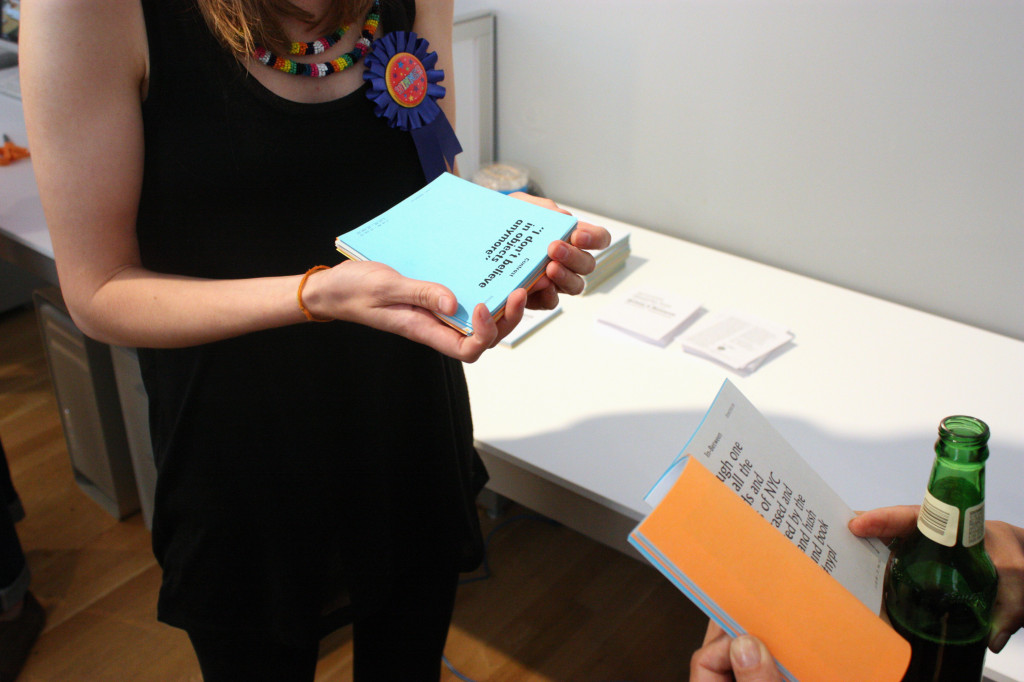
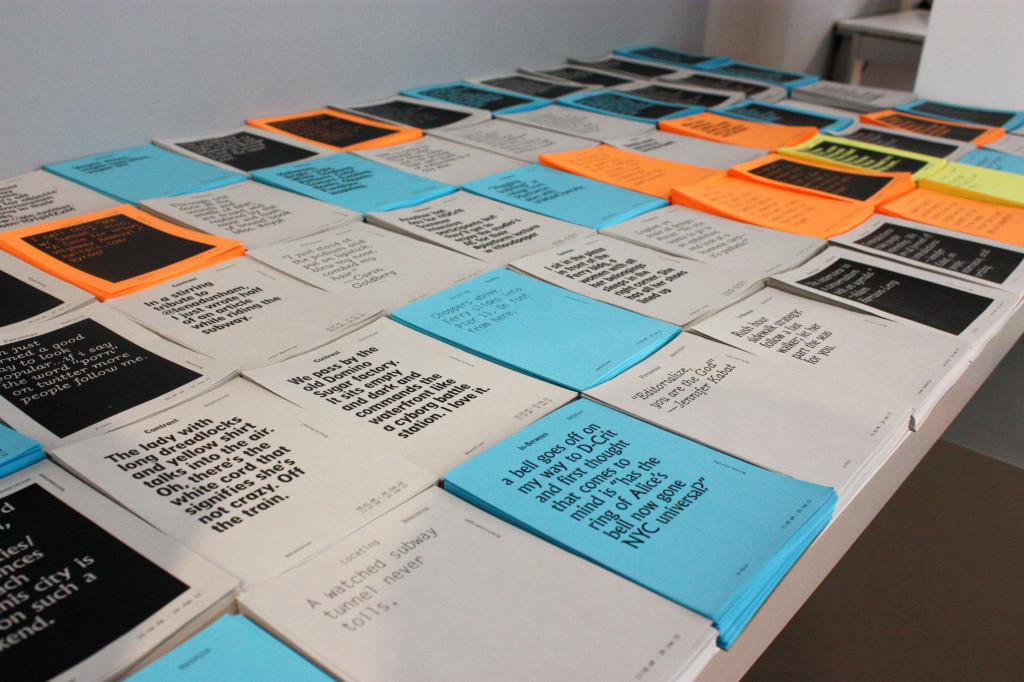
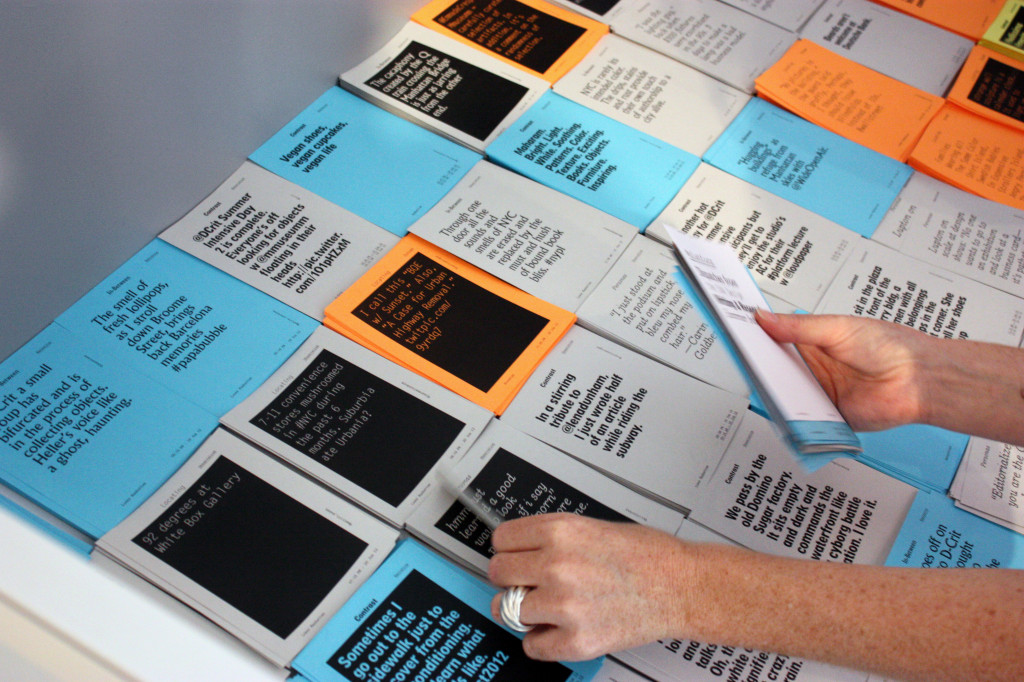
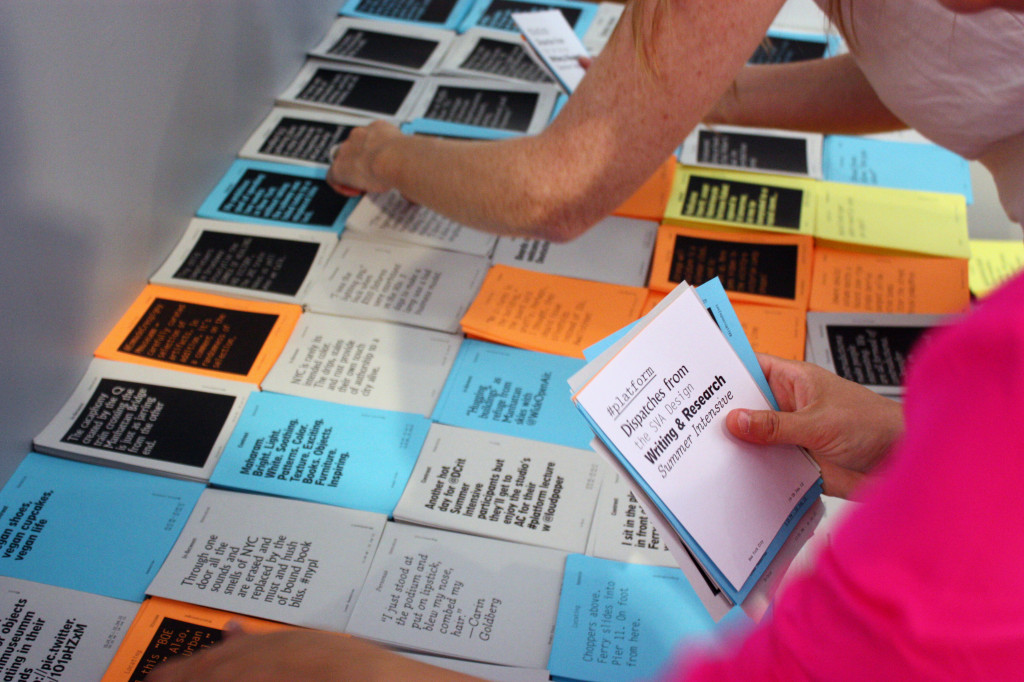

(136)
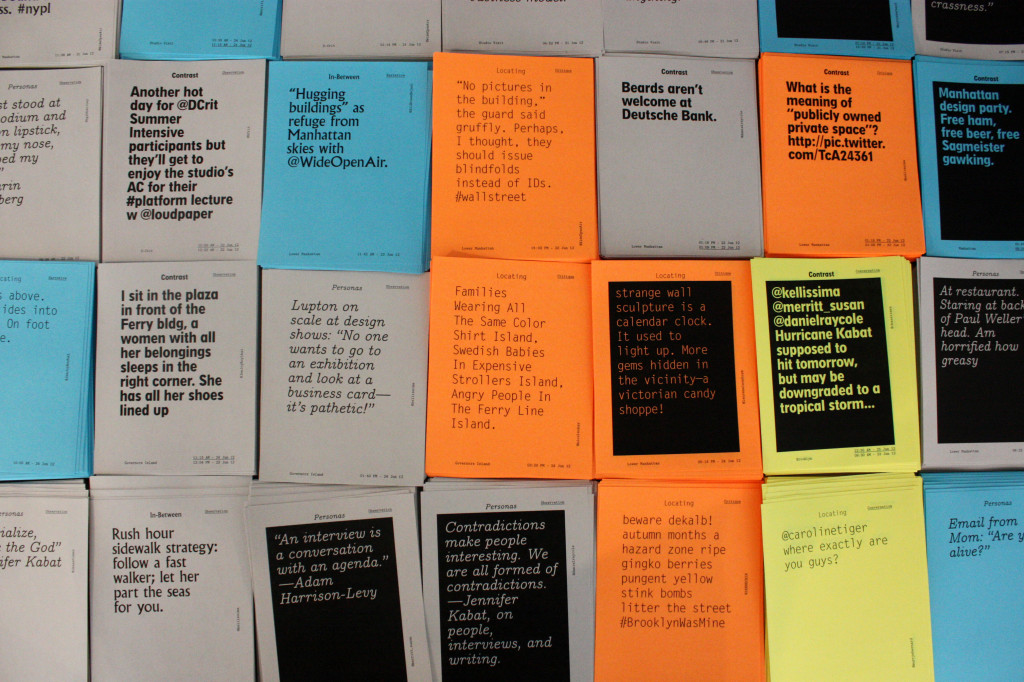
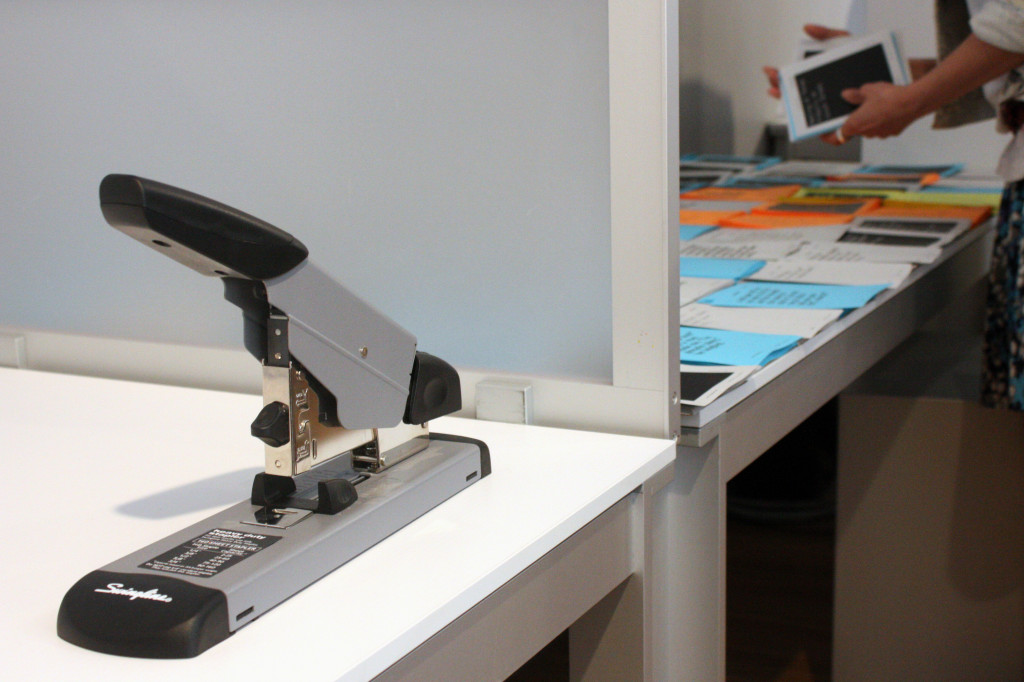
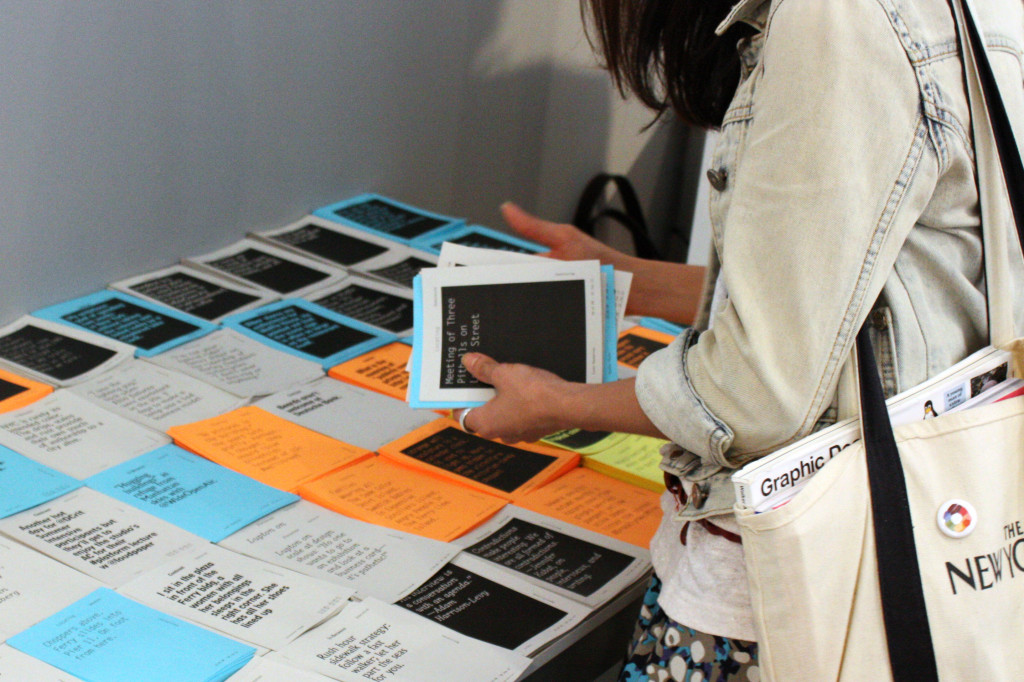
#platform = collaboratively produced publication by SVA summer design writing intensive participants, with Mimi Zeiger & Neil Donnelly.
(128)
Freedom of expression within tight constraints: An anthology of thoughts and observations give voice to the collective experience.
(135)
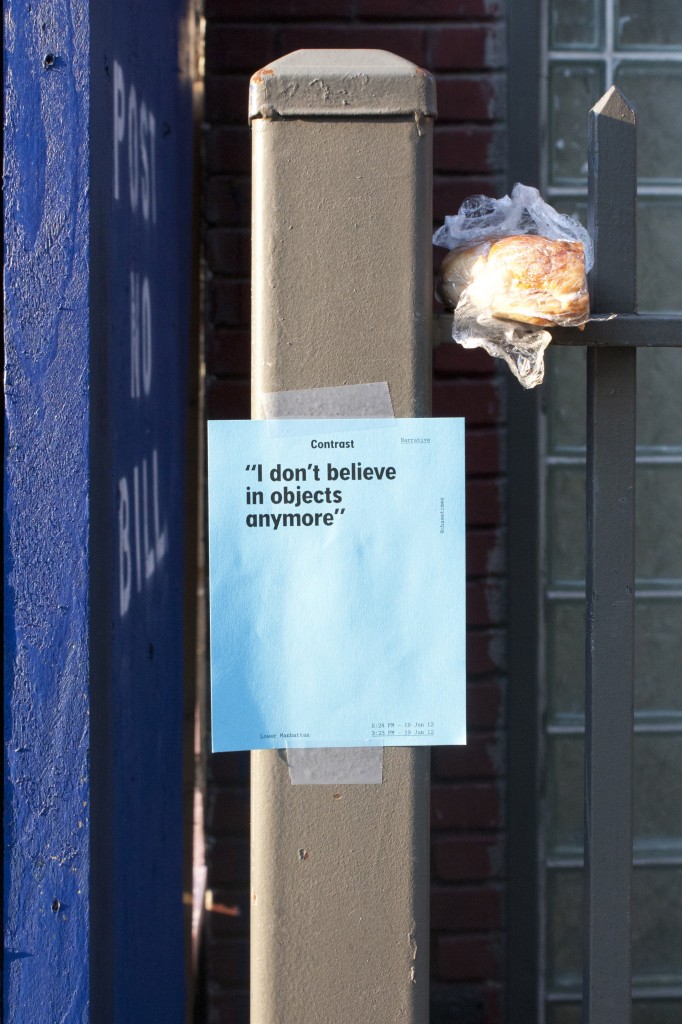
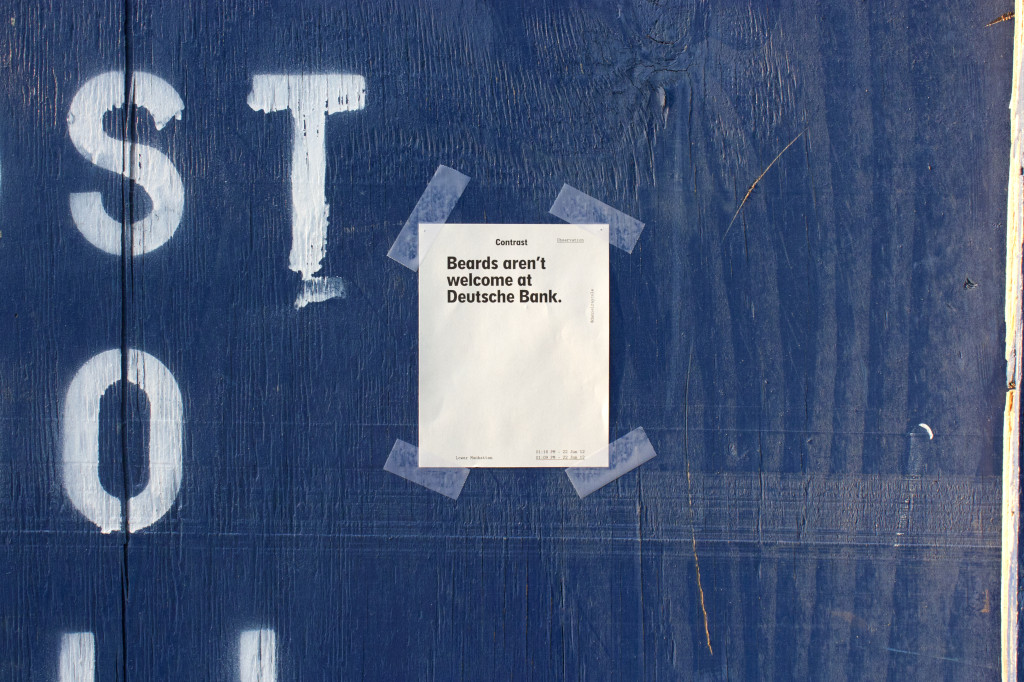
Moving from digital to analog, it presents conversational, observational, narrative, and critical tweets produced during the Intensive.
(130)
Time is of the essence. Dérive tweets get tagged and bagged. Narratives are shared. Meaning created with collective intelligence.
(137)
We distilled two weeks of collective experiences, conversations, and relationships (more than 1,000 tweets), curating 68 for this volume.
(139)
Interdisciplinary curation means staying true to a collaborative direction, allowing for a spontaneous selection of educated critiques.
(122)
Potential sound of a tweet: quality of tone, incisive critical pitch, the volume that can be generated with 140 characters.
(131)
Herein lies the mystical divining rod of the Intensive. A retroactive guidebook to city-slicking, quotable-quotes, and D-Criticism.
(83)
#platform’s physical documents navigate back into the city, lingering as messages.
The School of Visual Arts Design Writing and Research Intensive offers students and working professionals a unique opportunity to study closely with a faculty composed of leading writers, editors, researchers, curators and bloggers. Participants spend two weeks in the SVA MFA Design Criticism studio learning how to write compellingly about images, objects and spaces and are introduced to a range of writing genres and a spectrum of methods and formats.
Faculty and lecturers include: Steven Heller, Alice Twemlow, Adam Harrison Levy, Karrie Jacobs, Paul Lukas, Justin Davidson, Mimi Zeiger, and Jennifer Kabat.
Click to download a copy.
“California design is not a superimposed style, but an answer to present conditions….It has developed out of our own preferences for living in a modern way,” explained architect and designer Greta Magnusson Grossman in 1951. Casually, she captured the essence of midcentury West Coast design—a movement built on climatic, economic, and technological responses to Los Angeles combined with a non-doctrinaire embrace of modernism. It’s her quote that opens California Design, 1930–1965: “Living in a Modern Way,” the latest exhibition at the Los Angeles County Museum of Art (LACMA). Read More …