Mimi Zeiger

Critic, editor, curator and instigator.

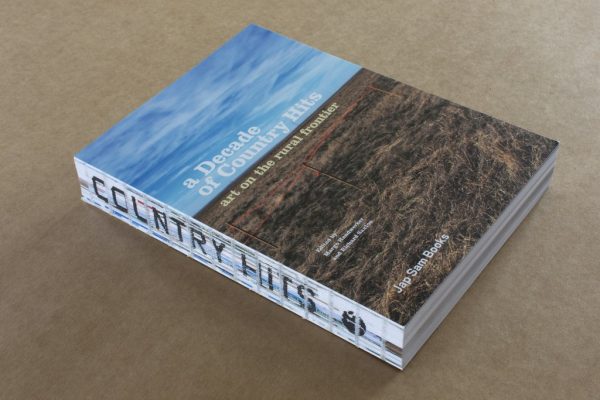
Edited by: Margo Handwerker and Richard Saxton. Featuring works by: Richard Saxton, municipalWORKSHOP, and M12 Collective. Graphic design: Peter de Kan Publisher: Jap Sam Books.

Art has its Billboard charts. They focus mostly on artists and exhibitions in urban centers. A Decade of Country Hitsis devoted to uncharted hits thriving instead on rural aesthetics and rural knowledge. This richly illustrated volume documents ten years of collective works initiated by artist Richard Saxton in rural communities around the world, from the American Midwest and Southwest to parts of Europe, Australia, and South America. Impossible to attribute to any one artistic genre, the works archived here explore a growing community of artists and researchers drawn to the rural experience in all its complexity. It resembles a sketchbook: with drawings, photographs, and from the hip accounts in the field, as well as contributions from likeminded artists, musicians, poets, and writers. Designed by Peter de Kan, the book is published by Jap Sam Books and distributed in North America and Canada by RAM Publications & Distribution.

A Decade of Country Hits includes an international roster of contributors. It contains interviews with Todd Bockley, co-director of the Center for Social Sculpture; Twink Metzler, founder of Living Room Studios; architectural historian Robert Nauman; and Wapke Feenstra, artist and co-founder of Myvillages. Featured throughout are new collaborations with Zach Boddicker, singer and songwriter for 4H Royalty; Kurt Wagner, singer and songwriter for Lambchop; and Matthew Fluharty, director of Art of the Rural. Providing context for the work are essays by artist Stuart Hyatt, founder of TEAM Records; as well as essays by critics and writers Josh Garrett-Davis, author of Ghost Dances: Proving Up on the Great PlainsMimi Zeiger, author of New Museums: Contemporary Museum Architecture Around the World, Tiny Houses, and Micro Green; and Enrique Ramirez, whose writing has appeared in PerspectaThresholdsAA Files, and elsewhere. In addition are essays by award-winning artists Marjetica Potrč,Chris Sauter, and Fernando García-Dory, founder of A Shepherds School; as well as essays by curators, Ian Hunter, director of the LITTORAL Arts Trust; Marco Marcon, co-founder of International Art Space, and Kirsten Stoltz, programming director of the M12 Collective.
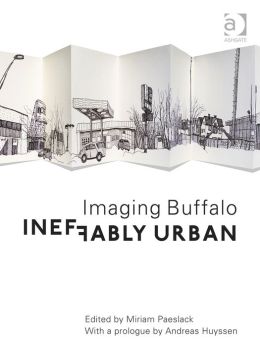
Edited by Miriam Paeslack, University at Buffalo (SUNY), Buffalo, NY, USA

Buffalo, in New York state, is ‘ineffable’: a typical city in transition between its past and future. It is a classic example of one of many ‘shrinking cities’ in North America and elsewhere which once prospered because of heavy industrialization, but which now have to deal with various degrees of urban decay. Bringing together a range of scholars from the humanities, the social sciences, art and architecture, this volume looks at both the literal city image and urban representation generated by photographs, video, historical and contemporary narratives, and grass-root initiatives. It investigates the notion of agency of media in the city and, in return, what the city’s agency is. This agency matters particularly as it is both transforming – shrinking, fading, being redefined – and being shaped through its visual and spatial mediation. Read More …

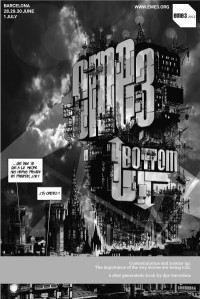
Following the debate “Communication and Bottom-UP. The importance of the way stories are being told.” we [at dpr-barcelona] are committed to expand the debates and conversations avoiding them to get lost after a few days of the event. That’s why we’re publishing this digital-pamphlet [kindle + ePub] exploring the thought and ideas of thinkers and doers; articulated by simple detonating questions posed through emails, tweets and conversations intending to communicate effectively the very essence of the debate: “the importance of telling stories.” Read More …

(136)
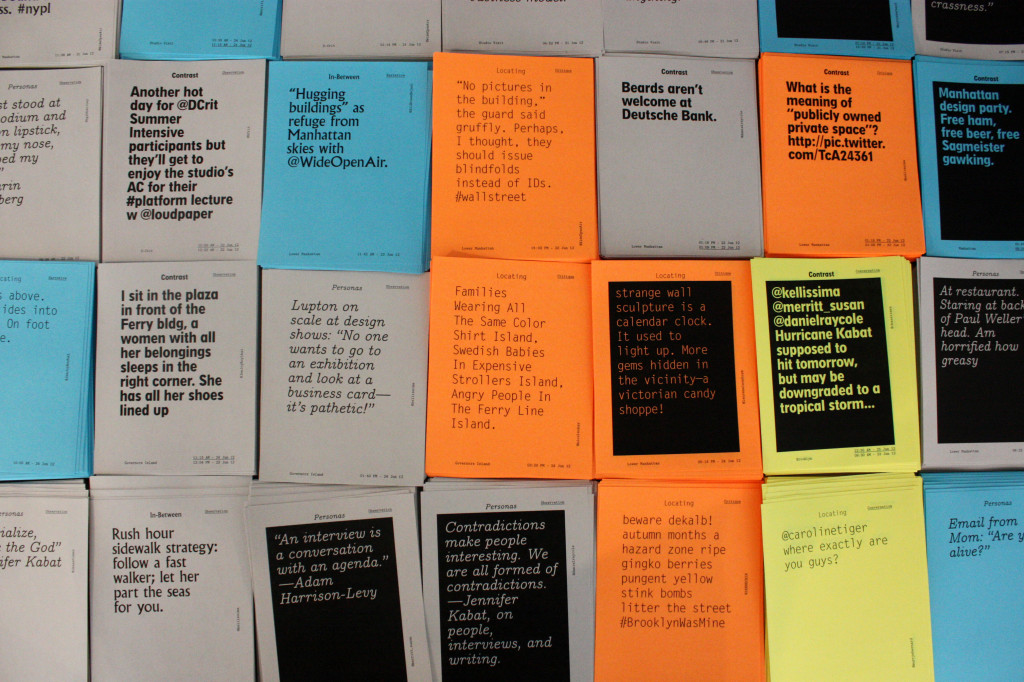
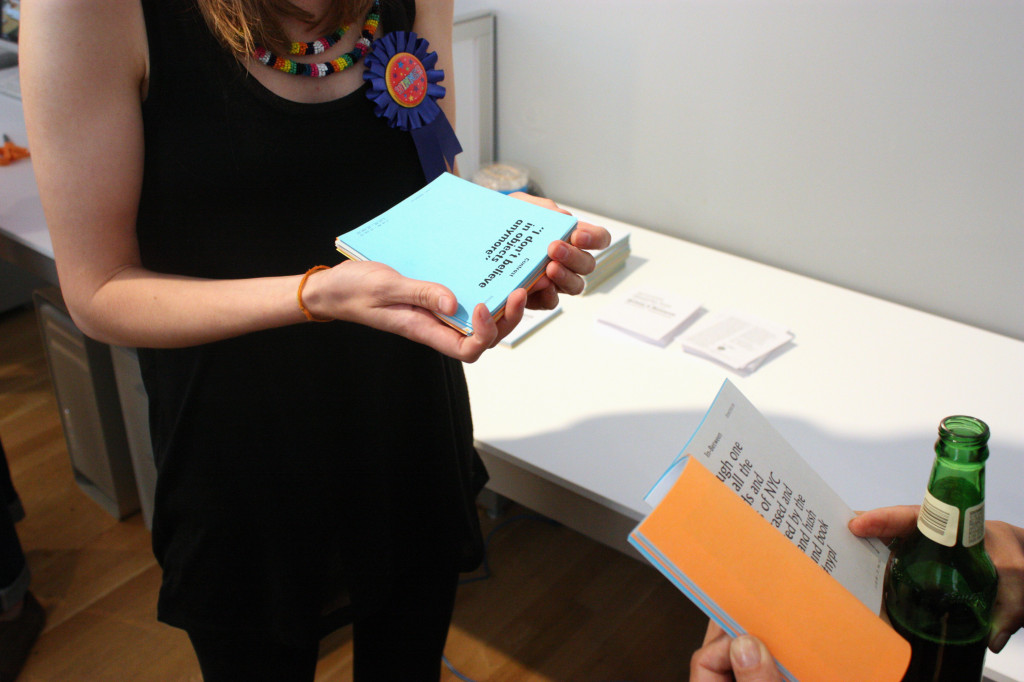
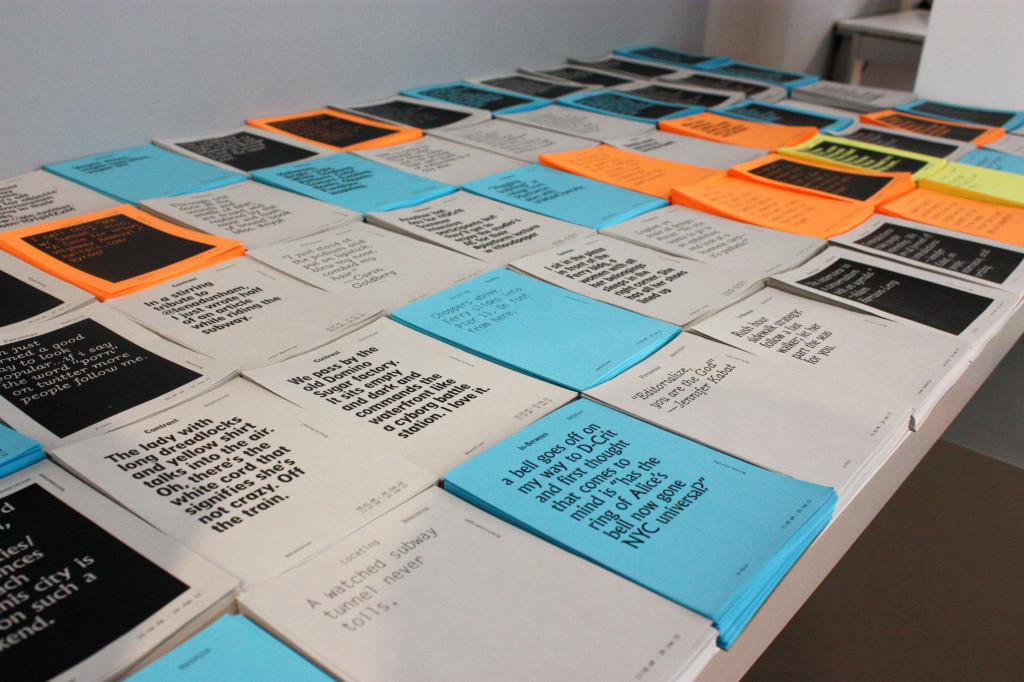
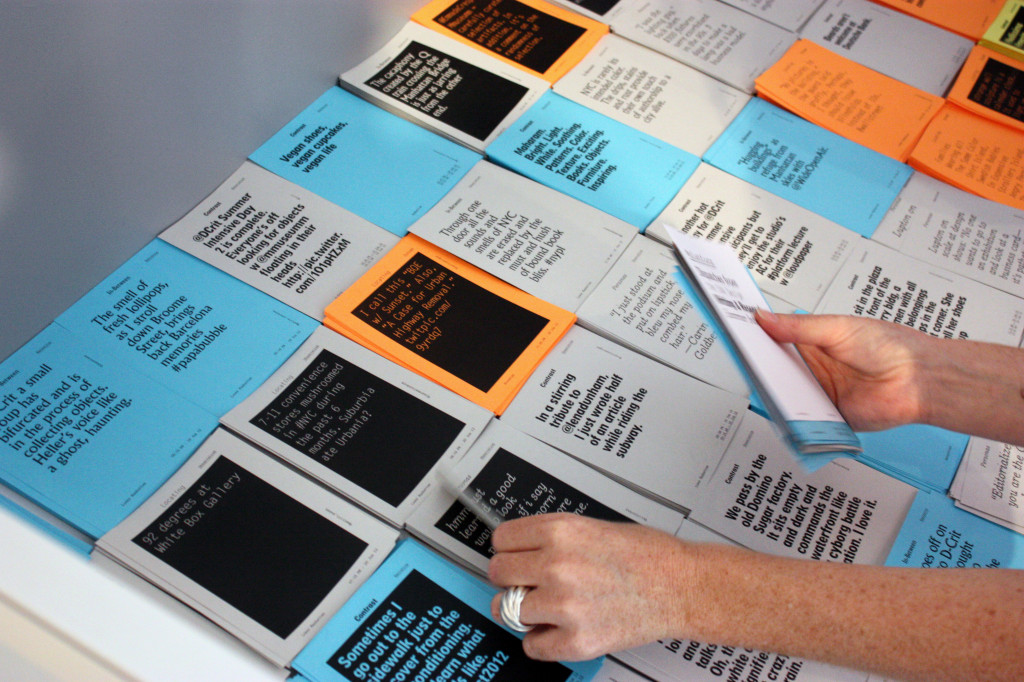
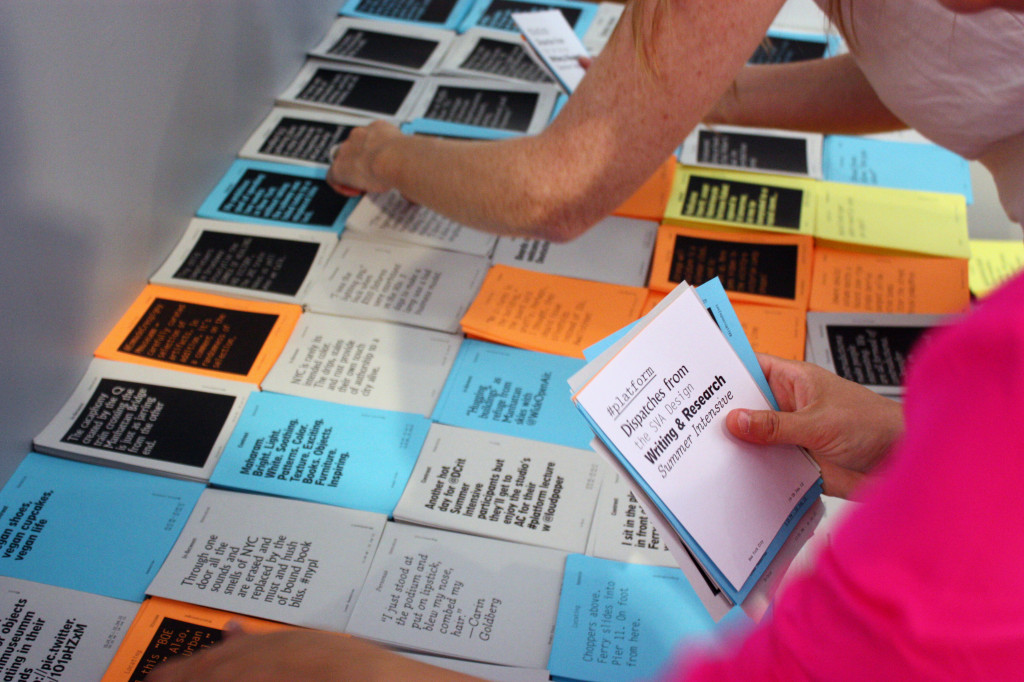
#platform = collaboratively produced publication by SVA summer design writing intensive participants, with Mimi Zeiger & Neil Donnelly.

(128)
Freedom of expression within tight constraints: An anthology of thoughts and observations give voice to the collective experience.

(135)
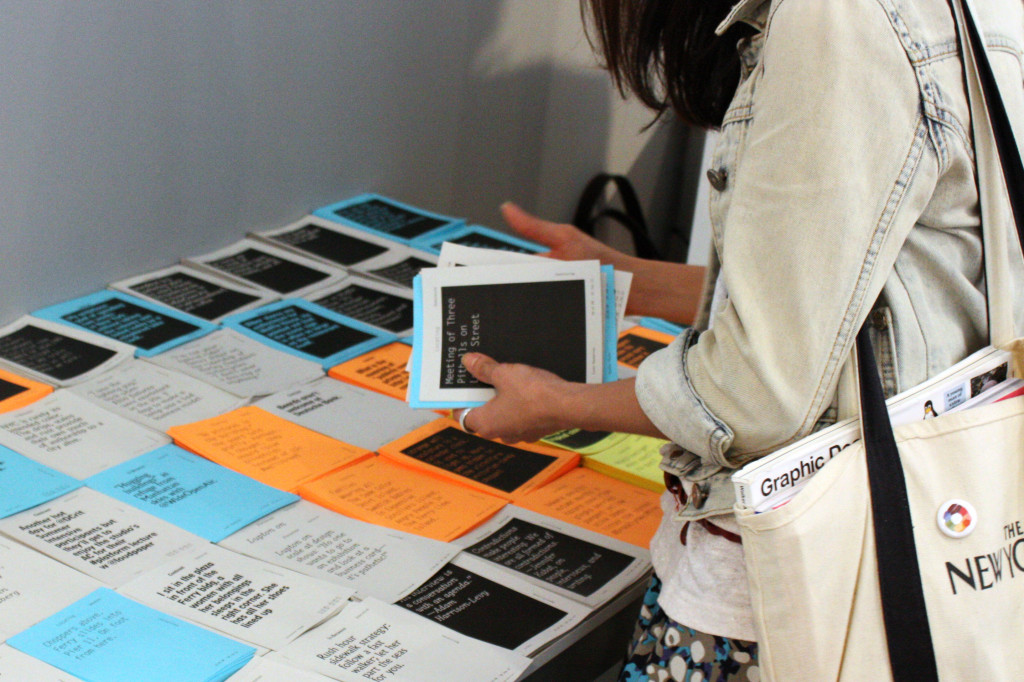
Moving from digital to analog, it presents conversational, observational, narrative, and critical tweets produced during the Intensive.

(130)
Time is of the essence. Dérive tweets get tagged and bagged. Narratives are shared. Meaning created with collective intelligence.

(137)
We distilled two weeks of collective experiences, conversations, and relationships (more than 1,000 tweets), curating 68 for this volume.

(139)
Interdisciplinary curation means staying true to a collaborative direction, allowing for a spontaneous selection of educated critiques.

(122)
Potential sound of a tweet: quality of tone, incisive critical pitch, the volume that can be generated with 140 characters.

(131)
Herein lies the mystical divining rod of the Intensive. A retroactive guidebook to city-slicking, quotable-quotes, and D-Criticism.

(83)
#platform’s physical documents navigate back into the city, lingering as messages.

The School of Visual Arts Design Writing and Research Intensive offers students and working professionals a unique opportunity to study closely with a faculty composed of leading writers, editors, researchers, curators and bloggers. Participants spend two weeks in the SVA MFA Design Criticism studio learning how to write compellingly about images, objects and spaces and are introduced to a range of writing genres and a spectrum of methods and formats.

Faculty and lecturers include: Steven Heller, Alice Twemlow, Adam Harrison Levy, Karrie Jacobs, Paul Lukas, Justin Davidson, Mimi Zeiger, and Jennifer Kabat.

Click to download a copy.

Contributor

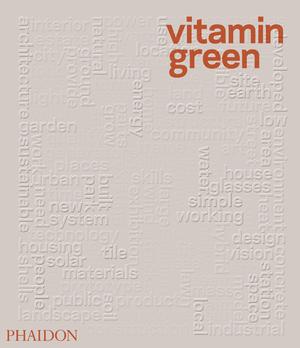
Vitamin Green provides an up-to-the-minute look at the single most important topic in contemporary design: sustainability. This new attention to the life of the things we make is changing the way design is practiced on every level and will be at the center of discussions about architecture, landscape architecture, and product design in the twenty-first century. Read More …

Edited by Elias Redstone

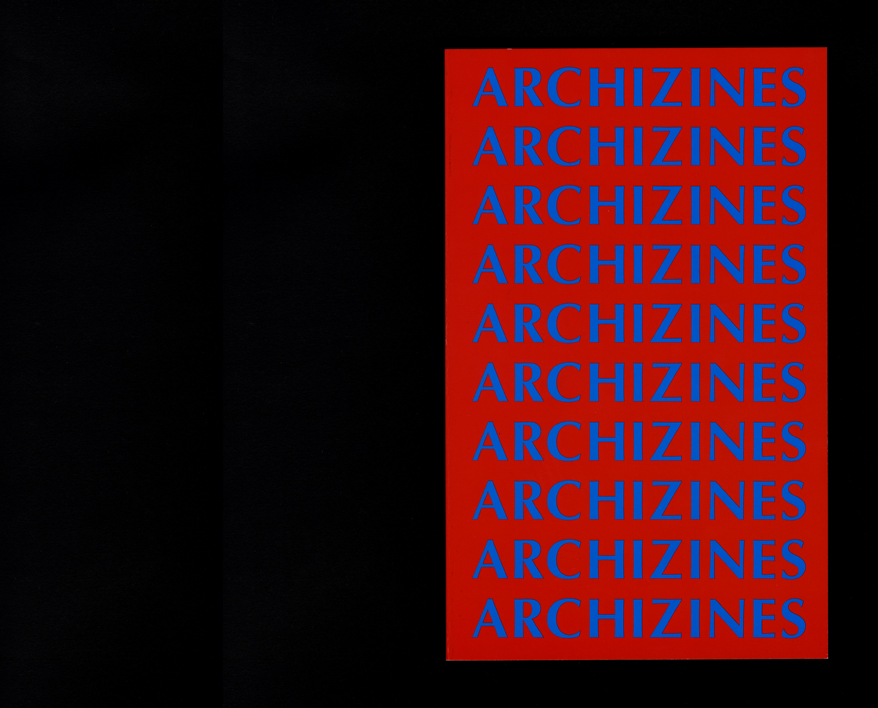
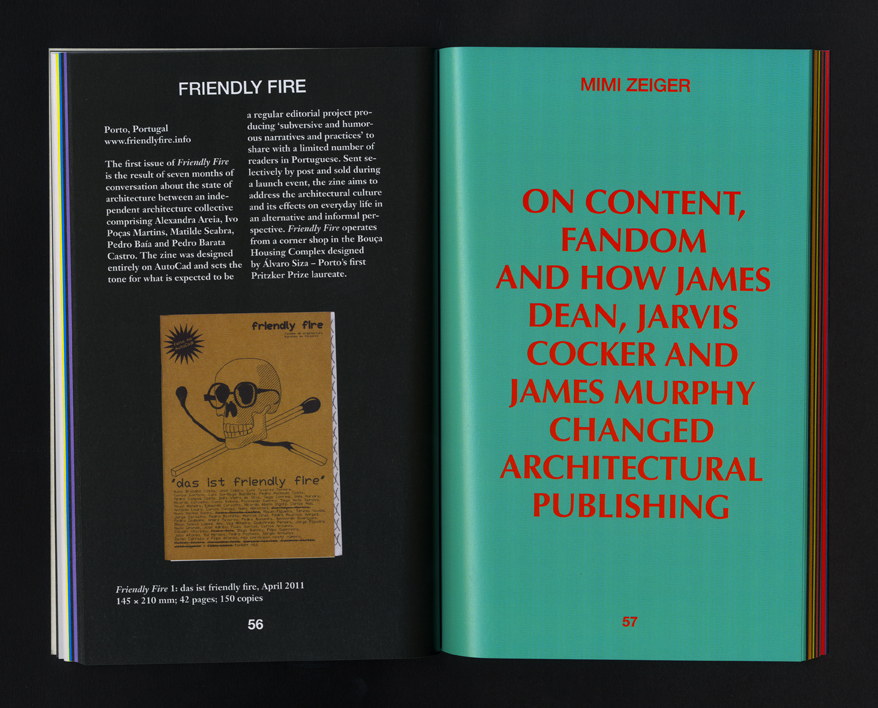
From handmade fanzines and print-on-demand news-letters to magazines and student journals, ARCHIZINES celebrates the recent resurgence of alternative and independent architectural publishing. Edited by Elias Redstone, ARCHIZINES showcases 60 new publications from over 20 countries alongside critical texts from Pedro Gadanho (Beyond), Iker Gil (MAS Context), Adam Murray (Preston is my Paris), Rob Wilson (Block), Mimi Zeiger (Maximum Maxim MMX / loudpaper) and Matthew Clarke, Ang Li & Matthew Storrie (PIDGIN) that explore the relationship between architecture and publishing today. Themes addressed include the role of publishing in academia and architectural practice, and the representation of architecture in fictional writing, photography, magazines and fanzine culture. Read More …

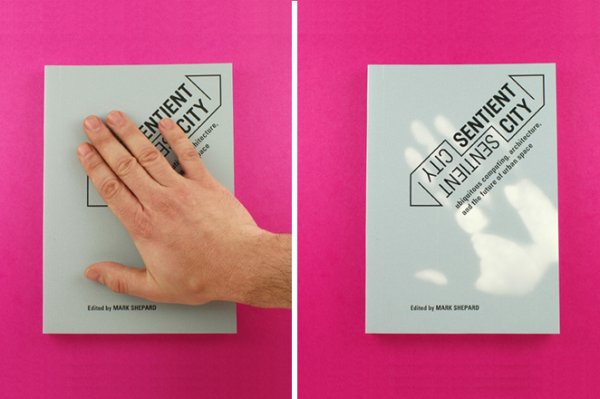
Essay: “Comforts, Crisis, and The Rise of DIY Urbanism” in Sentient City: Ubiquitous Computing, Architecture and the Future of Public Space, edited by Mark Shepard.

Sentient City: ubiquitous computing, architecture and the future of public space is an edited volume of case studies and essays that critically address the evolving relations between contemporary technologies and urban life.

This book expands on an exhibition that I curated in the fall of 2009 titled Toward the Sentient City. Documentation (text, images, diagrams, photographs) of the projects realized for the exhibition is combined with that of preliminary experiments, background research, material studies, interaction prototypes, and the subsequent analysis and interpretation of the data generated by the projects’ implementation.

Complementing these case studies, a series of critical essays reflect on the larger implications of ubiquitous computing for the way we think about architecture in general and the design of urban space in particular. Building on a series of responses to the exhibition contributed by writers and theorists of architecture, urbanism, media theory, technology and related fields, these critical reflections are intended to help the reader situate what may at first appear to be novel questions about the intersection of ubiquitous computing, architecture and urban space in terms of more long-standing and established discourses on the technological mediation of urban life and the role architects, urban designers, and technologists alike might play in shaping its future evolution.

Case studies by David Benjamin, Soo-in Yang, and Natalie Jeremijenko; Haque Design + Research; SENSEable City Lab; David Jimison and JooYoun Paek; and Anthony Townsend, Antonina Simeti, Dana Spiegel, Laura Forlano, and Tony Bacigalupo.

Essays by Keller Easterling, Matthew Fuller, Anne Galloway, Dan Hill, Omar Khan, Saskia Sassen, Trebor Scholz, Hadas Steiner, Kazys Varnelis, Martijn de Waal, and Mimi Zeiger.

Published by the Architectural League of New York and MIT Press.

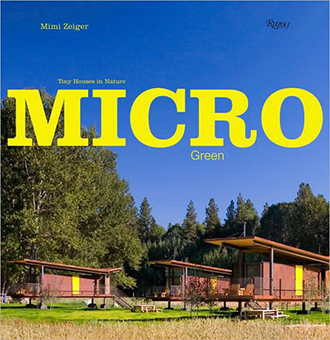
From treehouses to pre-fabs, this book presents sustainable, micro-green living at its best. Micro Green delves into the concept of compact living and demonstrates the possibilities of living with less while maintaining a rich life. As sustainable architecture becomes mainstream, many architects and designers are using technology and wit to experiment with what it means to be green, and the results are both effective and enthralling. The rustic treehouses, airy domes, and recycled-scrap structures of Micro Green are presented through vivid photography and detailed building plans, and display a range of environmental influences. Here living spaces are carved out of hillsides, trees rise through decks and floors, and walls melt seamlessly back into the surrounding woods. Though many of the homes chronicled in Micro Green are unique in design, their economical size and ingenious interior spaces are the epitome of practicality and illustrate an acute understanding of compact living and its potential for rural, suburban, and even urban ecosystems. Small in both carbon and architectural footprint, the dwellings in Micro Green have large implications for the global movements of eco-consciousness and sustainability.

With “McMansions” increasingly giving way to “tiny” houses, the desire to downsize and be more ecologically and economically prudent is a concept many are beginning to embrace. Focusing on dwelling spaces all under 1,000 square feet, TINY HOUSES (Rizzoli, April 2009) aims to challenge readers to take a look at their own homes and consider how much space they actively use.

Ranging from tree houses to floating houses, TINY HOUSES features an international collection of over thirty modular and prefab homes, each one embodying “microgreen living”, defined as the creation of tiny homes where people challenge themselves to live “greener” lives. By using a thoughtful application of green living principles, renewable resources for construction, and clever ingenuity, these homes exemplify sustainable living at its best.

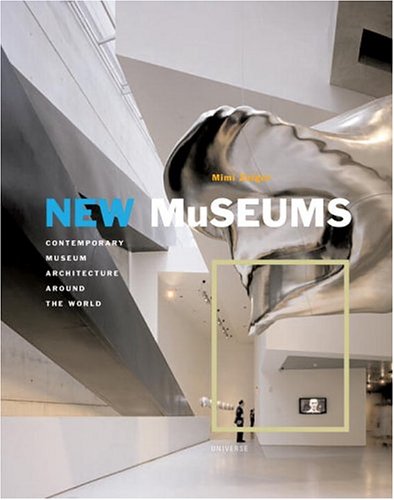
Since the opening in 1997 of the Guggenheim Bilbao, designed by Frank Gehry, museum architecture has enjoyed worldwide attention on an unprecedented scale. That single watershed project demonstrated to municipalities that architecture has the power to transform the image of an entire city, thus making the turn of the twenty-first century the unofficial age of the museum building.

New Museums examines the boom in high-design museum projects in detail, beginning with the Guggenheim Bilbao’s groundbreaking role in the development of contemporary museum architecture. It continues with a beautifully illustrated tour of 30 examples of the most innovative and exciting museum architecture around the world, including Tadao Ando’s Museum of Modern Art in Fort Worth, Zaha Hadid’s Contemporary Arts Center in Cincinnati, Renzo Piano’s Nasher Sculpture Center in Dallas, and many others.