Mimi Zeiger

Critic, editor, curator and instigator.

Terremoto is the kind of firm that enthusiastically describes its approach to a recent project as ‘hippie-dippy gooey goodness.’ The landscape architecture design studio with offices in Los Angeles and San Francisco digs a countercultural vibe. After all, they did restore and enhance the landscape of the Sea Ranch Lodge, the historic (and famously hippie modernist) outpost on the Northern California coast master planned by landscape architect Lawrence Halprin.

Read More …

Author Frances Anderton, environmental artist Lauren Bon, and urban historian Norman Klein approach the city of Los Angeles from different perspectives and fields: together they will discuss how L.A.’s unique history, architecture, and environment have shaped the city. The conversation will be moderated by L.A.-based critic, editor and curator Mimi Zeiger.

Read More …

By valuing small spaces, we find pleasures through design more generous and more humane than solutions made for bigger projects—adding to the case for living with less.

This past summer, Barbie Dreamhouses sprawled out across our collective imagination like a rose-colored suburban subdivision. They feature prominently in Greta Gerwig’s movie, where a solitary Barbie occupies each multistory home. Notably wall-less and stair-less (who needs a staircase when a spiral slide will do?), the toy houses reflect vast expansiveness—in pink. Boundless, they combine manifest destiny, the American dream, and a pop feminist utopia. If Virginia Woolf wanted a room of one’s own, Barbie craves the world.

Read More …

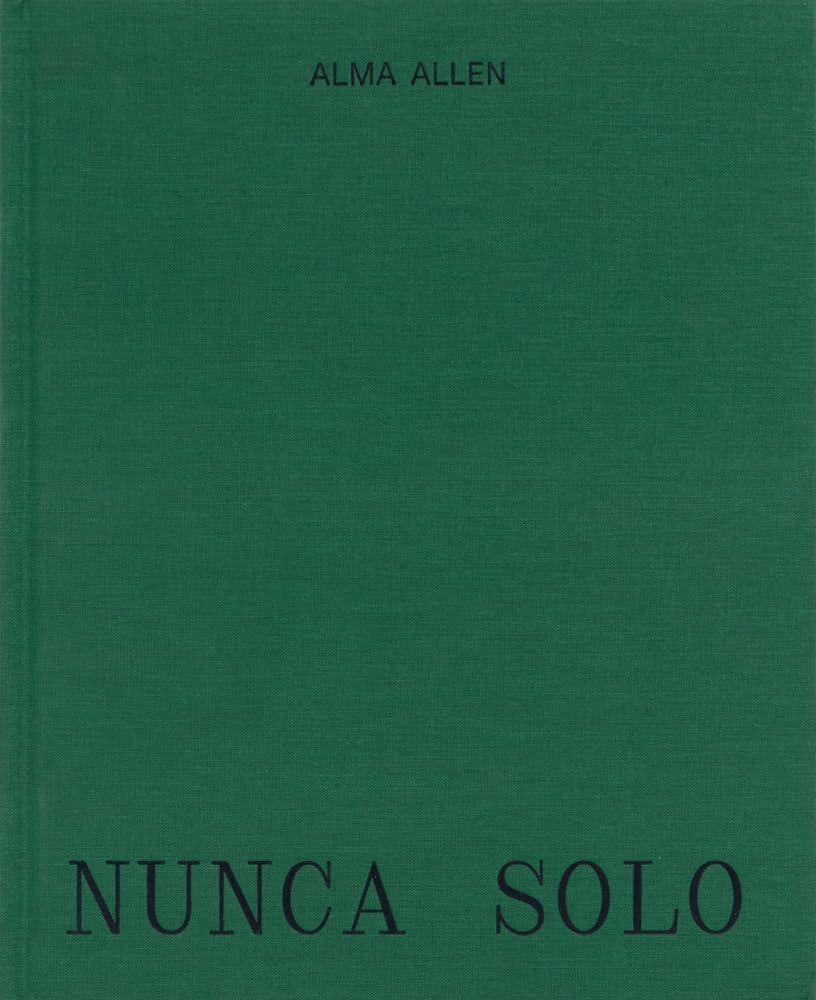
Kasmin Books is pleased to present Alma Allen: Nunca Solo, a catalogue accompanying the artist’s exhibition at Museo Anahuacalli, Diego Rivera’s iconic museum in Mexico City. With translations in both English and Spanish, this volume delves into Allen’s ongoing engagement with time, form, and hybridity through twenty-six newly commissioned sculptures installed among the volcanic architecture and grounds of the museum.

Read More …

The collapse of LA’s Skid Row Housing Trust reveals a lack of investment in the maintenance of supportive housing properties.

‘One of Skid Row’s largest housing providers faces financial implosion,’ ran a headline in the Los Angeles Times in early February. Prospects looked bleak for the Skid Row Housing Trust (SRHT), a non‑profit property developer and pioneer in providing housing and services for Los Angeles’ unhoused people. 

A month later, a second article in the newspaper reported appalling conditions in the older single‑room occupancy (SRO) properties: mouldering corridors, broken plumbing, waste and hoarding. There are 29 buildings in the organisation’s portfolio. A little more than half of these are permanent supportive housing (PSH) designed by top architecture firms, while the rest are SROs, constructed in the early 20th century and serving the city’s lowest‑income populations. 

Read More …

At the turn of the last century, the 10 acres on which Vista Hermosa Natural Park sits was a forest of oil derricks. Located on the outskirts of a nascent downtown Los Angeles, dozens of wellheads replaced the native sage and chaparral scrub. A photograph from 1901 shows a poisonous landscape glistening with pools of what might be water—or oil. 

Fast-forward a century and the land was still a toxic mess. Working-class homes (built decades after drilling) were bulldozed to make way for the Belmont Learning Complex. A project of the Los Angeles Unified School District, the $200 million middle school campus and housing complex was once deemed “the most expensive school in America” and was meant to bring high-tech learning to the city’s Temple-Beaudry neighborhood. But by 2000, construction had halted, and the planned complex was enmeshed in political scandal that bubbled up to mainstream news outlets. 

Read More …

The demise was probably inevitable, foretold by an Ed Ruscha painting. William Pereira’s LACMA opened in 1962, but the buildings were never great. Its corporate modernism was inward‑looking, and its flourishes didn’t age well. Later additions by Hardy Holzman Pfeiffer Associates (1986) and Renzo Piano (2008, 2010) atomised the campus, but there was always something pleasant about sitting in the plaza and watching museum‑goers drift from building to building – a piece of pedestrian urbanism in a town long blasted for not having any. (It does.)

Read More …

Out of the windows of Lenny Steinberg’s Venice Beach living room, there are a few hundred metres of sand, a line of white surf, then the grey-blue expanse of the Pacific Ocean. It’s a remarkable, pinch-me view, the kind most folks only see from the nearby boardwalk at Muscle Beach, where tourists and roller skaters glide through a perfume of cannabis dispensaries and fish taco stands.

The LA-based designer’s home is just a few doors down from Frank Gehry’s Norton House, a mid-1980s landmark that mimics a lifeguard tower. She and her husband, Bob, a prominent lawyer, moved here in the 1990s, transforming a 1960s post-and-beam duplex into a minimalist roost that now houses an archive and showroom of five decades of her work, alongside her art and object collection. Each piece – from the Lucite high heels on a table by the front door to the Frank Stella print in the main bedroom – reflects, in short, the fruits of a highly creative life.

Read More …

Lesley Lokko’s sprawling, dense Biennale asks us to engage different representational languages. It’s a slow burn, but finding new legibility takes a moment.

“Zt. Zzt. ZZZzzzZZZzzzzZZZzzzzzzZZZZzzzzzzzzZZZzzzzzZZZzzzzo’ona,” begins The Old Drift, Namwali Serpell’s 2019 novel set in Zambia. The insistent whine of a mosquito. Her pesky, omniscient narrator traverses generations and geographies. It’s a tale of violence and the folly of colonization. That hum, indigenous and persistent, singular and swarm, is the consciousness of the African continent.Those ZZZs droned through the Arsenale and Giardini as participants, journalists, and VIPs gathered to kick off the eighteenth International Venice Architecture Biennale, and echoed across alleys and piazze made damp by unseasonal rain and high tides. Venice, after all, is a reformed swamp with mosquitos of its own.

Read More …