Mimi Zeiger

Critic, editor, curator and instigator.

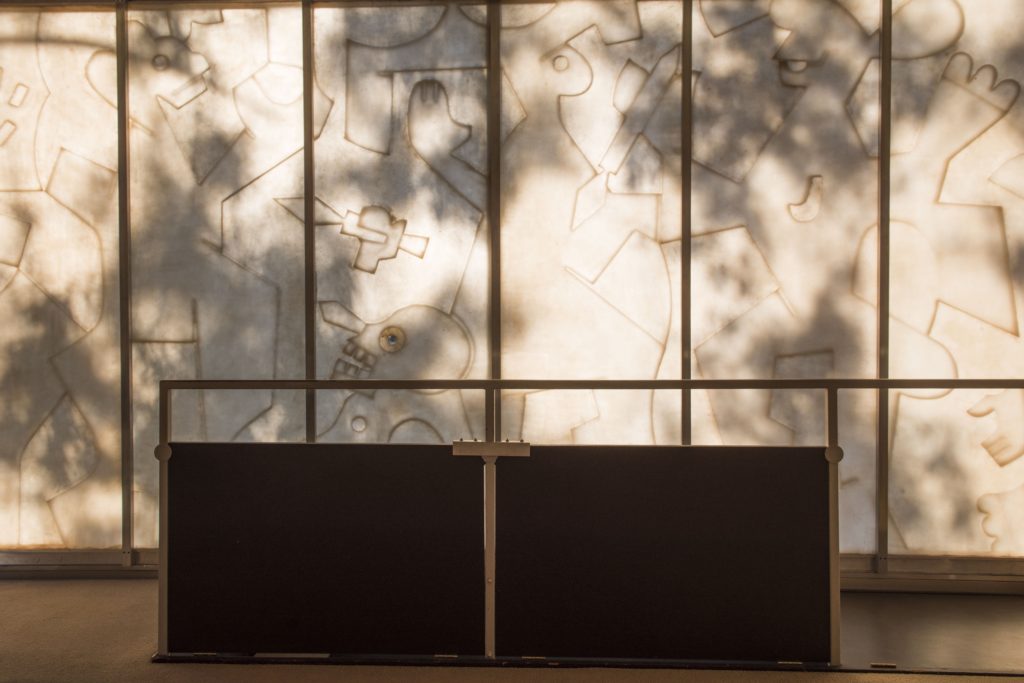
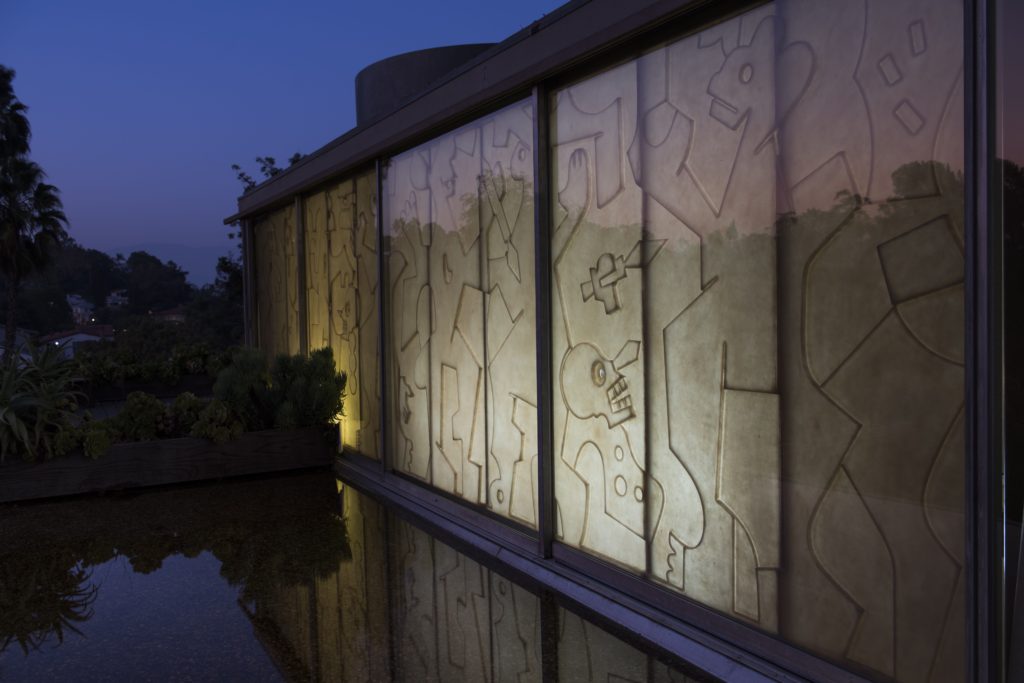
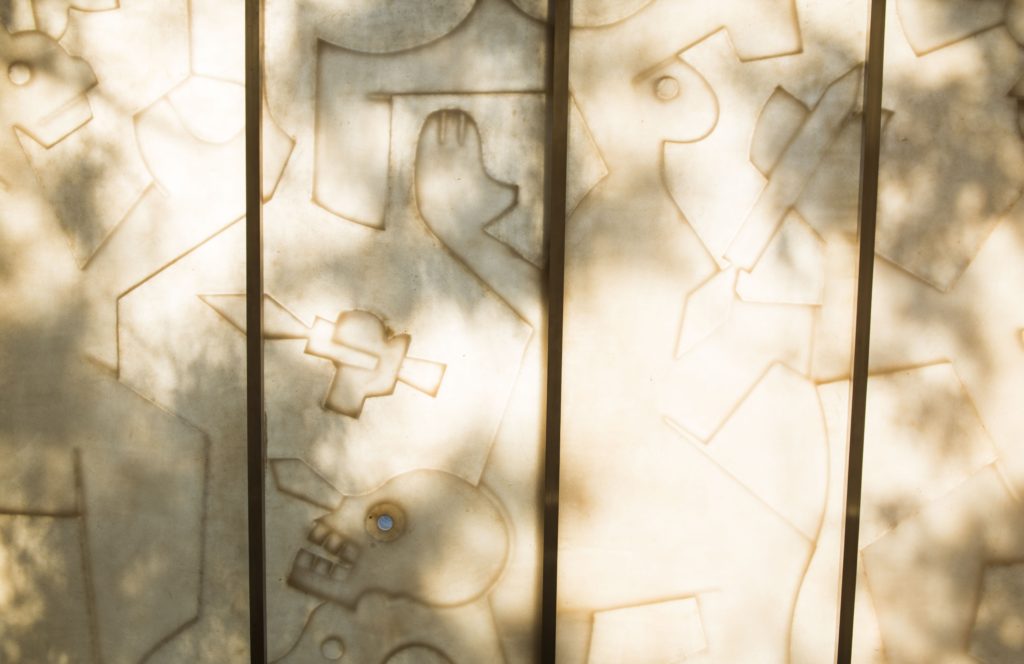
To speak with lighting designer Colin Ball about the Smythe Library at Tonbridge School in Kent, England, is to discuss circadian rhythms, melatonin studies, and daylight differentials due to differences in latitude between Los Angeles and London.

“Let’s talk about the experience of light for the person,” he says, as he begins describing how the firm he works for, London-based BDP, approached the renovation of the 1962 library building originally designed by British architect Sir William Holford. “The natural hormonal balance of our brain affects our vision. Morning requires bright light. In the evening more candlelight or a single desk light environment is better, which allows you to concentrate.” Read More …

West 53rd Street in Manhattan is home to the ever-expanding Museum of Modern Art (MoMA), which fills close to half of the north side of the block between Fifth Avenue and Avenue of the Americas. While a roster of exhibitions draws more than a million visitors a year from all over the globe to its galleries, across the street a more local phenomenon is taking place: People are flocking to the public library.

Since it opened in 2016, the 53rd Street Library, designed by Mexico City and New York–based TEN Arquitectos with New York’s HLB Lighting Design, has become a destination for locals looking for a public space to work, study, or take in an event. The bright, 28,000-square-foot space defies the traditional definition of a musty branch library. While New York Public Library (NYPL) cardholders can still check out books, the library is designed to function as a kind of cultural and community hub. There are plenty of spots to plug in a laptop and patrons are allowed to bring in their lattes or lunchboxes. At its center is a double-height amphitheater; a cascade of wide oak bleachers that look out towards the street. The art and culture institutions on West 53rd Street like to partner with the library and hold events—such as a string quartet performance—in the space. “In an age of reading books on Kindles, people go to library to get work done,” says HLB senior principal and lighting designer Barbara Horton. “The stacks aren’t as important anymore.” Read More …

Images of the havoc that natural disasters wreak upon the built environment are part of our cultural consciousness. They have been since the birth of photography. Yet the past decade or so has seen a worrisome convergence: the parallel increases in the ubiquity of media technology and the number and severity of devastating storms, which are arguably linked to climate change. Katrina: drowned New Orleans freeways and neighborhoods (the latter re-created in Beyoncé’s 2016 “Formation” music video). Sandy: a darkened Manhattan shot by Iwan Baan. Harvey: Houston’s graybrown floodwaters captured by drone photography. Irma: cell phone footage of a battered port town in the British Virgin Islands.

The degree to which the two are connected—and the importance of that link—was most acute when Hurricane Maria tore through Puerto Rico, cutting out power and destroying telecommunications infrastructure. The Washington Post even attributed the Trump administration’s delayed response in part to not seeing the wreckage. Read More …

When Robert L. McKay, the architect best known for designing and founding the first Taco Bell, died in early October, news of his passing spread nationwide on the AP Wire. The Los Angeles Times ran an obituary, as did Fox Business and news outlets in Kansas and Nebraska – places that were unlikely to have flocked en masse to hard shell tacos before McKay opened his doors in 1962.

In 2015, McKay’s original building was moved from the Los Angeles suburb of Downey to Taco Bell’s corporate headquarters in Irvine, California. Images from that migration reveal his early vision for a hacienda-type fast-food eatery: mission-style arches across the facade, red Spanish tile roof. Riding down the freeway – doublewide on the back of a flatbed truck – the lowly taco stand merged dogged American entrepreneurism and classic Mexican design. Taco Bell is not on the curatorial checklist of Found in Translation, an exhibition on view until January 2018 at the Los Angeles County Museum of Art (LACMA) about the design influences between LA and Mexico, but it could be. Or, given how a fast-food restaurant best known for stoner Meximelt binges and questionable slogans – “Make a run for the border” – transmitted Mexican design imagery across the country, it should be. Read More …

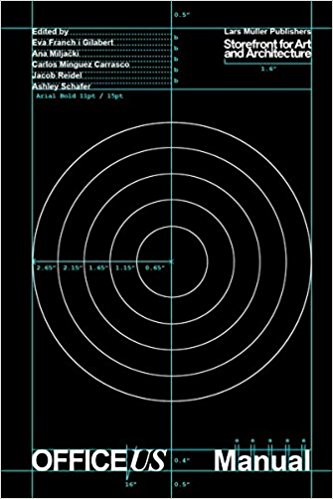
Office US Manual is a critical, occasionally humorous, and sometimes stupefying guide to the architectural workplace. The third publication of OfficeUS, this book presents office policies and guidelines spanning the last one hundred years alongside commissioned statements by contemporary contributors, original graphic analysis, and images from The Architects by Amie Siegel. The Manual is a resource for understanding—and reimagining—the nature and design of architectural practice.

Contributors:
Rami Abou-Khalil, Sean Anderson, Andrew Atwood, Phil Bernstein, Besler & Sons, Aleksandr Bierig, Gabrielle Brainard, Landon Brown, Felix Burrichter, Savinien Caracostea, Rafael de Cárdenas / Architecture at Large, Choon Choi, Matthew Clarke, Peggy Deamer, Designers Assembly, Caroline O’Donnell, Craig Edward Dykers, Keller Easterling, Family, Pedro Gadanho, Gordon Gill, Liam Gillick, Marc Guberman, Adam Hayes, Juan Herreros, Sarah M. Hirschman, Phu Hoang, Florian Idenburg, Michael Jefferson, George Barnett Johnston, James von Klemperer, Keith Krumwiede, Jimenez Lai, Andrew Laing, Jesse LeCavalier, Leong Leong, Thomas Y. Levin, John May, Kyle May, Nicholas McDermott, Michael Meredith, Sina Najafi, ODA, John Perry, Daniel Pittman, PlayLab, Inc, Charles Renfro, Pierce Reynoldson, Julian Rose, Andrew Ross, Magali Sarfatti-Larson, SHoP Architects, Manuel Shvartzberg, Galia Solomonoff, Erica Stoller, Dan Taeyoung, Nader Tehrani, Troy Conrad Therrien, Nato Thompson, Ada Tolla, Marc Tsurumaki, Julia van den Hout, J.H. Verkerke, Marina Otero Verzier, Ian Volner, Don Weinreich, Marion Weiss, Sarah Whiting, Mabel O. Wilson, Human Wu, Kim Yao, Michael Young, Mimi Zeiger
The Guggenheim Bilbao marks a temporal point as much as a geographic one—more so than Richard Meier’s Getty Museum, which opened in the same year, or any of the works by Sverre Fehn, who won the Pritzker in 1997, Gehry’s museum embodies a moment where architecture moved from a local to a global condition. This is true of both the strategy of the kunsthalle-like space deployed into an undervalued urbanism with hopes of sparking renewal, and technique—early CATIA-generated forms soon to be a benchmark for expressive architecture. Looking back at this moment in time, I wouldn’t say that the Guggenheim was part of the zeitgeist, but rather it actually presaged 21st-century conditions as it fused technology and globalization.

Ed Rosenthal grows weed. He has for decades. The Oakland, California-based horticulturist, author, and activist is the go-to expert on home cultivation. He’s written more than a dozen books on the subject and the policies that surround medical marijuana and legalization. Their titles fall somewhere between what you’d see in your local nursery and your corner head shop: The Big Book of Buds (volumes one through four), Marijuana Garden Saver, and Marijuana Pest & Disease Control.

“Growing is addictive,” Rosenthal says with a laugh, and then quickly clarifies that the drug is not. “Given the right conditions and a sunny backyard, marijuana can be grown almost anywhere in California.” He speaks poetically about marijuana’s diverse morphology: It has male and female plants. Some are tall, some wide, and there are different strains like indica or sativa that range in color—like heirloom tomatoes—from absinthe yellow–green to maroon and deep purple. To cultivate cannabis for its THC (tetrahydrocannabinol) and psychoactive properties, only the female plants are grown. The male plants look a bit like wild mustard; the female plants are the ones that produce buds for consumption. “With humans and cannabis, the female is considered more beautiful,” he explains. “I have a bunch of marijuana plants growing, and they all look different, like six different varieties of a dahlia. Each plant is an individual.” He compares homegrown marijuana to homegrown tomatoes. “The person who grows the best marijuana is the person who is growing at home. Everybody loves their own produce.”

It’s a vision of cannabis production that is far different from what the public imagination associates with marijuana: the resource-heavy hydroponic “grow house,” which makes high demands on labor, energy, and water. Or the news reports of thousands of plants seized and destroyed on illegal grow sites on U.S. Forest Service land. Read More …

I’m not going to define history. No matter how heavily that word weighs on the Chicago Architecture Biennial, which opened last weekend. Neither will artistic directors Sharon Johnston and Mark Lee; although they provocatively titled the second iteration of the event “Make New History”, a phrase borrowed from the title of an artist book by Ed Ruscha.

In remarks to the press, they pointed to the many works displayed in the Chicago Cultural Center as explanation. And if these works are to be trusted, then history is not the dark angel haunting philosophers and historians, but rather something lighter: a shiny treasure trove of references – called forth by Google image search – to be appropriated and stylised.

Deadpan Ruscha understood the irony of his slogan. With three simple words he poked fun at the impossibility of escaping our past. An edition of Make New History sits on the shelves of Johnston Marklee‘s office (or so says editor Sarah Hearne in her introduction to the biennial catalog). Read More …

Sometime in the early 1980s, Reyner Banham looked out across a stretch of Arizona landscape—a dry wash and long mound of earth scattered with trash. “[A]mong the chollas and cacti there are areas of burned ash, holes containing broken porcelain insulators and what may be pieces of toilet fitting, broken china and other domestic detritus; and areas of compacted ground that might have been the sites of small  buildings,” he later wrote in Scenes in America Deserta as the opening to a chapter entitled “Frank Lloyd Wright Country.” Read More …

Curators: Mario Ballesteros, Andrea Dietz, Sarah Lorenzen, and Mimi Zeiger
 

Artists and writers: Frida Escobedo, Aris Janigian, Pedro&Juana, Tezontle, Katya Tylevich, and David Ulin

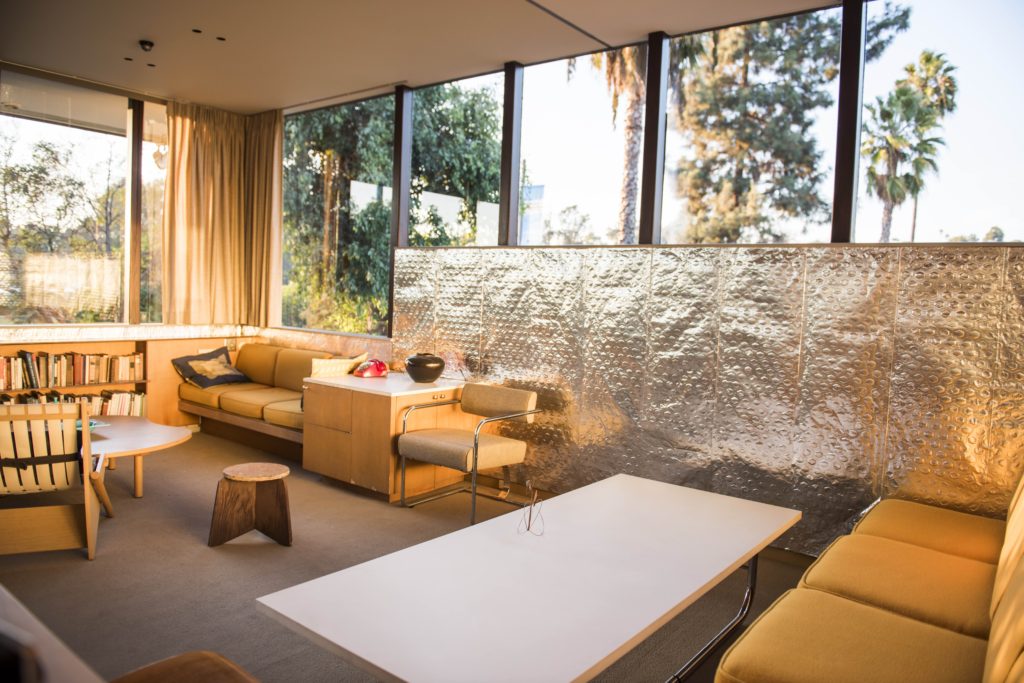
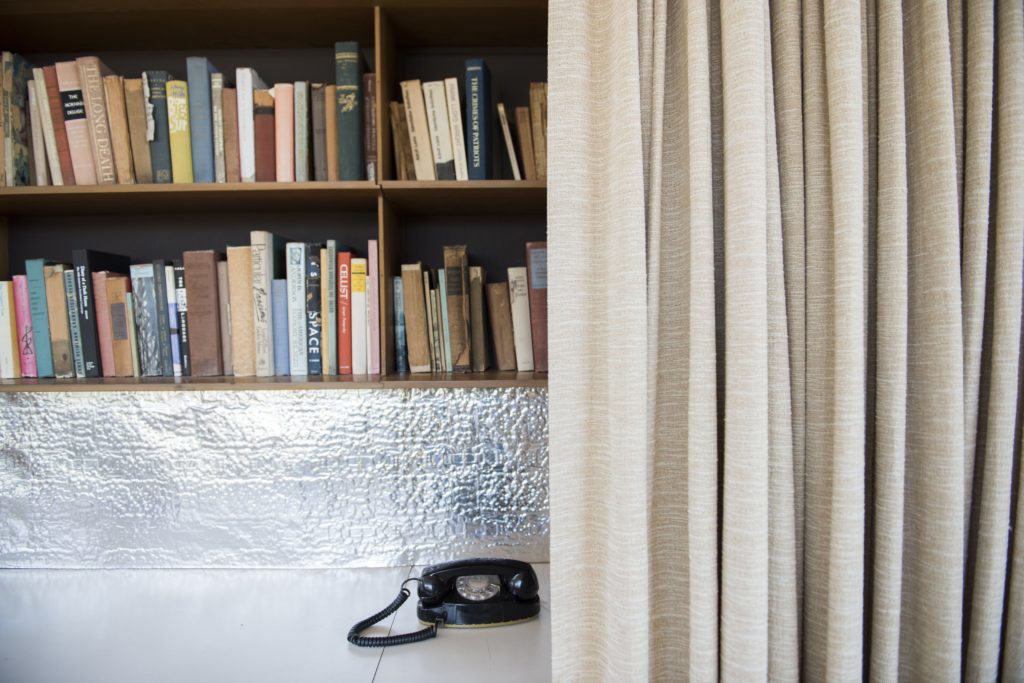
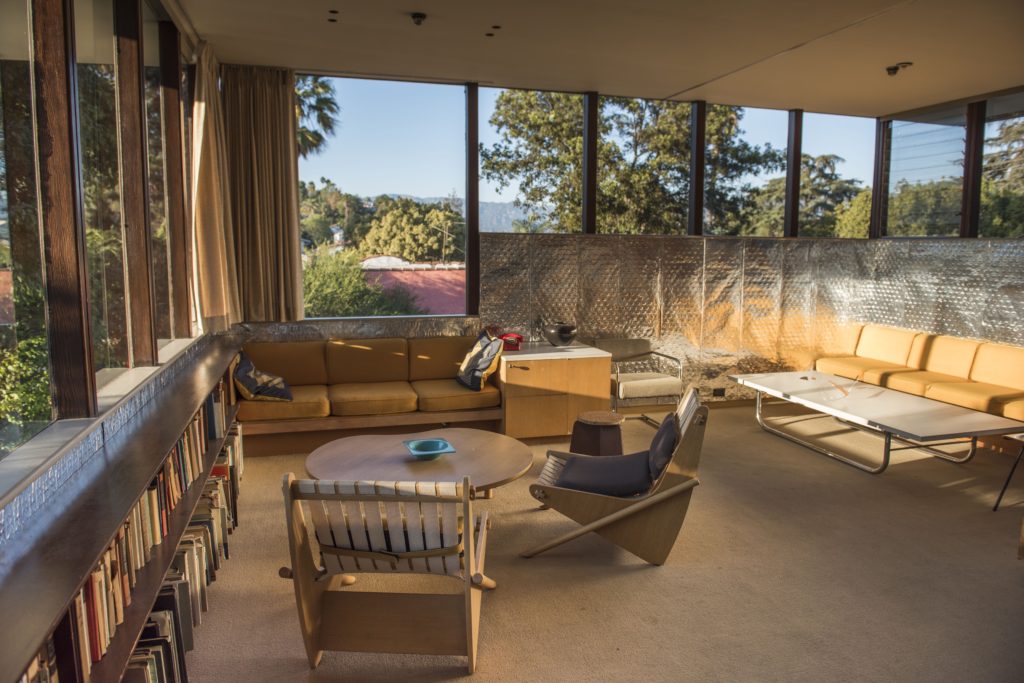
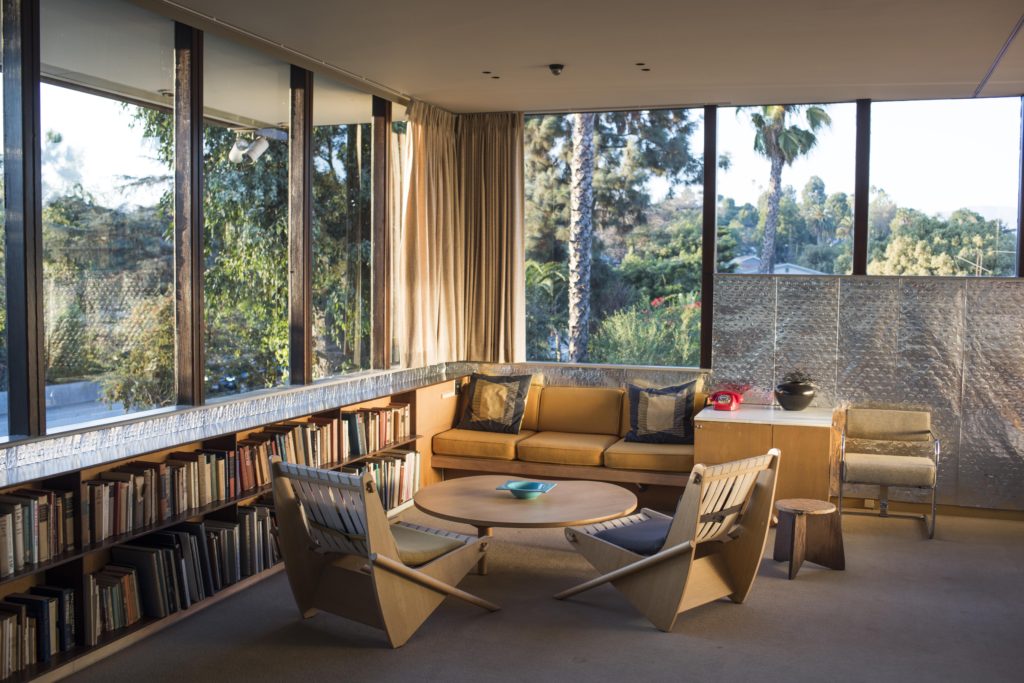
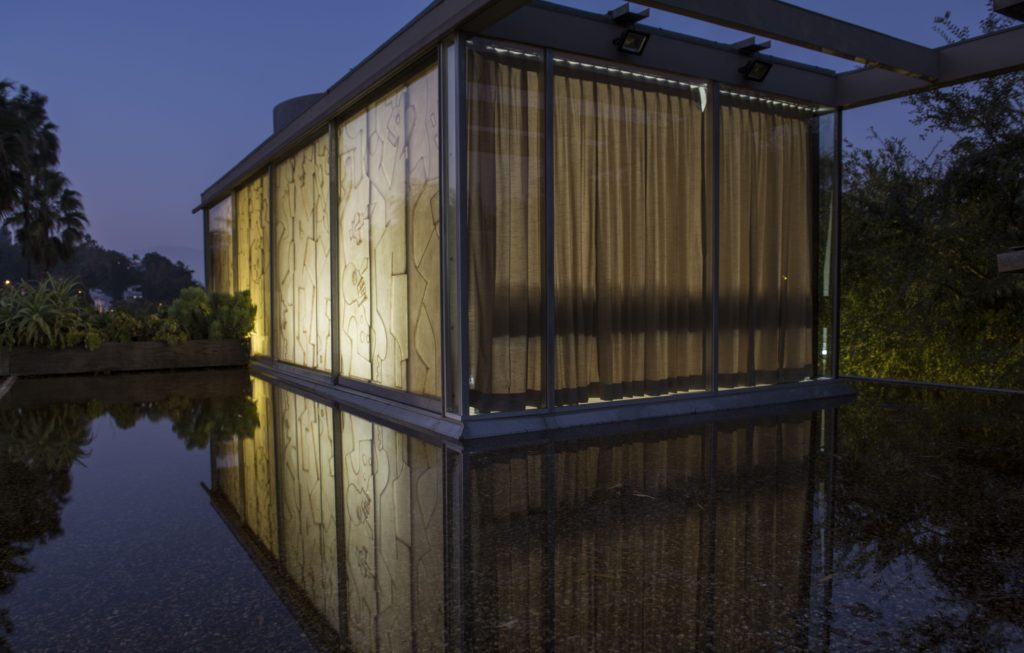
Neutra VDL Studio and Residences, Los Angeles with Los Angeles Forum for Architecture and Urban Design and Archivo Diseño y Arquitectura.

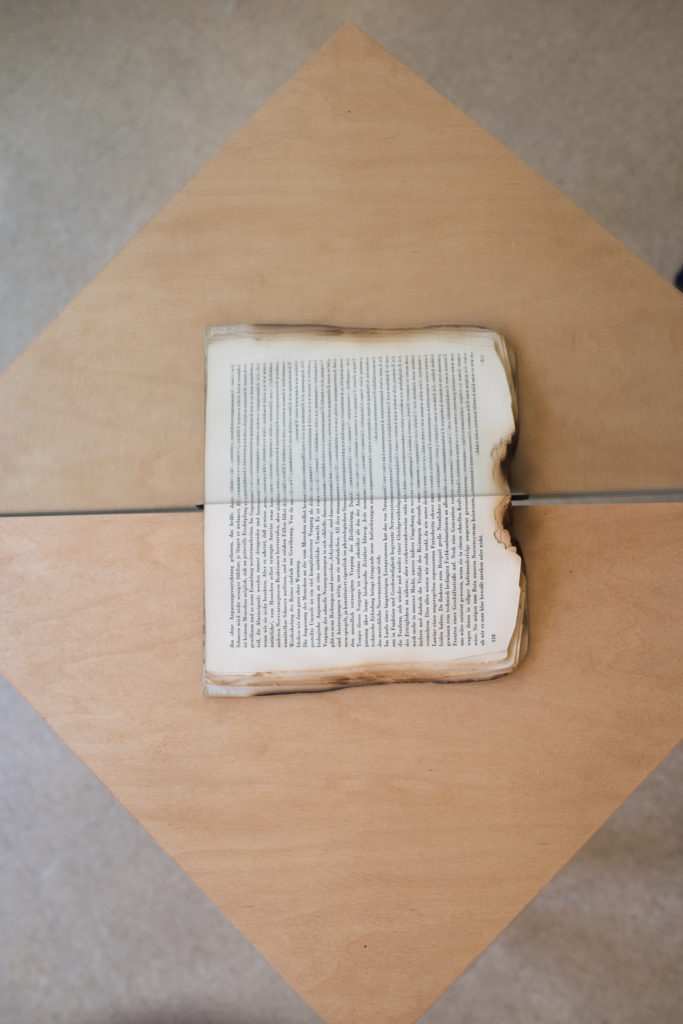
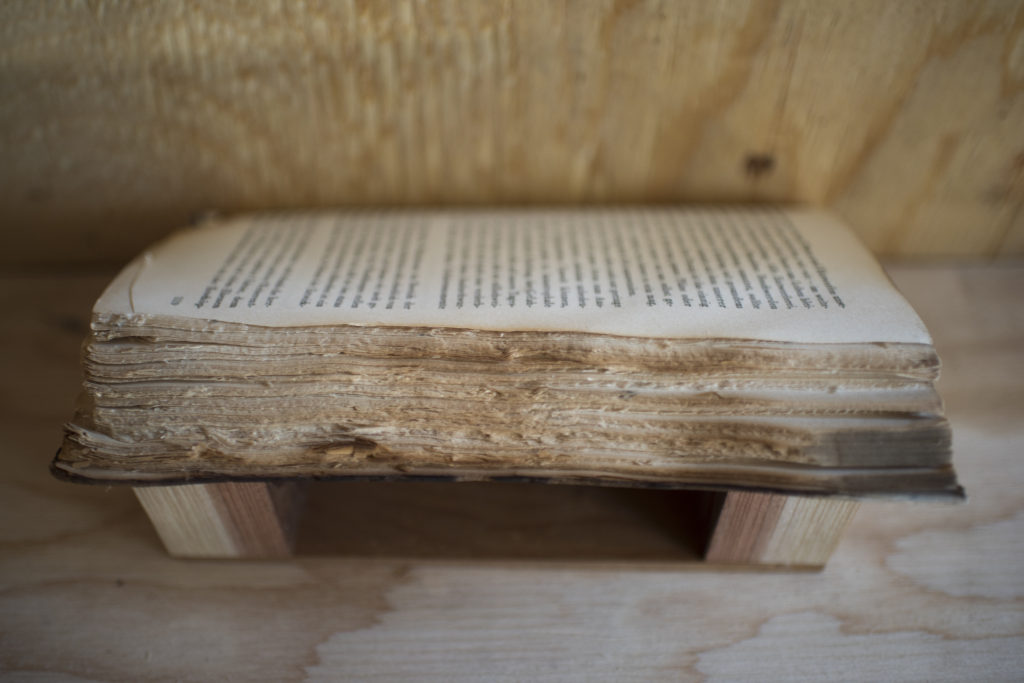
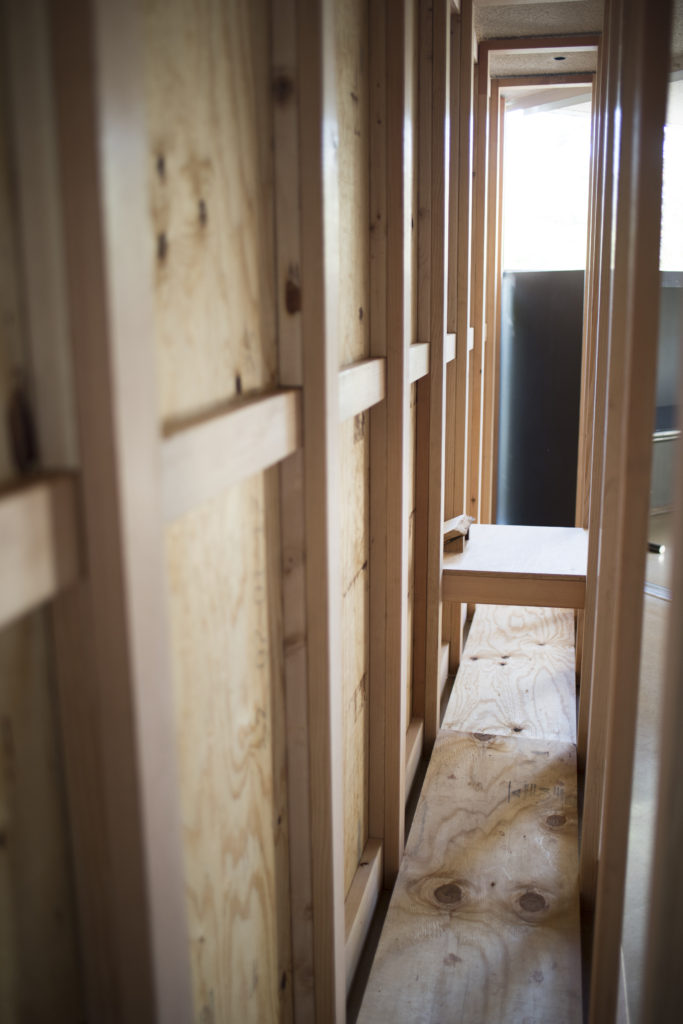
Tu casa es mi casa features site-specific installations by three Mexico City–based design teams—Frida Escobedo, Pedro&Juana, and Tezontle, and three California-based writers—Aris Janigian, Katya Tylevich, and David Ulin.

If our contemporary political moment offers up a border wall as the primary architectural expression of connection between the U.S. and Mexico, Tu casa es mi casa suggests a more porous boundary between the two countries. The title, a riff on the welcoming “my house is your house,” offers the inverted “your house is my house”—an expression of the personal and political stakes of this transposition.

Read More …