Mimi Zeiger

Critic, editor, curator and instigator.

Driving the 101 Freeway from Silver Lake to Calabasas, California, I kick around in my head the literary references I could use to describe this stretch of road bounded by the Sherman Oaks Galleria to the south and the turnoff for the Ronald Regan Presidential Library to the north. Charles Bukowski’s pulp and grit was left back in Hollywood, we’ve crossed out of Reyner Banham’s ecologies, and the hills that so famously burn in Joan Didion’s Letter from Los Angeles are farther east. There’s probably a German term for this landscape of rolling hills, Starbucks, and Lexus dealerships. Certainly Adorno coined some phrase in his critique of the culture industry, written while living in exile in the Pacific Palisades.

It’s tempting to say that we are on the edge — the edge of culture, the edge of suburbia, the edge of rural California and all the narratives that go with it. (The Western High Noon was shot at Warner Bros. Ranch, which is now the Calabasas Golf Club.) But if we leave behind old-fashioned geography and look at our pin on the media map, we find that this is the territory of E!: a pop-cultural space populated by people whose names often start with K.
Read More …

This is the original text of Young’s 1968 speech, interspersed with comments from contemporary practitioners.

If I seem to repeat things you have heard before, I do not apologize, any more than I think a physician would apologize for giving inoculations. Sometimes we have to give repeated vaccinations, and we continue to do so until we observe that it has taken effect. One need only take a casual look at this audience to see that we have a long way to go in this field of integration of the architects. I almost feel like Mr. Stanley looking for Dr. Livingston—in reverse—in Africa. I think I did see one and wanted to rush up and say: Dr. Livingston, I presume! Read More …

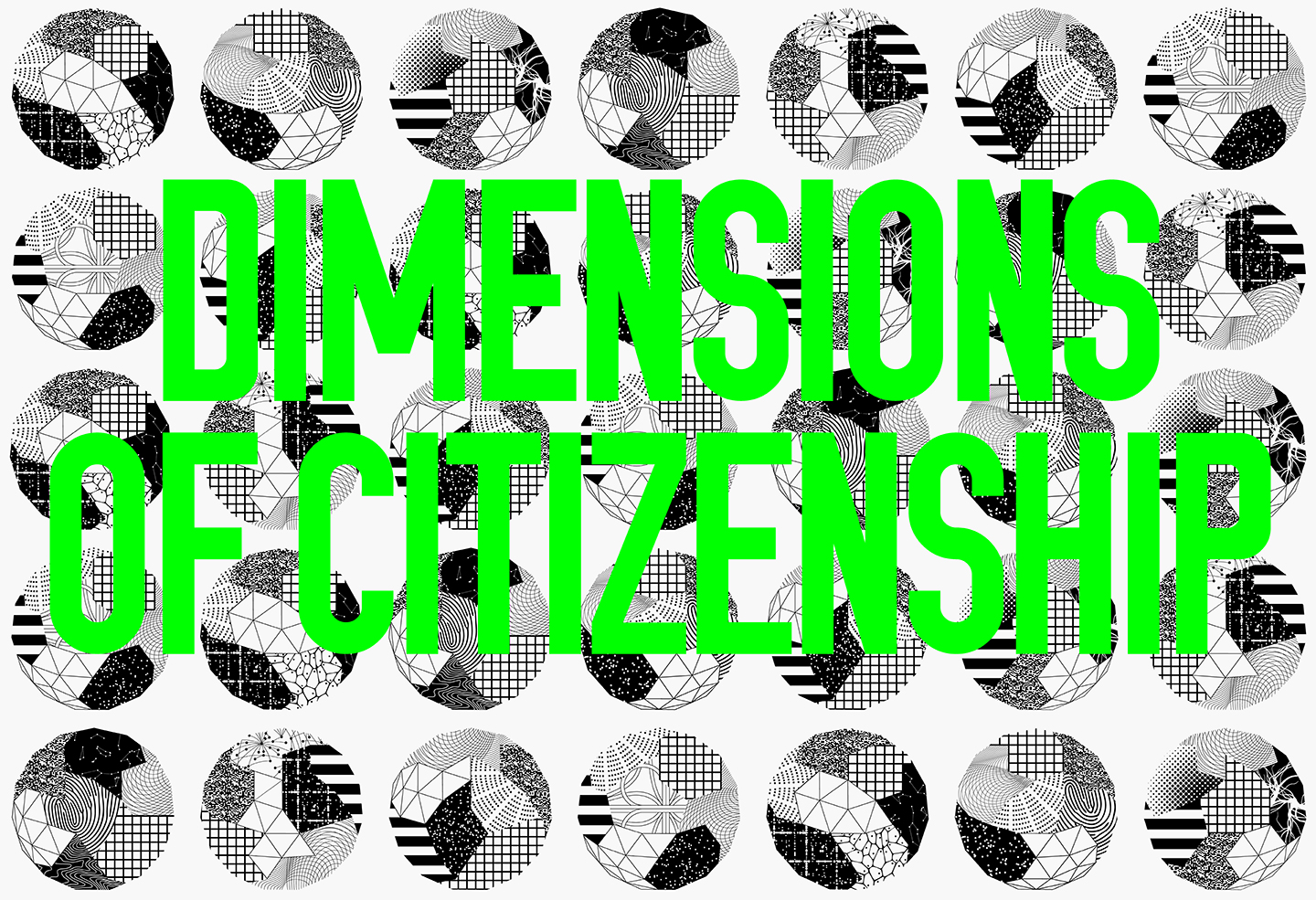
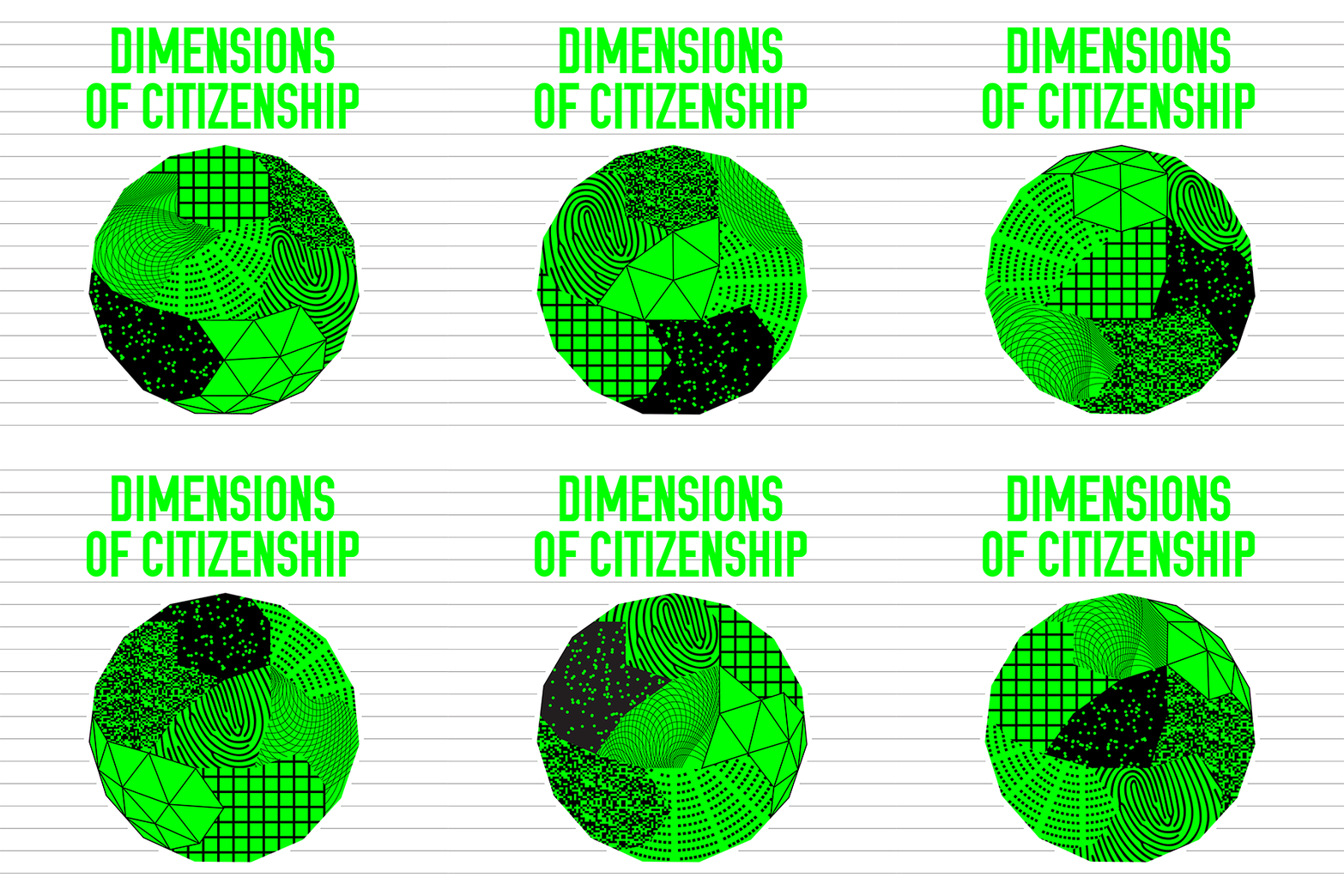
Co-curators of the U.S. Pavilion at the 2018 Venice Architecture Biennale, Ann Lui and Mimi Zeiger, will give insight into the curatorial practices and research leading into Dimensions of Citizenship. Interrogating the spatial conditions of design and citizenship, their exhibition will present works by architects, designers, artists, and thinkers who are responding to today’s shifting modes of citizenship, and putting forth visions of future ways of belonging. Future Firm co-founder and School of the Art Institute of Chicago professor Ann Lui, and architecture critic Mimi Zeiger, are curating the exhibition along with University of Chicago architectural history professor Niall Atkinson, and associate curator Iker Gil, founder of MAS Context.

March 27, 2018 – 6:00pm
Art & Architecture Building
Taubman College, University of Michigan

A&A Auditorium (room 2104)

Dimensions of Citizenship challenges architects and designers to envision what it means to be a citizen today. As transnational flows of capital, digital technologies, and geopolitical transformations expand, conventional notions of citizenship are undermined. How might architecture, then, express today’s rhizomatic and paradoxical conditions of citizenship?

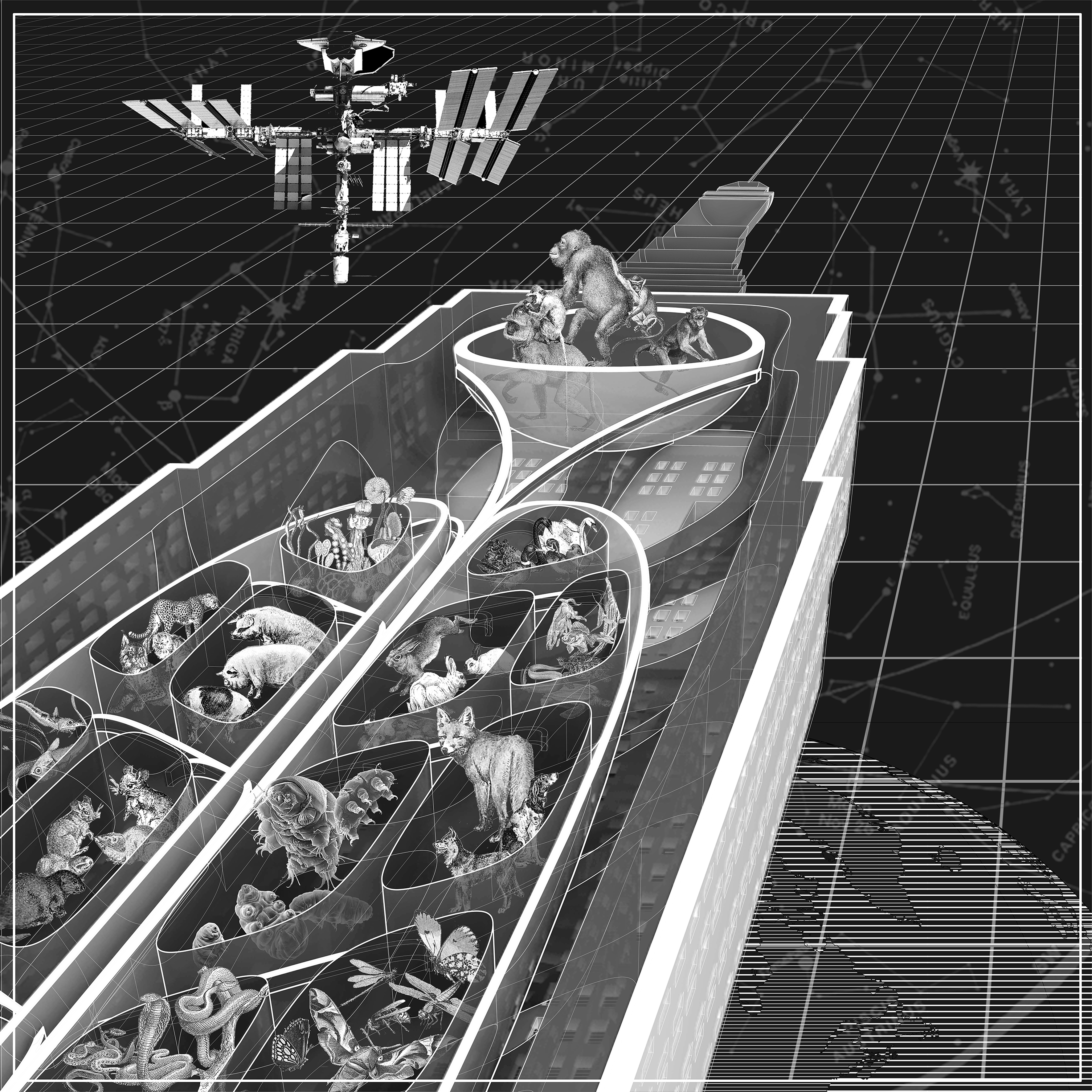
The US Pavilion explores seven spatial scales: Citizen, Civitas, Region, Nation, Globe, Network, and Cosmos.These scales, telescoping from body to city to heavens, broadly position citizenship as a critical global topic. Installations by architects, landscape architects, artists, and theorists investigate spaces of citizenship marked by histories of inequality and the violence imposed on people, non-human actors, and ecologies. These works do not solve the complex relationships of governance, affinity, and circumstance that bind us. Instead, they use architecture’s disciplinary agency to render visible paradoxes and formulations of belonging.

Commissioners
School of the Art Institute of Chicago
The University of Chicago

Curators
Niall Atkinson
Associate Professor in the Department of Art History and the College, The University of Chicago

Ann Lui
Assistant Professor in the Department of Architecture, Interior Architecture, and Designed Objects at the School of the Art Institute of Chicago, and co-founder of Future Firm

Mimi Zeiger
Los Angeles-based critic, editor, and curator; faculty member in the Media Design Practices MFA program at ArtCenter College of Design

Associate Curator
Iker Gil
Lecturer in the Department of Architecture, Interior Architecture, and Designed Objects at the School of the Art Institute of Chicago, director of MAS Studio, and founder of MAS Context

Dimensions of Citizenship, the theme of the US Pavilion at the 2018 Venice Architecture Biennale, co-commissioned by the School of the Art Institute of Chicago (SAIC) and the University of Chicago, challenges architects and designers to envision what it means to be a citizen today. As transnational flows of capital, digital technologies, and geopolitical transformations expand, conventional notions of citizenship are undermined. How might architecture, then, express, and engage with today’s rhizomatic and paradoxical conditions of citizenship?

Read More …

Sometimes the ending is the beginning. Curation, as with criticism, hinges between the labor of production and turning that work to face the public. As such, the opening of an exhibition represents an end point for the curatorial team and the start of an audience’s engagement with the ideas, materials, and experiences on view. Which is why, when reflecting on representation and a broad interpretation of the term to convey both the mechanical processes of display and the making seen and heard the bodies and voices structurally left out of the discourse, it makes sense to begin at the inauguration of the U.S. Pavilion at the 2018 Venice Architecture Biennale.

Read More …

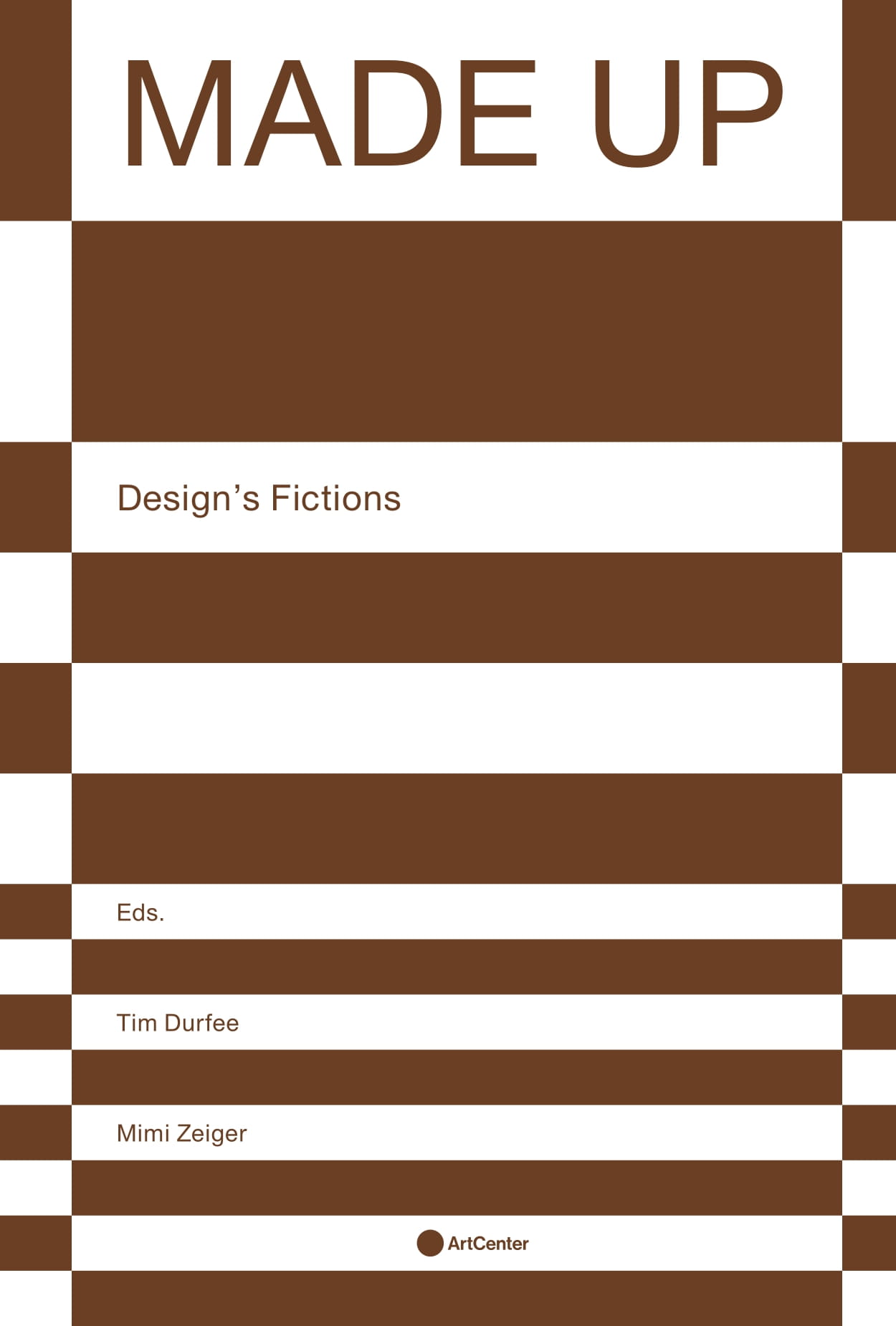
Tim Durfee, Mimi Zeiger, editors

At a time when “fake news” is part of our daily cultural lexicon, Made Up: Design’s Fictions explores lies, fantasies, and other un-real scenarios as tools of design.

Through essays, interviews, and narratives by Bruce Sterling, Fiona Raby, Sam Jacob and other significant voices in the field, this volume questions the initial discourses around “design fiction”—a broad category of critical design that includes overlapping interests in science fiction, world building, speculation, and futuring. Made Up: Design’s Fictions advances contemporary analysis and enactment of narrative and speculation as an important part of practice today.

Essays, interviews, and narratives by: Julian Bleecker, Benjamin H. Bratton, Anne Burdick, Emmet Byrne, Stuart Candy, Fiona Raby, Tim Durfee, Sam Jacob, Norman M. Klein, Peter Lunenfeld, Geoff Manaugh, Tom Marble, m-a-u-s-e-r, Metahaven, China Miéville, Keith Mitnick, MOS, Susanna Schouweiler, Bruce Sterling, Mimi Zeiger.

Size: 6.25 × 9.25 in. / 16 × 23.5 cm.
Pages: 108
Illustrations: One-Color
Cover: Softcover
Publication date: December 2017
Published By: Actar Publishers / Art Center Graduate Press
ISBN: English 978-1- 5323-4788- 7
Price: 13.50 € / $16 / £12

As busy, busy people who move through the world and occasionally need to sit still, we have a tacit understanding that furniture should be, if not comfortable, at least neutral — ready to accept the buttocks of any size, gender, race, or orientation. Beautiful designs tempt us into repose. However the conceit of universal design is upset when we are forced to recognize that not all bodies fit in or are supported by the most elemental of objects. So when, earlier this year, Hunger and Bad Feminist author Roxane Gay was fat-shamed for requesting a chair sturdy enough to support her frame and outcry ensued against this affront on body acceptance, I was also shocked by how a simple function — sitting — could be weaponized against bodies. It’s with Gay’s incident in mind that I approached maneuvering my wide hips into the dimensions of Frank Lloyd Wright’s Barrel chair. Low ceilings are generally cited for the architect’s famous disregard for bodies other than his own, his sense of scale being modeled on his (alleged) 5-foot-8-and-1/4-inch height. Designed in 1907 as part of the custom furniture of his Gesamtkunstwerk, Darwin Martin House in Buffalo, the Barrel chair is one of his most popular designs, often replicated in its nearly circular geometries. Settled into a reproduction of its oak corseting and obliged thereby to adopt a morally good posture, I imagine other people, other soft bits, shifting uncomfortably against the constraints of universality, yet comforted by the allure of an icon.

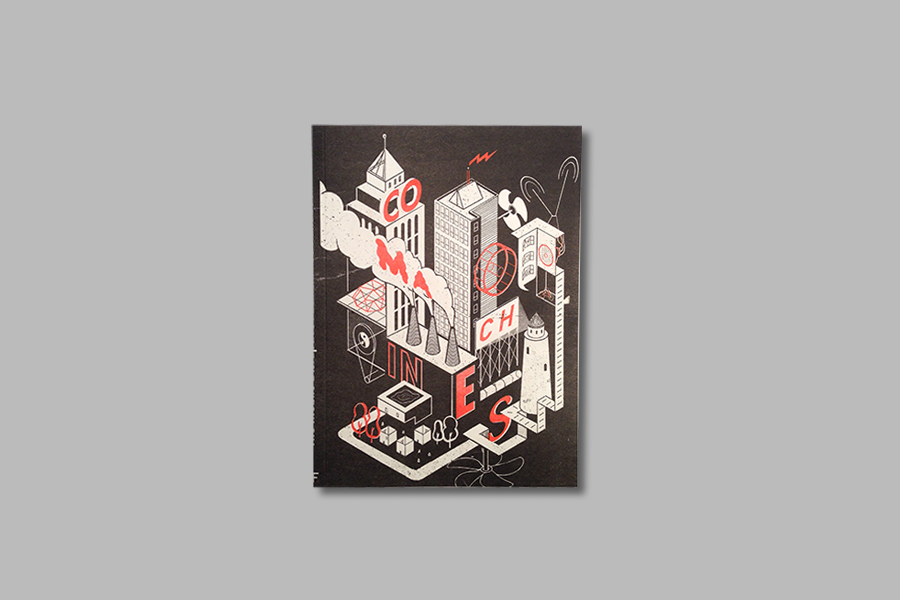
Inspired by the recent tendency among architects and designers to opt out of traditional office work in favour of creating self-initiated interventions in public space, ‘Co-Machines’ map out a new architectural movement motivated by practices of place-making, occupying and squatting, and alternative economies. Ecological or technological in scope, all the interventions are mobile and nearly all of them are performed without permission from city planners. Presenting a selection of international projects by emerging designers, ‘Co-machines: Mobile Disruptive Architecture’ shows the life of the alternative, grassroots and DIY with an independent spirit. It seeks out approaches and strategies to complement established urban planning and city-building, and show the beauty and fun in the initiative. In a range of ways, ‘Co-Machines’ raises questions about the function of architectural permanence, the opportunities for social, ecological, ethical or dynamics otherwise in urban planning and the scope of architecture at large.

ON/OFF (Dan Dorocic, Mimi Zeiger, Kim Dovey, Alan Smart, Nick Green, Fiona Shipwright, Michael Maginness, Alison Hugill, Diane Barbé, Benni Foerster- Baldenius, Carole Lung, Sam Carvalho )

“Armrest” appears early on in The Arsenal of Exclusion & Inclusion (Actar). The encyclopedic volume by Tobias Armborst, Daniel D’Oca, and Georgeen Theodore with Riley Gold (plus contributions from a host of architecture, urbanism, and planning notables) begins with “Accessory Dwelling Unit” and ends with “Youth Curfew,” but it is the armrest placed on a public bench to ward off unsanctioned sleeping that most efficiently summarizes what’s at stake throughout this 459-page book: access, control, and space.

As the three partners of Interboro—a Brooklyn-based architecture, planning, and research collective—Armborst, D’Oca, and Theodore are well versed in the contentious history of urban design and policy in U.S. cities. They manage to strike an editorial tone that is forthright but not strident. If anything, it is a bit self-effacing in regard to the legacy of urbanism’s discourses past and present. “For many nascent urbanists, this is where it all begins, with an excerpt from Mike Davis’s City of Quartz and an ensuing epiphany about space and power,” they write in a sidebar to the “Armrest” entry, all too aware that their example could be, in their term, “hackneyed.” Still, the trio stays with the lesson. Read More …