Mimi Zeiger

Critic, editor, curator and instigator.

In fall 2020, the Wolfsonian Public Humanities Lab sponsored a six-episode series titled Whither Criticism? to question the state of architecture criticism today, and to ask how the field needs to adapt to address the major crises of our time.

Hosts David Rifkind (Architecture) and Dan Evans (Journalism + Media) welcomed some of the leading architecture critics of our time for a frank and illuminating discussion. Speakers included Lee Bey, Christopher Hawthorne, Inga Saffron, Kate Wagner, Alistair Gordon, and Mimi Zeiger.

Read More …

The 2020 Exhibit Columbus Symposium: New Middles gathered national and international thought leaders in architecture, art, design, and landscape architecture together with Columbus stakeholders to explore the question, What Is The Future of The Middle City?

Read More …

Mimi Zeiger is a Los Angeles-based critic, editor, and curator. Her work is situated at the intersection architecture and media cultures. She was co-curator of the U.S. Pavilion for the 2018 Venice Architecture Biennale and currently curating Soft Schindler at the MAK Center for Art and Architecture, which openened on October 12, 2019. She also teaches at SCI-Arc and the Media Design Practices MFA program at Art Center College of Design. 

She has written for the New York Times, the Los Angeles Times, Architectural Review, Metropolis, and Architect, where she is a contributing editor, and is an opinion columnist for Dezeen. Zeiger is the 2015 recipient of the Bradford Williams Medal for excellence in writing about landscape architecture. She has curated, contributed to, and collaborated on projects that have been shown at the Art Institute Chicago, Venice Architecture Biennale, the New Museum, Storefront for Art and Architecture, pinkcomma gallery, and the AA School. She co-curated Now, There: Scenes from the Post-Geographic City, which received the Bronze Dragon award at the 2015 Bi-City Biennale of Urbanism\Architecture, Shenzhen.

In her interview, Mimi talks about her practice – as writer, editor, and curator – and the precarity at the root of it, advising young architects to not let architecture be their only sustenance.

By Julia Gamolina

Read More …
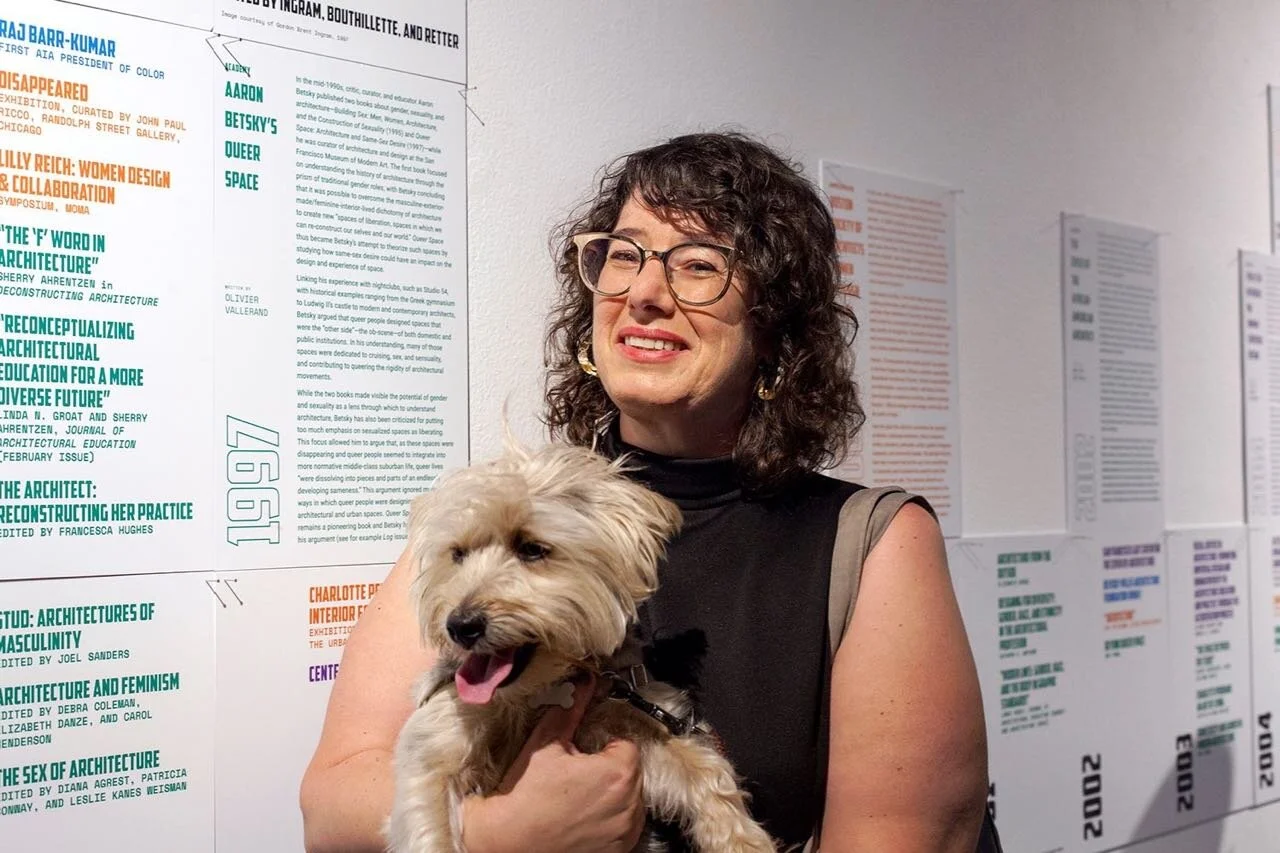
Presented as part of the Ada Louise Huxtable and the Formation of the Architecture Critic Workshop held at the Getty Research Institute, organized by Maristella Casciato and Gary Fox. Participants included: Barry Bergdoll, Maristella Casciato, Pippo Ciorra, Meredith Clausen, Gary Fox, Ann Harrison, Anne Helmreich, Thomas Hines, Mary McLeod, Barbara Penner, Emily Pugh, Peg Rawes, Suzanne Stephens, Wim de Wit, and Mimi Zeiger.

Questions of criticism in relationship to time have been on my mind lately. So, I wanted to start with a quote from Huxtable taken from her 1969 review of Robert Venturi’s Complexity and Contradiction published in the New York Times under the title “The Case for Chaos”:

Today’s theory is tomorrow’s practice. With the speedup characteristic of our age, it has a way of becoming today’s practice. Any thinking feeling citizen involved with his environment in this latter part of the twentieth century (that’s right—latter—with all the “projections” to the one awesome remote year 2000 no more than comfortable middle age for the present generation) must know the wave of future or succumb to the undertow of the past.

—Ada Louise Huxtable, New York Times, January 26, 1969

Read More …

2018 Design Trust Seed Grant

“Criticism Now: Developing Architecture and Design Criticism in the Pearl River Delta” is a weeklong English writing workshop that aims to develop new critical voices in architecture and design in Hong Kong, a place that needs more communication channels to represent its growing creativity in architecture, design, and urbanism.

Read More …

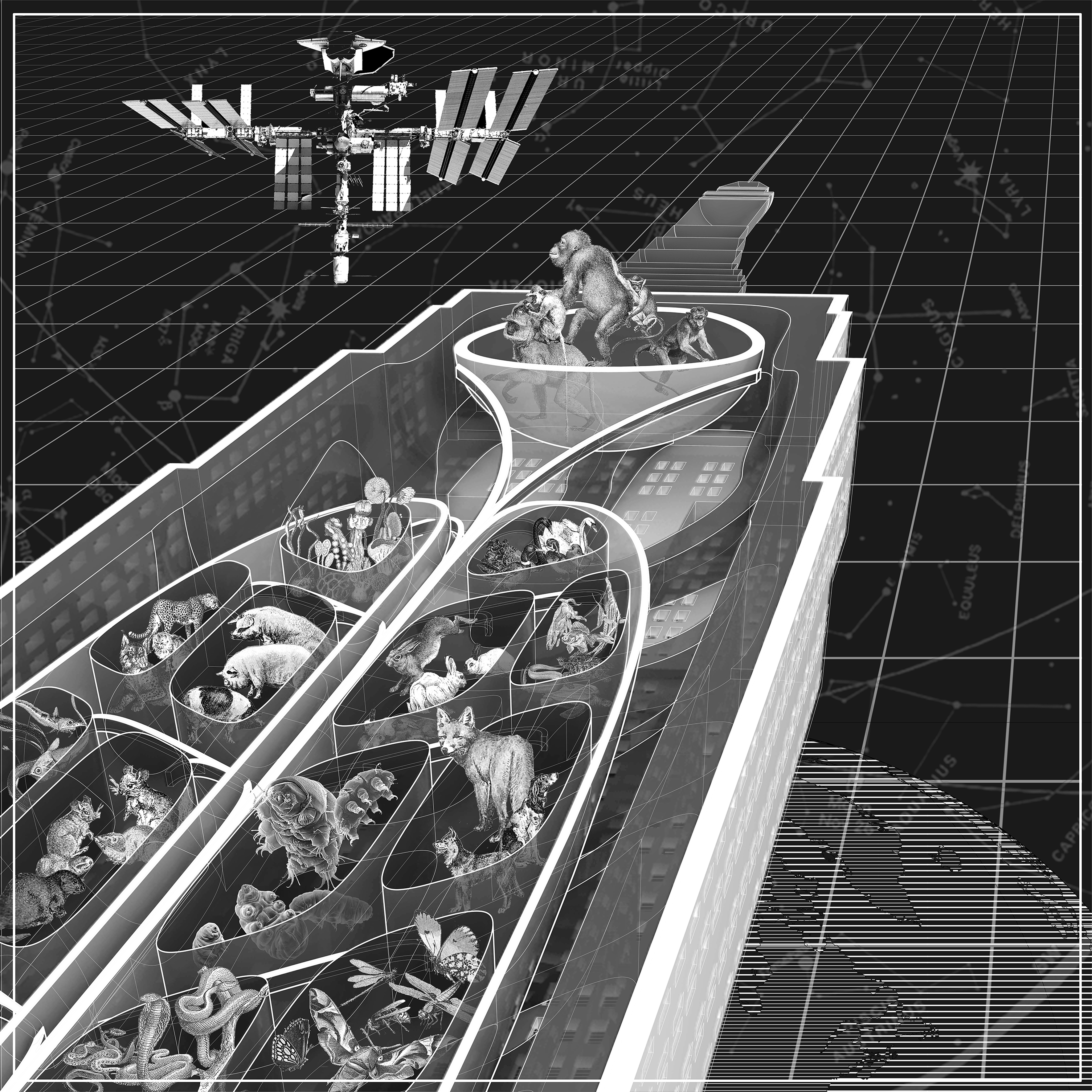
Co-curators of the U.S. Pavilion at the 2018 Venice Architecture Biennale, Ann Lui and Mimi Zeiger, will give insight into the curatorial practices and research leading into Dimensions of Citizenship. Interrogating the spatial conditions of design and citizenship, their exhibition will present works by architects, designers, artists, and thinkers who are responding to today’s shifting modes of citizenship, and putting forth visions of future ways of belonging. Future Firm co-founder and School of the Art Institute of Chicago professor Ann Lui, and architecture critic Mimi Zeiger, are curating the exhibition along with University of Chicago architectural history professor Niall Atkinson, and associate curator Iker Gil, founder of MAS Context.

March 27, 2018 – 6:00pm
Art & Architecture Building
Taubman College, University of Michigan

A&A Auditorium (room 2104)

Dimensions of Citizenship, the theme of the US Pavilion at the 2018 Venice Architecture Biennale, co-commissioned by the School of the Art Institute of Chicago (SAIC) and the University of Chicago, challenges architects and designers to envision what it means to be a citizen today. As transnational flows of capital, digital technologies, and geopolitical transformations expand, conventional notions of citizenship are undermined. How might architecture, then, express, and engage with today’s rhizomatic and paradoxical conditions of citizenship?

Read More …

At a time when digital media makes everyone a critic and a curator, Mimi Zeiger discusses how those titles dovetail in her work. She’ll present her approach to several projects, including Dimensions of Citizenship, the upcoming 2018 U.S. Pavilion for the Venice Architecture Biennale, Tu Casa es mi Casa, and Now, There: Scenes from the Post Geographic City. She’ll investigate how collaboration, structure, research, and critique shape exhibition making.

Tuesday, November 14, 2017
6:30 PM – 8:00 PM

SVA MA Design Research, Writing and Criticism
136 W 21st St, Second floor
New York, NY 10011

“Is liveability utopian?” Leading design critic and curator Mimi Zeiger opens her keynote with this question, inviting us to reconsider the dreams and realities that shape Los Angeles. Drawing from historical experiments like early 20th-century communal societies and contemporary cultural shifts like the avocado toast phenomenon, Zeiger pairs imagined utopias with the city’s real challenges across infrastructure, culture, housing and health.

She explores the revival of the LA River as a green lifeline, the cultural transformation of the arts district, and the fierce debates over housing density. Through these examples, Zeiger reveals how utopian ideals help clarify the tensions of aspiration, inequality and inclusion in city life. Can the utopias of yesterday offer a blueprint for the cities of tomorrow—or are they simply stories we tell ourselves?

The Chicago Athletic Association excitedly welcomes Petra Bachmaier to discuss her dynamic collaborative art practice which has captivated the eyes and minds of Chicago and beyond. And Mimi Zeiger, a Los Angeles-based Critic, Editor, and Curator to moderate this conversation.

“For more than 10 years, Luftwerk have created art installations that merge elements of light and video with facets of architecture and design. Their 2010 commission to create a new media exhibit for the centennial celebration of Frank Lloyd Wright’s Robie House helped them discover a deeper resonance with architecture and pursue and a growing interest in how experiences of space and site are augmented through light and sound. With immersive works at sites such as Fallingwater, Mies van der Rohe’s Farnsworth House, Tampa’s Kiley Garden, Chicago’s Millennium Park, the Garfield Park Conservatory to name a few, their artwork blends history, architecture, and contemporary media to open new aesthetic conversations within public spaces. Projects to date have been featured in periodicals such as Architectural Record, Dwell, The Creators Project, design boom, and more. Recent awards include an Endorsement Award for Innovation from Surface Magazine, a Media Art Award from the National Endowment for the Arts (NEA), and featured projects honored by the American for the Arts Public Art Network (PAN). Petra Bachmaier, originally from Munich, works collaboratively with her partner Sean Gallero. The duo met during studies at SAIC and formed Luftwerk in 2007.” – David Zivan