Mimi Zeiger

Critic, editor, curator and instigator.

Peter Reyner Banham is one of the most relevant architectural and design critics of the 20th century. Join us to celebrate his 100th birthday on March 4 with a symposium, organised as a collaboration between the AA and The Bartlett School of Architecture, UCL, which will bring together multi-generational duets of scholars and practitioners engaging on themes key to the life and intellectual legacy of the English critic.

The symposium will precede two AA Visiting Schools held from June-July 2022 – “Farewell Reveries” (online) and “A Blighty Safari” (a road trip throughout the UK) – that will reflect on Banham’s passion for travel and field exploration.

Original image by Tim Street-Porter

Read More …

Waste Tide would be a poolside summer read if that pool were toxic swill of first-world effluence. CHEN QUIFAN’s science fiction novel was first published in China in 2013 and he’s currently futurist-in-residence at SCI-Arc. Set amid the e-waste trash heaps of Silicon Isle, a fictional polluted strip of land in a dying sea off the coast of China, the story evokes a future ravaged by climate change choking on obsolete consumer electronics. Modeled in part on the very real town of Guiyu, it’s an uncomfortably recognizable portrait of the Capitalocene and reflection of near-feudal class disparities. In this way, it resonates with novelist and socialist political activist China Miéville’s musings on utopia: “[W]e live in utopia; it just isn’t ours. So we live in apocalypse too.” The twin condition that someone else’s utopia is another’s dystopia is central to Waste Tide’s narrative, but not a foregone conclusion. From the piles of stripped circuity and heavy metal poisons of the dump emerges a worker revolution.

Waste Tide by Chen Quifan and translated by Ken Liu. Tor Books, 2019.

Santa Monica City Hall East deceives with its clean-cut appearance. Sleek and boxy, like a midcentury office building, it features a facade that’s tailored like a gray flannel suit. But the 50,200-square-foot companion to the city’s 1939 Art Deco City Hall is no paper pusher. Behind a bureaucratic exterior lurks a bohemian sensibility and a suite of high-performance green-building systems—including the old countercultural staple: composting toilets.
Read More …

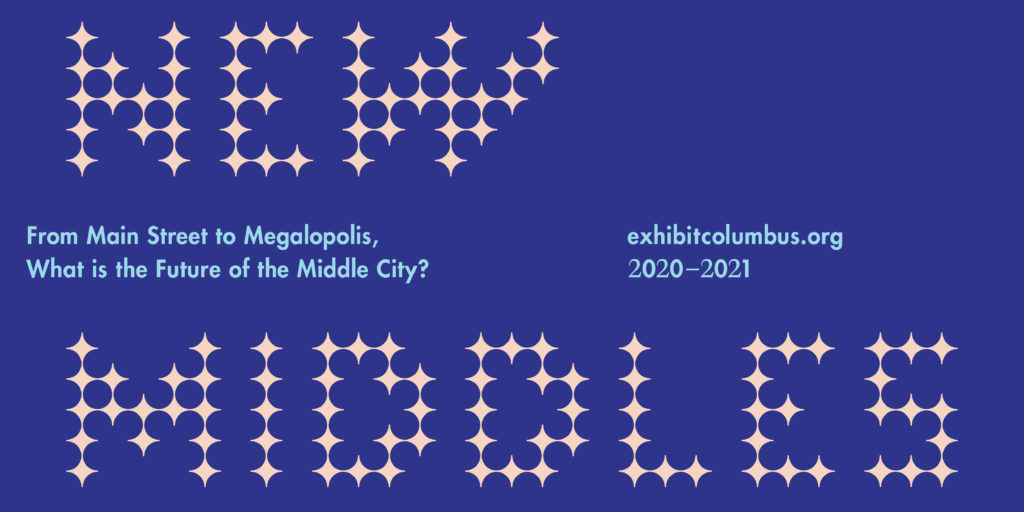
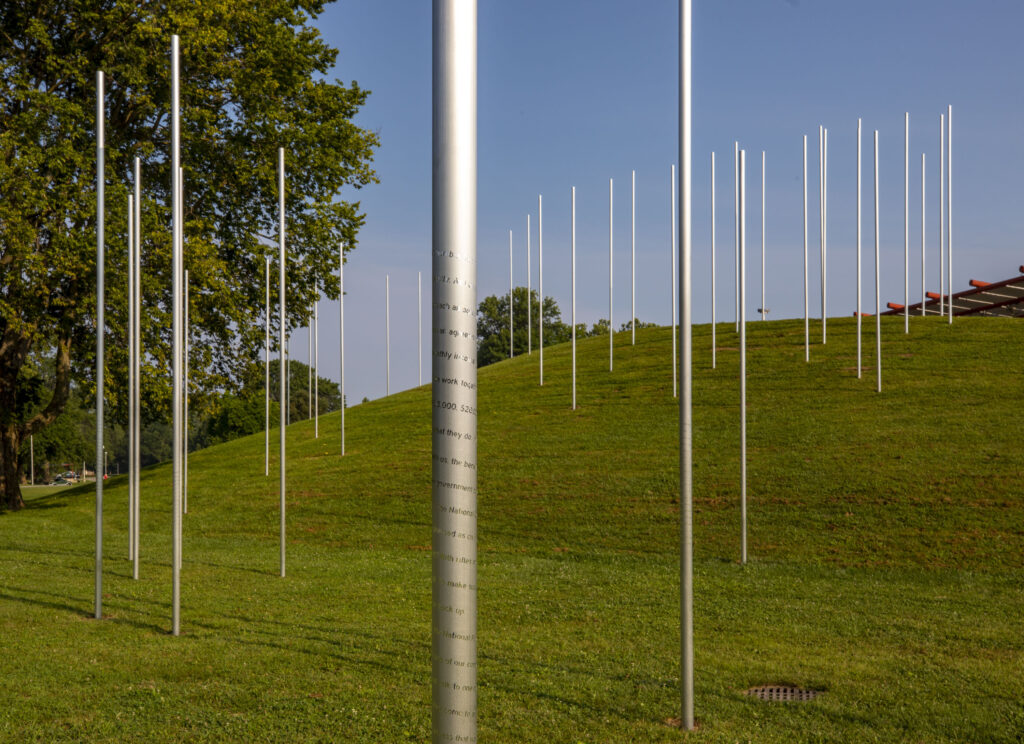
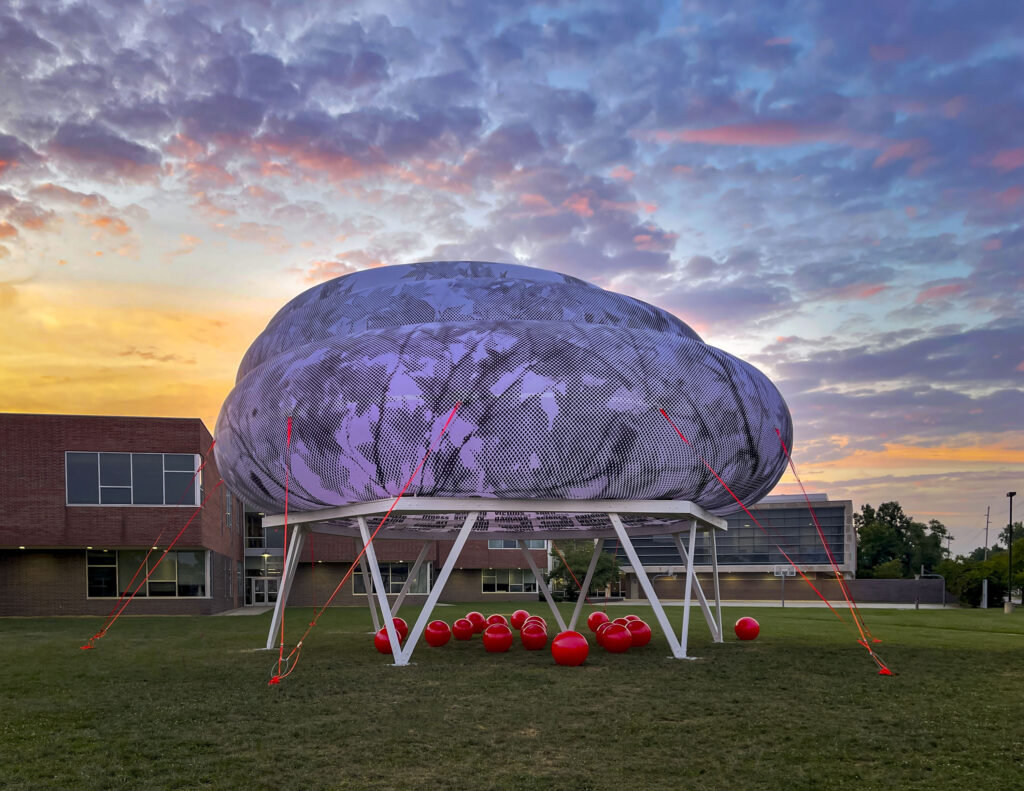
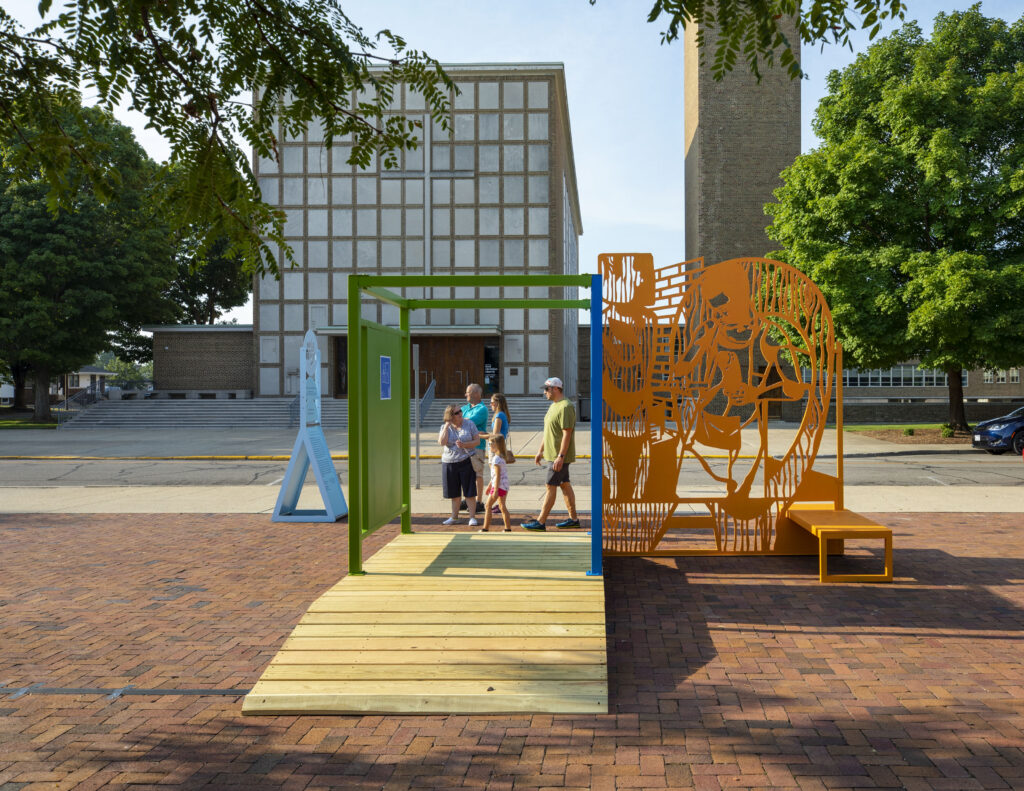
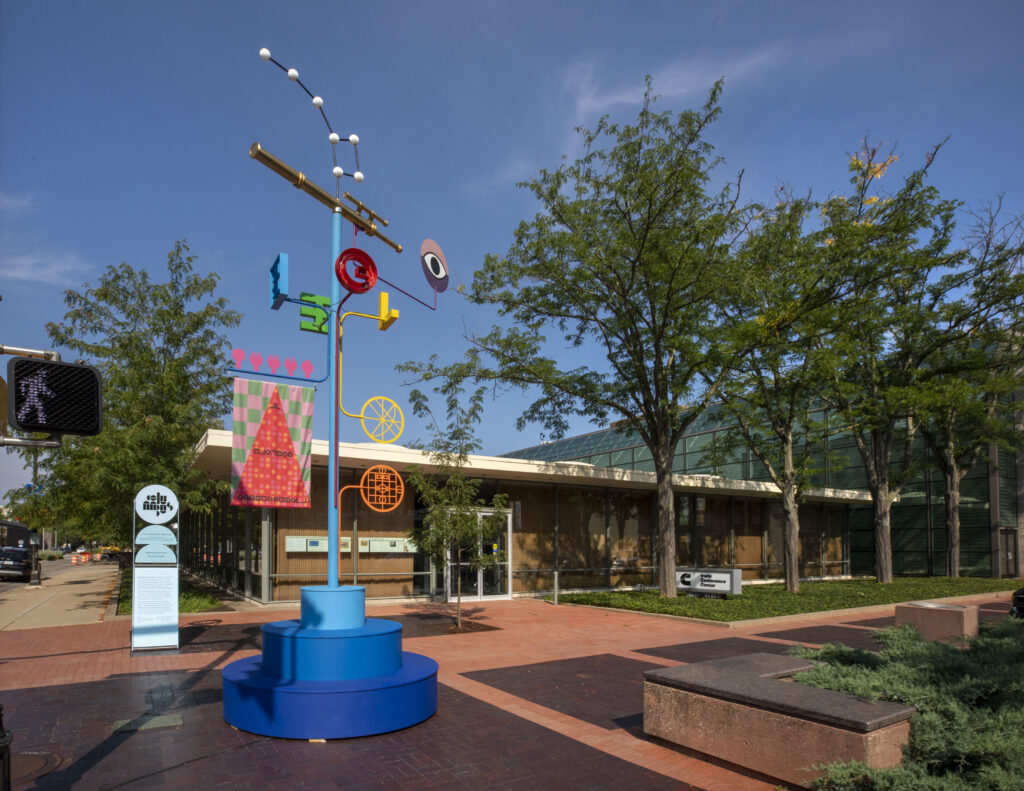
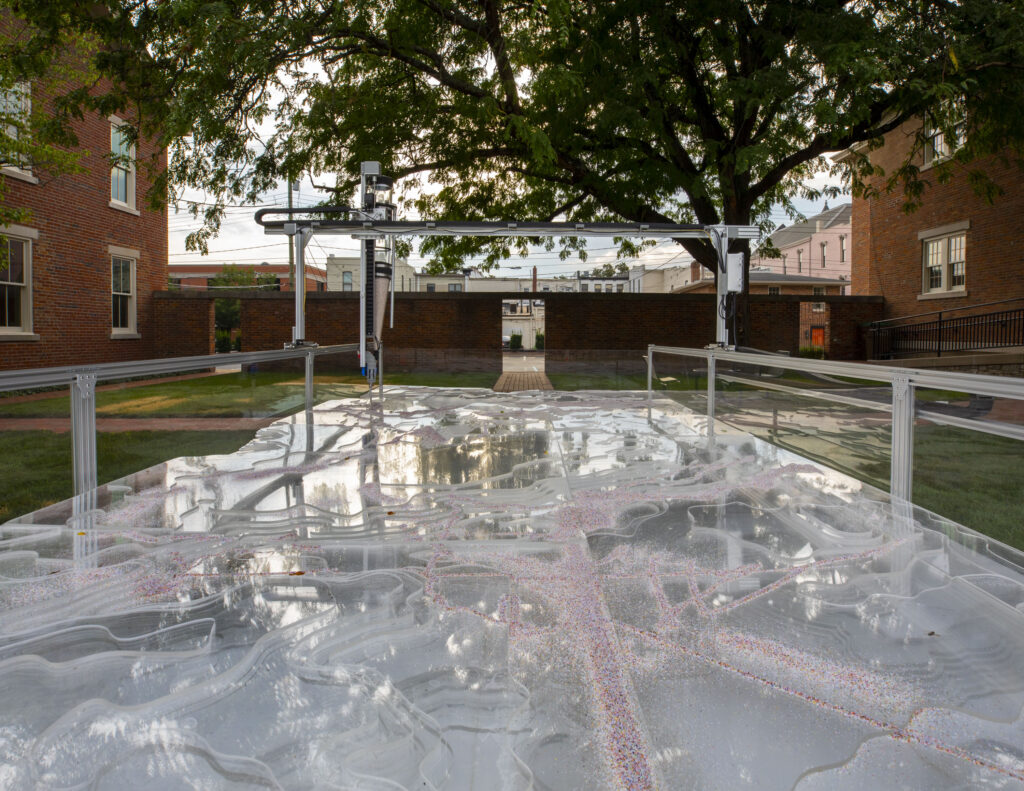
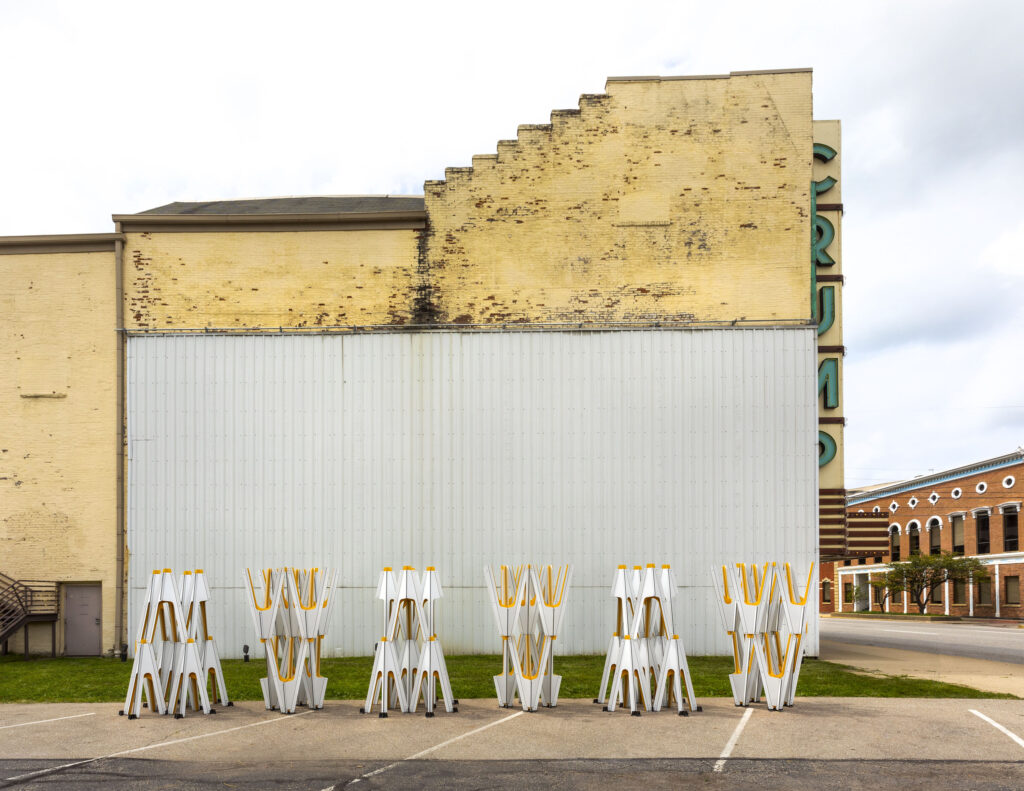
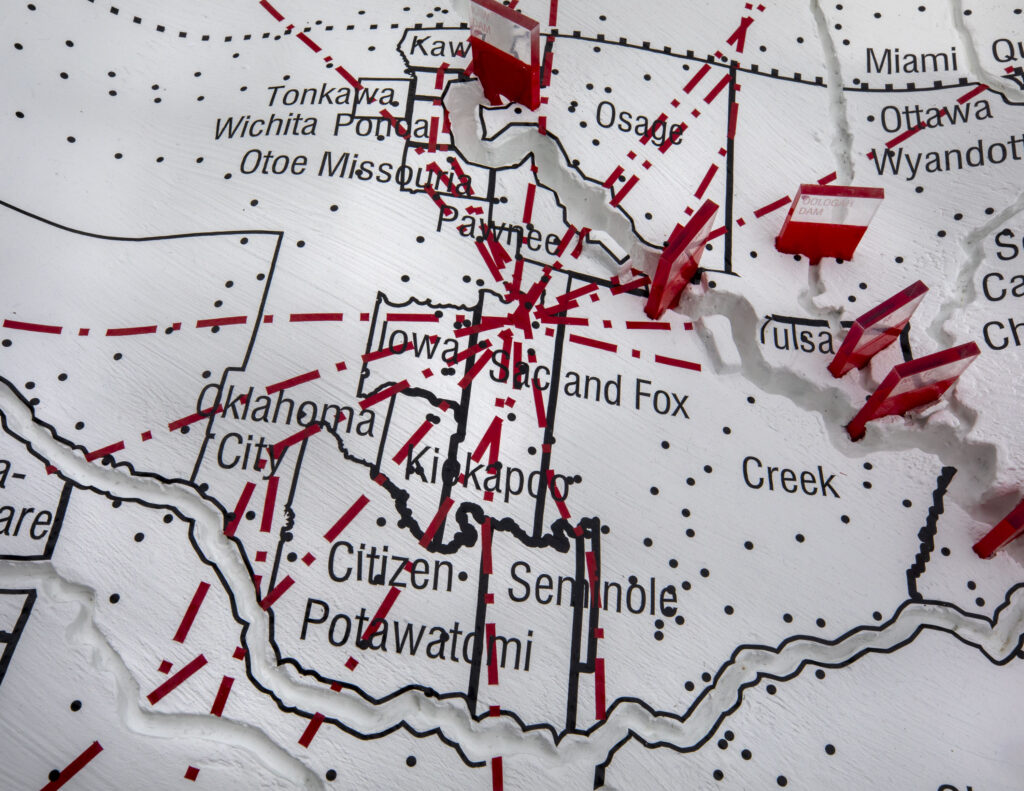
Exhibit Columbus is a two-year exploration of architecture, art, design, and community that activates the design legacy of Columbus, Indiana. It is a feature program of Landmark Columbus Foundation, a non-profit organization dedicated to caring for, celebrating, and advancing the cultural heritage of Columbus.

For the Fall 2021 Exhibition, co-curators Iker Gil and Mimi Zeiger invited exhibition participants to create site-specific, future-oriented installations, which responded to the theme: New Middles: From Main Street to Megalopolis, What is the Future of the Middle City?

Read More …

Nearly a decade in the making, its opening pushed back by the pandemic, M+ finally greeted Hong Kong last week. The billboard-like façade of the 700,000-square-foot art museum, designed by Swiss architects Herzog & de Meuron, lit up the budding skyline of the West Kowloon Cultural District with a wall of 5,664 LED tubes. Blue, red, and green from the institution’s logo made watery stripes in Victoria Harbor. Read More …

It’s difficult to think of a building renovation as a riposte. Acts of conservation are generally considered and well-mannered. Conservative by design. And while the newly refreshed Denver Art Museum illustrates such polite attributes, its updates by Machado Silvetti Associates and Fentress Architects are also a sly rebuttal to the Frederic C. Hamilton Building, Daniel Libeskind’s 2006 addition to the museum campus. After years of being thought of as difficult and inhospitable, Gio Ponti’s Lanny & Sharon Martin Building (formerly known as the North Building) is finally pushing back.

When it opened in 2006, Libeskind’s flashy architecture drew attention away from Ponti’s brooding 1971 edifice. Then, in the heady years of the Bilbao Effect’s gestural and populist expressions, the Italian architect’s design was deemed a citadel. Closed off from the city, a bit musty inside, it was branded a bastion of high art at a moment when museum directors, mayors, and developers preached openness.

Read More …

Genoese architect Renzo Piano would prefer it if you didn’t call the imperial sphere that his firm, Renzo Piano Building Workshop (RPBW), realized for the Academy Museum of Motion Pictures “the Death Star.” Indeed, the Star Warsreference is too on-the-nose for a bulbous structure meant to celebrate Hollywood history. Too self-referential even for an industry that loves a reboot. As if the architecture itself might break the fourth wall and mug for the camera, begging to be blown to smithereens in next year’s biggest blockbuster.

“Call it a dirigible, a zeppelin,” Renzo Piano said correctively to the press ensconced in the plush, red-carpet red, 1,000-seat Geffen Theater, snug in the belly of the monumental vessel (surround sound courtesy of Dolby). Better yet to refer to the 26-million-pound precast concrete, steel, and glass addition to the landmarked May Company building as he does: “a soap bubble.” Read More …

For the Audrey Irmas Pavilion at Wilshire Boulevard Temple, Rabbi Steve Leder, senior rabbi of the Los Angeles synagogue, commissioned Rem Koolhaas and Shohei Shigematsu to design a mezuzah to grace the doorways of the new 55,000-square-foot building, a cockeyed honeycomb caught between the historic temple and Brutalist St. Basil Church. As this was OMA’s first religious structure and first mezuzah, neither architect was particularly familiar with the ritual object: a reliclike enclosure for a small scroll inscribed with a prayer. They set about fabricating a design from colored resin and aluminum foam, a material familiar to the office and used to great effect at Fondazione Prada in Milan. Read More …

For the Fall 2021 Exhibition, co-curators Iker Gil and Mimi Zeiger have invited exhibition participants to create site-specific, future-oriented installations, which will be developed over the coming year in response to the theme: New Middles:From Main Street to Megalopolis, What is the Future of the Middle City?

This 2020–2021 cycle of programming explores the future of the center of the United States and the regions connected by the Mississippi Watershed. New Middles speculates on the heartland, an ecology stretching beyond political borders—from North to South—from the Canadian Border to the Gulf, and from East to West—from Appalachia to the plains. Embracing a long timeline of cities past, present, and future, New Middles builds upon Columbus’ legacy as a laboratory for design as civic investment. In a moment when we most need reflection, creativity, and innovation to envision new ways of being, New Middlesconsiders Columbus a place to destabilize assumptions, and imagine new architectures and landscapes as a way to positively move our cities forward.

Read More …