Apple may have acquired Beats Music and Beats Electronics in May, but the new Beats by Dre headquarters in Culver City couldn’t be farther from the all-white aesthetic favored by Jonathan Ive and Steve Jobs or Norman Foster’s spaceship-in-the-garden landing soon in Cupertino. “We come from hip-hop, hardcore punk, and indie rock. Hype Williams to Paul Williams, Robert Mapplethorpe to Robert Kelly. How do you design for that without being cliché?” asks Luke Wood, cofounder of the company with Dr. Dre and Jimmy Iovine. Read More …
On paper, the overhaul of Steve and Colleen Nusinow’s 2,000-square-foot Craftsman-style bungalow in Redondo Beach, California, is a classic empty-nest story: The kids move out, the parents treat themselves to a master suite. But their tale isn’t typical. Like many remodelers, the couple wanted to ditch their cramped bedroom, which faced the street and lacked adequate closet space. In their quest for more room and privacy, the Nusinows turned the house inside out, opening it to the outdoors for entertaining and everyday living. Read More …
Let’s get this bit out of the way: Mexico City is dense, Mexico City is colourful, and Mexico City is a place of contrasts. That is to say, in a haze of pollution you can eat tapas on the roof of a boutique hotel designed by Enrique Norton – or scoff down quesadillas on the street, sheltered by a tarp hung between a fence and a lamp post. The city’s famous outdoor markets sell local crafts and produce alongside imported Chinese sundries. Icons of Mexican modernism are tangled in an urban fabric dating back centuries. For a number of young architects, designers, and curators practicing in its colonias (neighbourhoods), Mexico City is more than clichéd observation; it’s an opportunity to refashion the narrative. Read More …
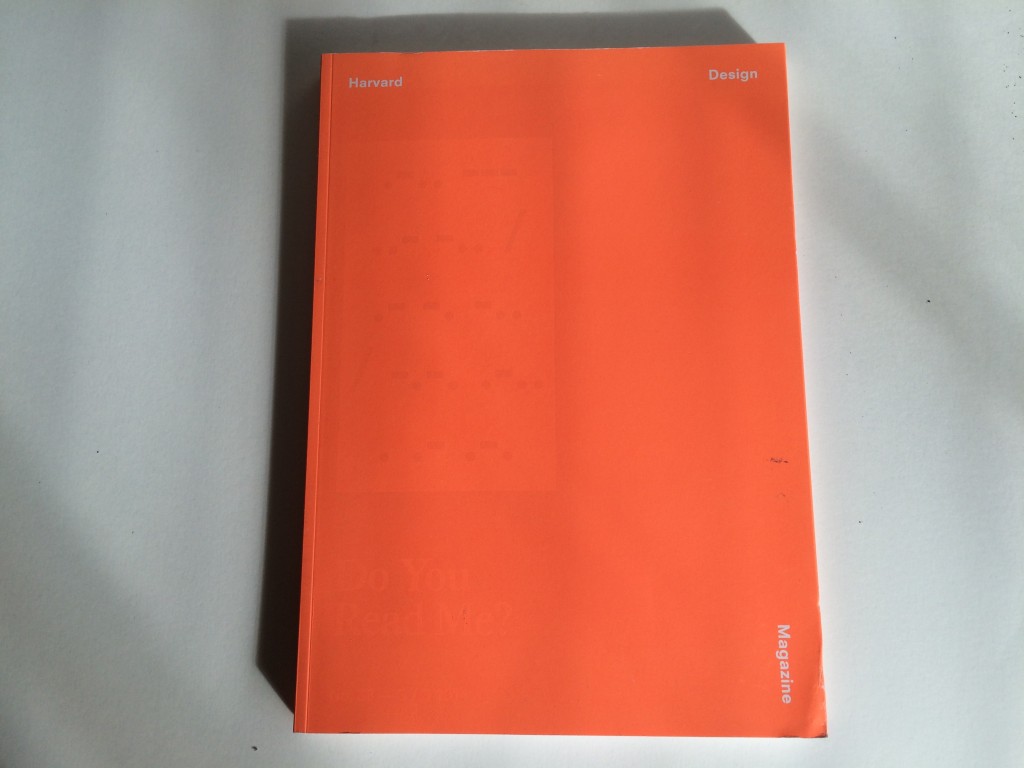
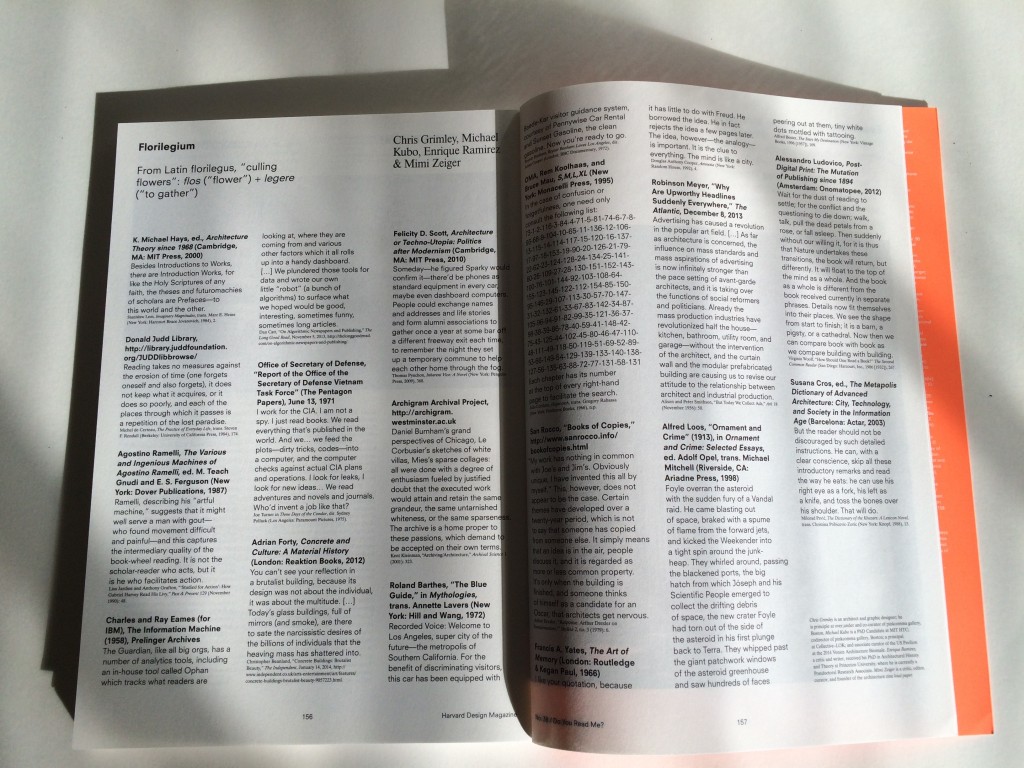
For issue No. 38 “Do you Read Me?”
Collaborators: Michael Kubo, Chris Grimley, Enrique Ramirez, Mimi Zeiger
Can a tote bag emblazoned with a hashtag spark change? Over the course of the Venice Biennale vernissage one of the unspoken fundamentals of the Rem Koolhaas-curated exposition, as with any trade show, was the swag bag, the free cotton or nylon tote offered as a token of solidarity between viewer and exhibitor. Of the hundreds of bags carried on the beleaguered shoulders of Giardini visitors, from national pavilion to national pavilion, one stood out – a plain muslin tote bag with the words #STAYRADICAL printed in black ink. Read More …
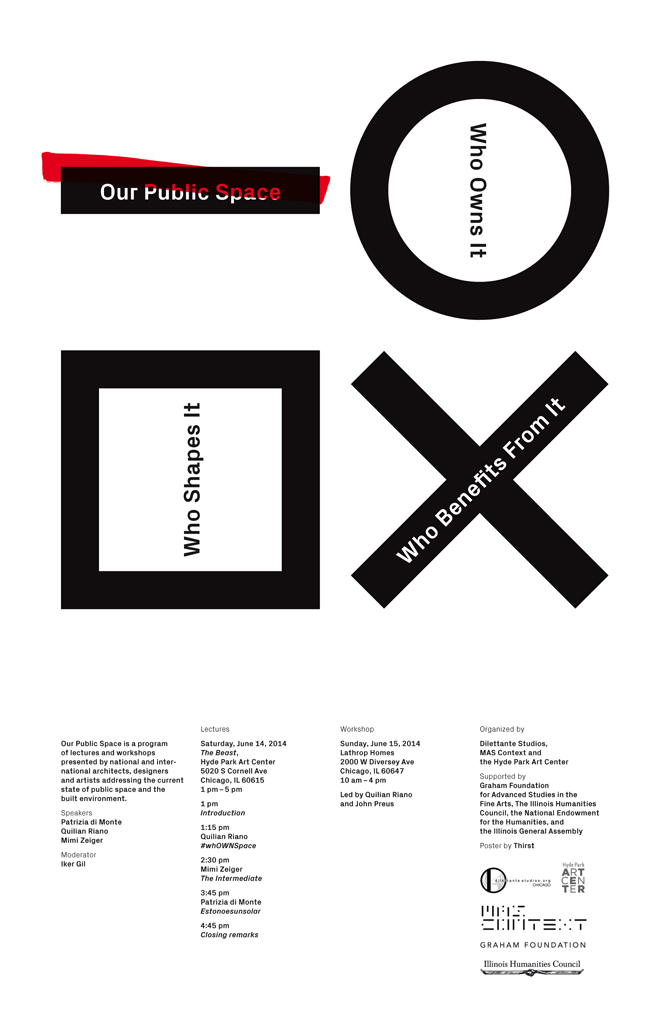
Our Public Space is a two-day program of lectures and a workshop presented by a concise list of national and international architects, designers, and artists addressing the current state of public space and the built environment. This program is organized by Dilettante Studios, MAS Context, and the Hyde Park Art Center and will take place on June 14 and June 15, 2014. With Iker Gil, John Prius, Quilian Riano, Patrizia di Monte, and Mimi Zeiger. Read More …
Rojkind Arquitectos transformed the Liverpool department store on Mexico City’s Avenida de los Insurgentes by wrapping three sides of the building in a 10-foot-deep layer of programmable hexagonal pods.
“Can architecture serve as a way to reconnect parts of the city or enhance human experience?” asks architect Michel Rojkind, founder of Mexico City–based Rojkind Arquitectos. The question is ambitious, even a little outsized, considering that we’ve sat down over coffee to discuss the firm’s remodel of an outpost of Liverpool, a Mexican department store. But Rojkind is sincere and determined to create designs that give back to the community.
Arch. Dome. Vault. The terms are relics of architectural history, but in Southern California they are also the building blocks of suburbia, where Mission-style McMansions flaunt endless stucco arches and vaulted foyers. Principals Sharon Johnston, AIA, and Mark Lee of Los Angeles–based Johnston Marklee, however, have updated the archaic and used vaults to rethink a beach house in Oxnard, Calif., just north of Malibu. Read More …
You can hear the “bwak, bwak” of chickens as dusk falls on Camino Verde, an informal settlement that sprawls over the hillside of south Tijuana. Down the slope, a group of
men tinker with busted trucks. The neighborhood is home to 40,000 people. In a city that has become a hub of art and food culture in Mexico, Camino Verde is largely immune to any
revitalization and is still plagued by poverty, crime and drug use. I’m standing on the site of Transborder FarmLab, created by Torolab, an interdisciplinary art collective based in Tijuana. Among the discarded tires, piles of trash and loose dogs, people here are trying to make a life for themselves. The FarmLab lot used to be narco-gang turf. Now, it is home to a bunkerlike cultural facility and terraced soil awaiting plantings.
Download PDF for full article.
A few weeks ago at a conference in Mexico City, architect Elizabeth Diller took the stage of the Teatro Metropolitan and presented a series of projects culled from her firm’s growing oeuvre on the theme of the city. She guided the audience gathered in the faded splendour of the vast auditorium through each work — the shrewd Lincoln Center, the precedent-setting The High Line, the upcoming Culture Shed, among others (notably minus the scheme for a supersized MoMA).
Read More …