Mimi Zeiger

Critic, editor, curator and instigator.

Art Center College of Design / Media Design Practices
Curators: Tim Durfee and Mimi Zeiger

2015 Bi-City Biennale of Urbanism\Architecture: Re-Living The City
Former Dacheng Flour Factory & 8# Warehouse, Shenzhen

Winner of UABB Bronze Dragon award.

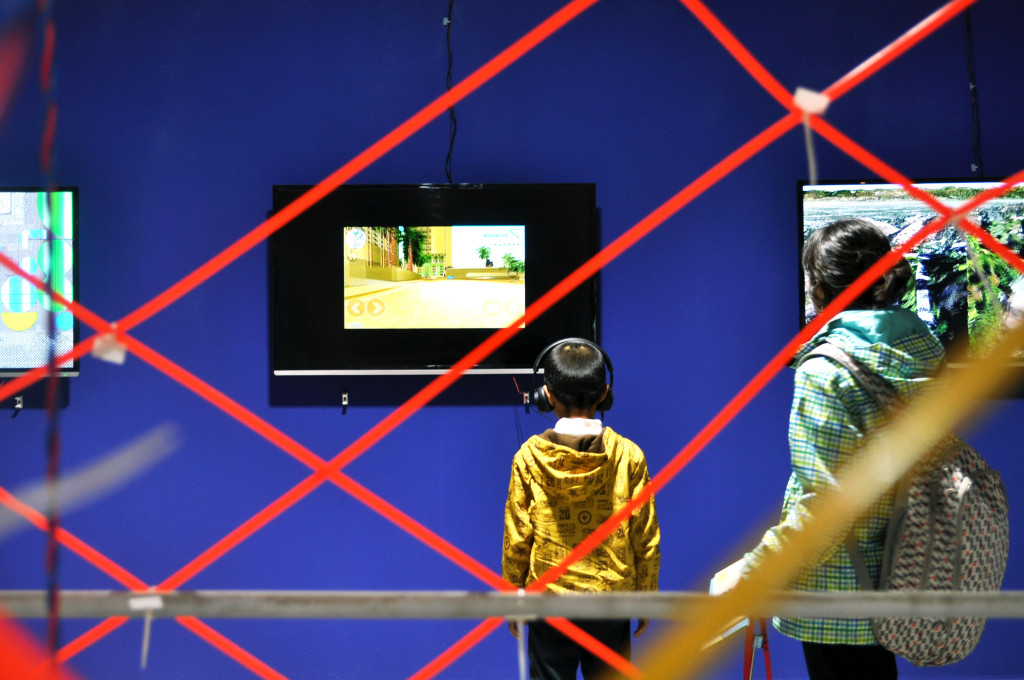
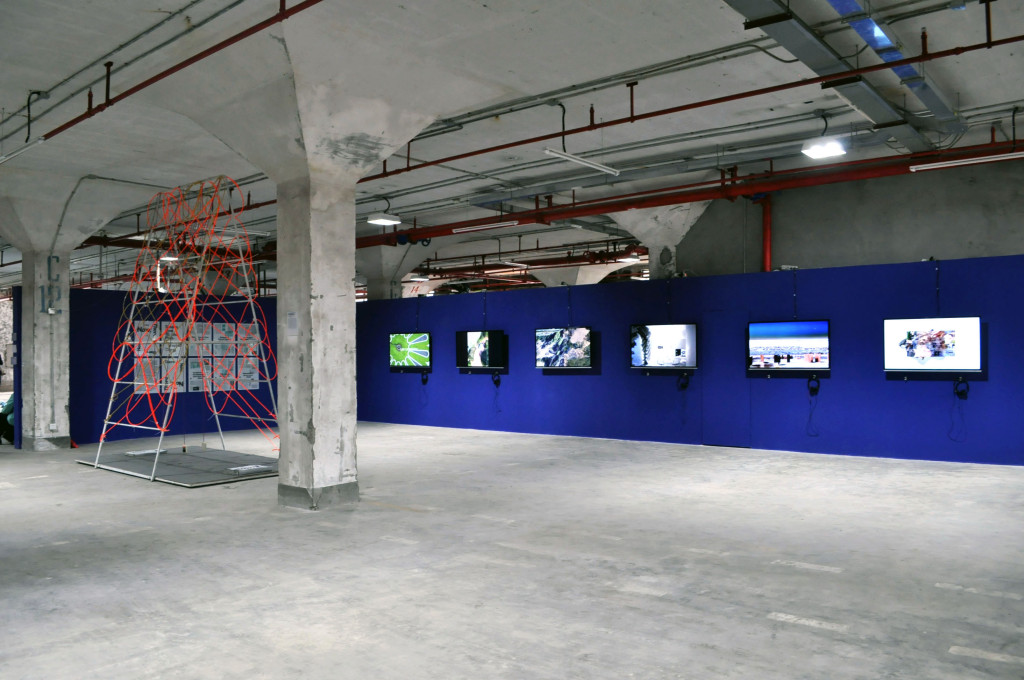
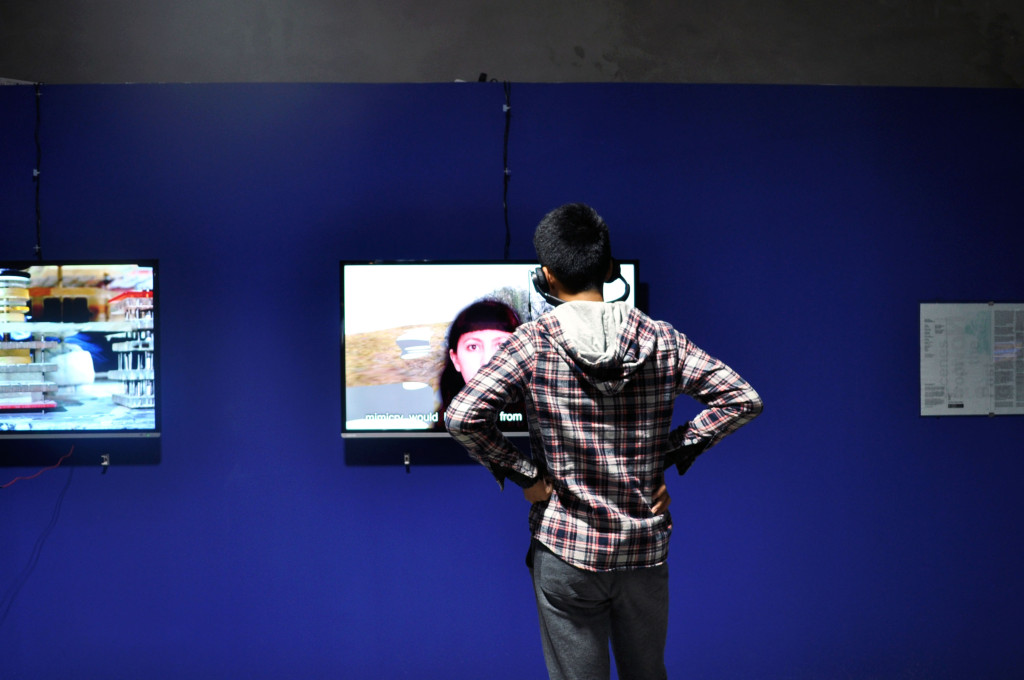
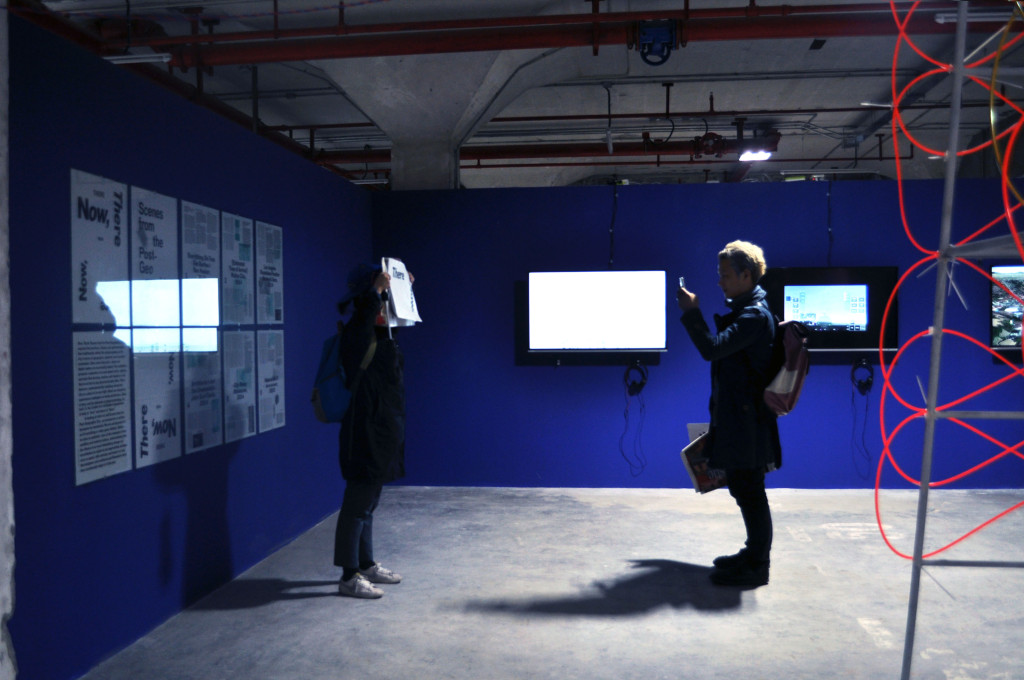
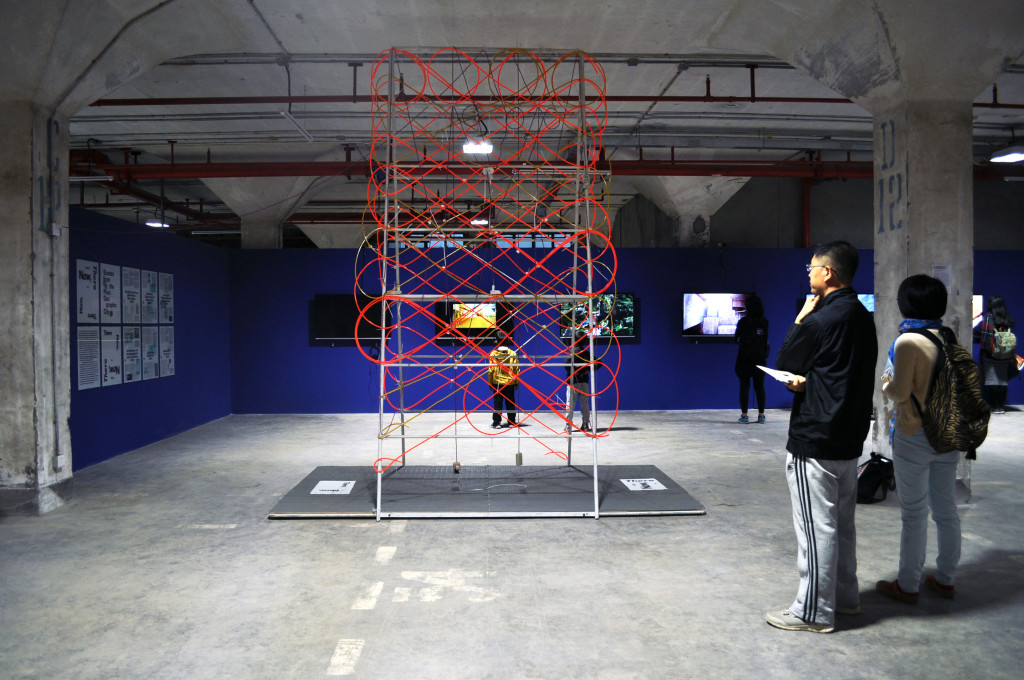
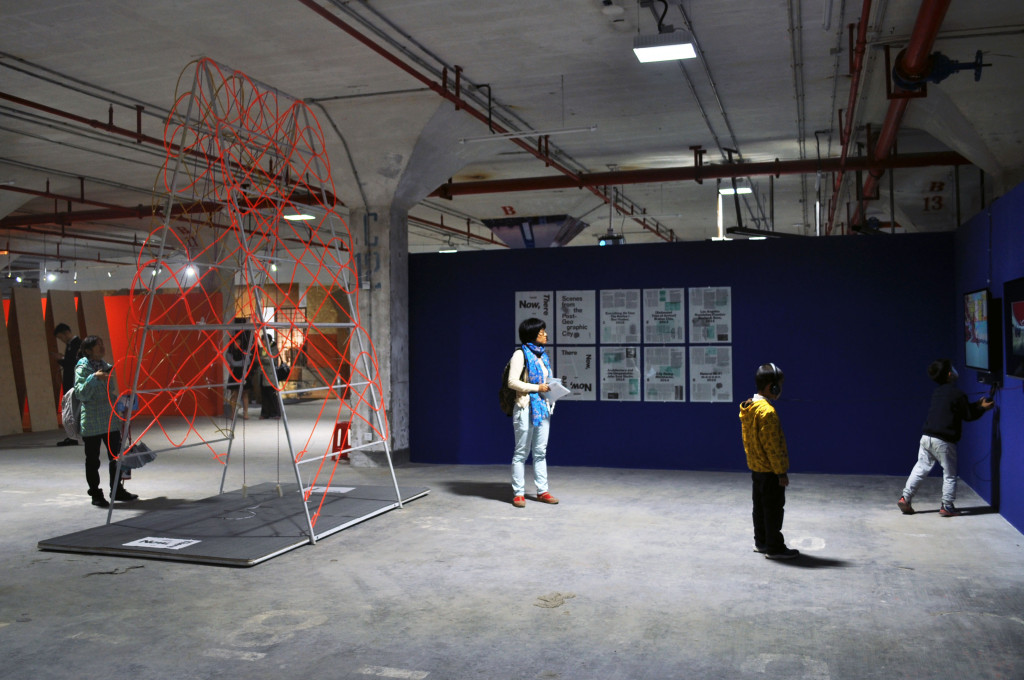
Now, There: Scenes from the Post-Geographic City unpacks the practices, rituals, and epistemologies that traditionally delimit the understanding of the city in terms of geographic, material, and economic parameters. Now, more than ever, urban and digital realms are inextricably linked. This exhibition presents a selection of screen-based works, objects, and texts that develop, explore, and visualize a city that is not tied to any physical locality. Now, There, however, understands this resulting networked city a place in its own right, albeit one shaped by experiences contingent on media and devices, flows of data, and the demands of global technology. As such, it too is open to a retroactive assessment of what is now and where is there.

Read More …

To celebrate the closing of the exhibition “Shelter” at the Architecture + Design Museum, on curators Sam Lubell and Danielle Rago hosted two panel discussions with the featured architects, focusing on the sites that serve as the exhibition’s organizing principles: the Metro subway extension in front of the Los Angeles County Museum of Art, and the stretch of the LA River running through the city proper. Both sites embody much of what is affecting Los Angeles’ changing urbanism – ongoing drought, invigorated public transportation, gentrification, and increasing density.

Mimi Zeiger, West Coast Editor of The Architect’s Newspaper moderated the panel on the River, with Jimenez Lai (Bureau Spectacular), Elizabeth Timme (LA-Más), and Lorcan O’Herlihy (Lorcan O’Herlihy Architects), and Amelia Taylor-Hochberg moderated the panel on Metro, with Jennifer Marmon (PAR), Bob Dornberger (wHY), and Priscilla Fraser (senior architect at LACMA).

Archinect Sessions, featuring a live recording of the closing panel discussion.

The Arsenal of Exclusion & Inclusion (Actar, 2015) is a forthcoming encyclopedia of tools—or what we call “weapons”—used by architects, planners, policy-makers, developers, real estate brokers, ac/vists, and other urban actors in the United States use to restrict or increase access to urban space. The Arsenal of Exclusion & Inclusion inventories these weapons, examines how they have been used, and speculates about how they might be deployed (or re/red) to make more open ci/es in which more people feel welcome in more spaces, be they “exclusive” communi/es with good schools, good jobs, and stable property values, or the everyday public spaces—the parks, sidewalks, and street corners— within those communi/es.

In this session, we will look examine a handful of weapons of exclusion opera/ng in contemporary Los Angeles, from superfluous curb cuts that prevent people from parking near the beach, to fake “parks” built to evict sex offenders from their homes (California law prohibits sex offenders from living within 2,000 feet of parks or schools), to communicate care facili/es ordinances that outlaw sober-living facili/es homes by outlawing mul/ple lease agreements, to gerrymandering schemes that poli/cally neutralize communi/es and their interests.

Access Wars
Daniel D’Oca, Interboro Partners, Brooklyn, NY

Community Designing Change: Active Methods of Community Engagement to Reshape a More Equitable Built Environment
Theresa Hwang, Woodbury University

Trailblazing Public Space
Therese Kelly, Therese Kelly Design / Los Angeles Urban Rangers

Aesthetics and the People
Mimi Zeiger, Architects Newspaper and Los Angles Forum for Architecture and Urban Design

Tourism for the 99%
Laura Pulido, University of Southern California

There is a letter in a drawer in Chicago’s Graham Foundation library; a sheet of Orange Coast College stationary dated 8 April 1980. The letter is from artist Barbara Kasten to Florence Henri, a photographer (then in her late 80s and living in Paris) who had been contemporary with many avants of early 20th-century Europe: Jean Arp, Man Ray, and László Moholy-Nagy, who she studied under at the Bauhaus. In it, Kasten asks to visit Henri and interview her as part of NEA-funded project to videotape six female photographers who had made “major contributions in the field” – figures whose work was troublingly dropping out of the historical narrative. Read More …

The McMurtry Art & Art History Building opened on the Stanford University campus in early October. The 100,000 square-foot building is the second of three Diller Scofidio + Renfro designs to open on the West Coast. Squeezed between the red carpet opening of The Broad in September and the ribbon cutting for the Berkeley Art Museum early next year, the McMurtry is not a museum, but instead is dedicated to a pair programmatic twins: fine art and art history. Read More …

During the opening days of the Chicago Architectural Biennial, as first the press and then the public (including some irascible architects) filed through the Chicago Cultural Center to see the dozens of projects on view, AN’s Mimi Zeiger sat down with Joseph Grima, co-curator of the inaugural exhibition, to discuss the urgencies of architectural practice. Read More …

Frank Gehry is having what publicists call a “moment”: Frank Gehry, a retrospective at LACMA, opened on September 13Building Art: The Life and Work of Frank Gehry, a biography penned by critic Paul Goldberger, was just published by Knopf; and he’s the 2015 recipient of the J. Paul Getty Award. The only problem is that, as a prolific architect for more than half of his 86 years, he’s moved beyond a moment, or even Warhol’s fifteen minutes. What we’re seeing now is the writing of his legacy and the prodigious desire for the archetypal architect to steer his firm, Gehry Partners, into a future beyond his signature. That future includes out-of-character projects, such as the study for the L.A. River.

Mimi Zeiger: What does it mean to you to have a retrospective of work opening at LACMA, an institution you’ve worked with for so many years? This new show is a far cry from renting furniture for a show you designed for Billy Al Bengston in 1968.

Frank Gehry: I have a problem looking back. I love working with [LACMA senior curator Stephanie Barron], on shows, but I couldn’t bring myself to work with her on my show.

What do you mean by “I have a problem looking back”?

Well, I think I work forward. I love my projects, but I figure if they’re worth documenting, other people will do it. Does that make sense? Read More …

First published in the exhibition catalogue for Vacancy: Urban Interruption and (Re)generation, edited by curator Neysa Page-Lieberman. (You can download a PDF of the catalogue or order the hard copy through the Glass Curtain Gallery.) Read More …

In May 2015, Mimi Zeiger was named the West Coast Editor of the Architect’s Newspaper. She oversees all content for the West edition of the paper, writing and editing stories and reviews. She also contributes to all national issues and is a feature editor.

For a complete collection of her writings for the blog, click here. For articles in past print editions, click here.

The gesture was more graceful than the act. With one generous flick of the wrist I sent the paperback sailing across the room. The book, The Age of Earthquakes: A Guide to the Extreme Present, is a small volume tri-authored by an intellectual supergroup: novelist and artist Douglas Coupland, international curator Hans Ulrich Obrist, and cultural critic Shumon Basar. In wry deference to its subject, the cover is inked in an oil slick chromo metallic. As Earthquakes arced from the couch to the closet door, which it hit with a thud before dropping to the floor, light reflected off its glistening surface, giving the appearance of a salmon spawning upstream.

(For the record, S,M,L,XL also boasts a silver cover, but I can’t imagine throwing the six-pound tome very far. Earthquakes, by contrast, is lightweight at 7.8 ounces).

When it landed, facedown, pages splayed and pressed against the floor, the half-light of the living room lamps seemed to illuminate a mysterious object. An alien ship crash-landed on oak boards. And so it sat there for a few days. Until my irritation with leaving a book on the floor trumped my irritation with the book itself and I picked it up. Read More …