Mimi Zeiger

Critic, editor, curator and instigator.

Editor: Lilian Pfaff

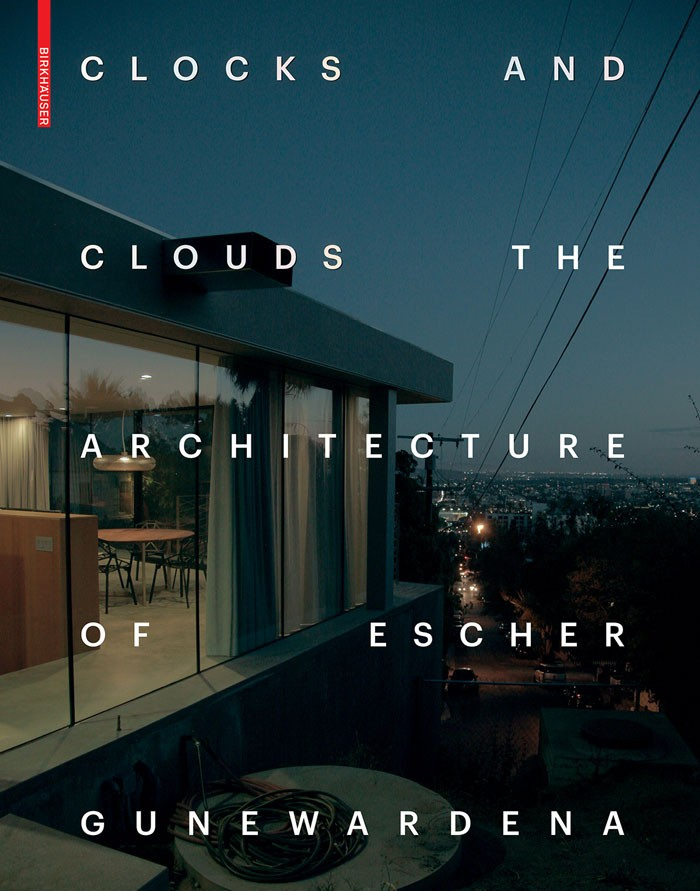
Clocks and Clouds: The Architecture of Escher GuneWardena, a monograph covering about 30 selected projects – unbuilt and completed – spanning a period of 20 years. The work includes, in addition to expected building types of residential, commercial and institutional categories, projects outside of the architects’ usual realm: Escher, an expert on John Lautner (1911-1994), has edited/co-authored two books on this architect and the firm has restored the Chemosphere and the Eames House. Further, stemming from the principals’ interest in contemporary art, the firm has collaborated with artists such as Olafur Eliasson, Sharon Lockhart, Steven Prina, Mike Kelley and others, and has designed spaces for art and museum exhibitions nationally and internationally.

The book will include an introductory text and essays by various writers familiar with their work (Martino Stierli, Barbara Lamprecht, Nicholas Olsberg, Lilian Pfaff, Sabine Eckmann, Mimi Zeiger and Paulette Singley). The essays will convey recurring concepts in the architects’ work ranging from ideas of “order” and “system”, to “accidental form”, and the subtle manipulations that lie between these positions, or what philosopher Karl Raimund Poppers categorizes as “clocks and clouds”: that which can be measured exactly (clocks); and that which has indefinite occurrences (clouds).
Jeffrey Allsbrook and Silvia Kuhle
Introduction: Mimi Zeiger

Through an in-depth exploration of nine projects ranging from retail to residential design, Standard Architecture Design highlights the practice of Los Angeles-based interdisciplinary studio Standard while it deconstructs traditional conceptions of interior and exterior space.

By honing in on the malleability of the storefront and its transformative role across varying sectors of architecture and design, Standard presents an alternative understanding of the facade. The public/private divide becomes permeable, and cultural narratives can be written from the inside out—flowing from fundamental elements like space and light to the contextual meaning of place. In Standard’s world, transitional spaces such as doors, windows and openings come to define and bring meaning to our collective experience of place.

Editors: Rob Berry, Victor Jones, Michael Sweeney, Mimi Zeiger, Chava Danielson, Joe Day, Thurman Grant, Duane McLemore

Design: Still Room Studio

The LA Forum Reader brings together three decades of discursive writings and publications on architecture, urbanism, and Los Angeles culled from the archives of the Los Angeles Forum for Architecture and Urban Design. Published under thematic sections: Experiments, Detours, Hunches, and Santa Anas, with interludes dedicated to Art and Architecture, Downtown, and the long-running LA Forum Newsletter, the collected essays and interviews track an uneven and lesser-known history of experimental architecture, postmodern geographies, and alternative urbanism in L.A. as told by the city’s key designers and thinkers.

Today, Los Angeles is a major architectural and urban player, but for decades the city was dismissed suburban and centerless. In republishing three decades of material on architecture and design in Los Angeles, the LA Forum Reader reclaims and reconsiders the city’s architectural and discursive histories. It establishes, or reestablishes, a textual context for critical experimentation and urban investigation. This anthological volume includes essays, interviews, and reproductions of publications that have long been out of print, including pamphlets by Craig Hodgetts and Margaret Crawford, as well as early writings by Aaron Betsky and John Chase.

Select Press:
Archinect, The LA Forum Reader Traces 30 Years of LA’s Architectural Discourse


Consider this a postcard from “Ugly Valley”. You know this place: it isn’t a downtrodden Catskills resort or the smoky grey Valley of Ashes from The Great Gatsby, which so forbearingly illustrates modernism‘s grim after effects. This is an anti-picturesque spot on the fringes of mainstream taste populated by the detritus of the 20th Century.

Here, Michael Graves’s Portland Building sits alongside Philip Johnson and John Burgee’s AT&T Building. Ugly Valley (just a hill over from Uncanny Valley) is a place bounded by temporality.

Read More …

In recent times, events in the US have raised an awareness of the connections between the built environment and questions of justice, equity and political agency

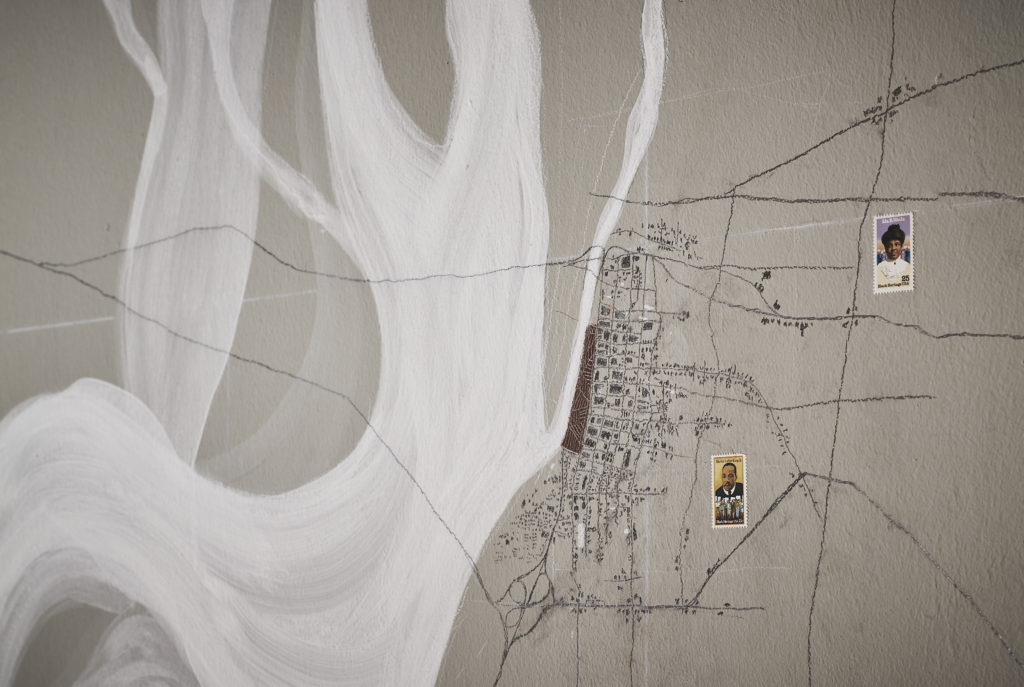
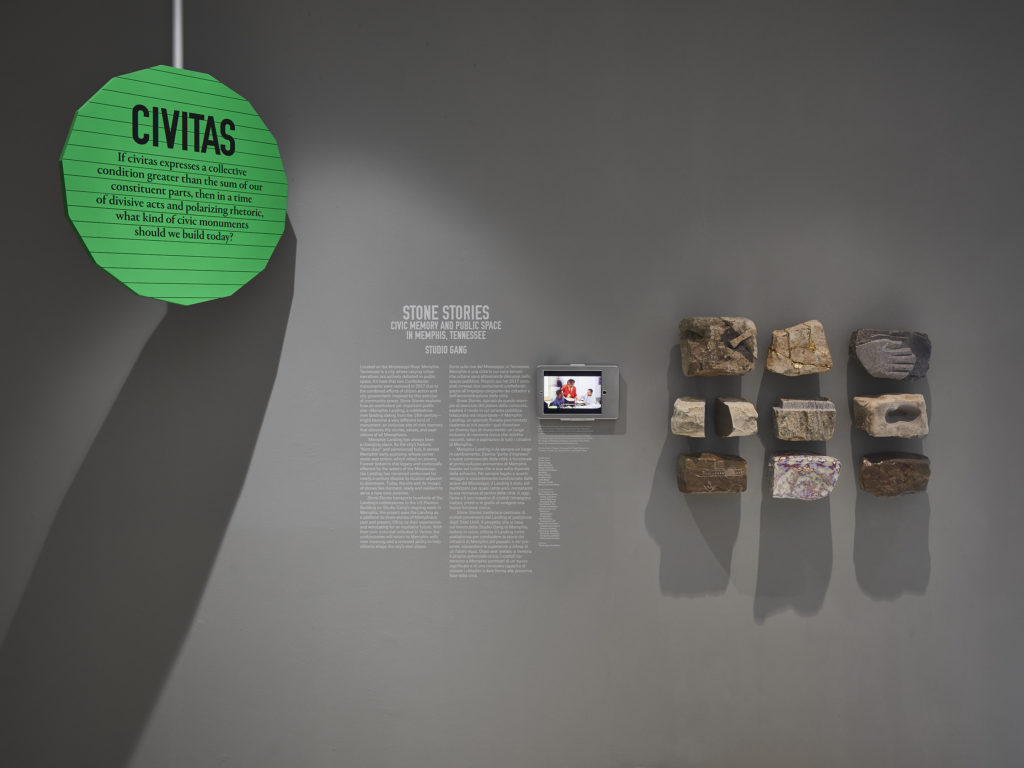
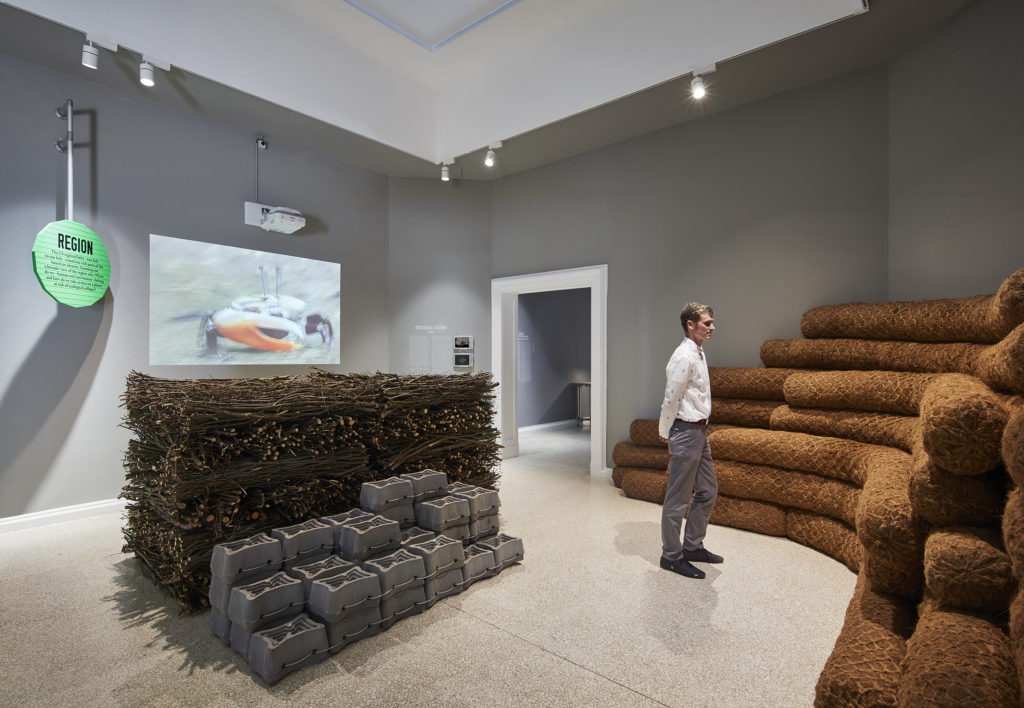
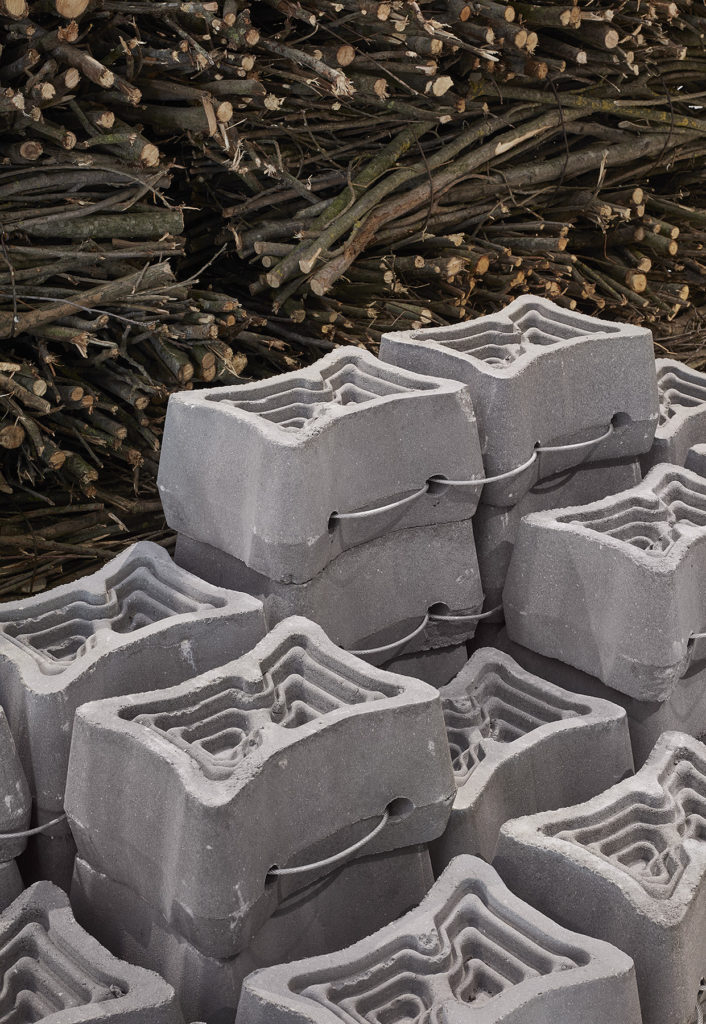
In 2003, architect and critic Michael Sorkin wrote: ‘All architecture is political’. While the intervening decade and a half has shown a certain lassitude in the field of architecture to embrace this position, events in the US over the last few years, from the rise of the Black Lives Matter movement to the 2016 presidential election, provoked a renewed awareness of the connections between the built environment and questions of justice, equity and political agency. Read More …

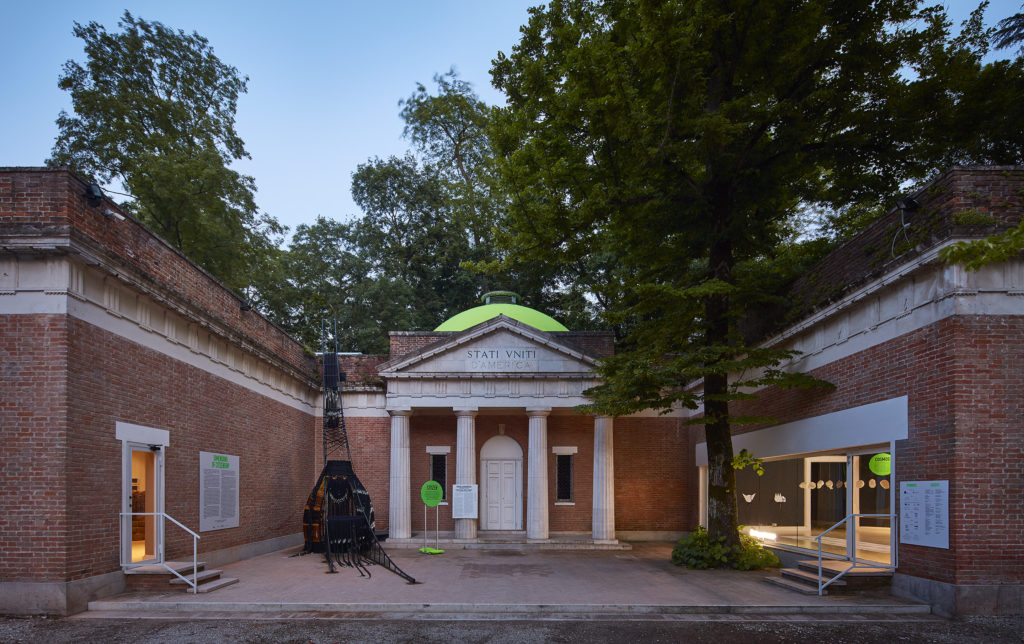
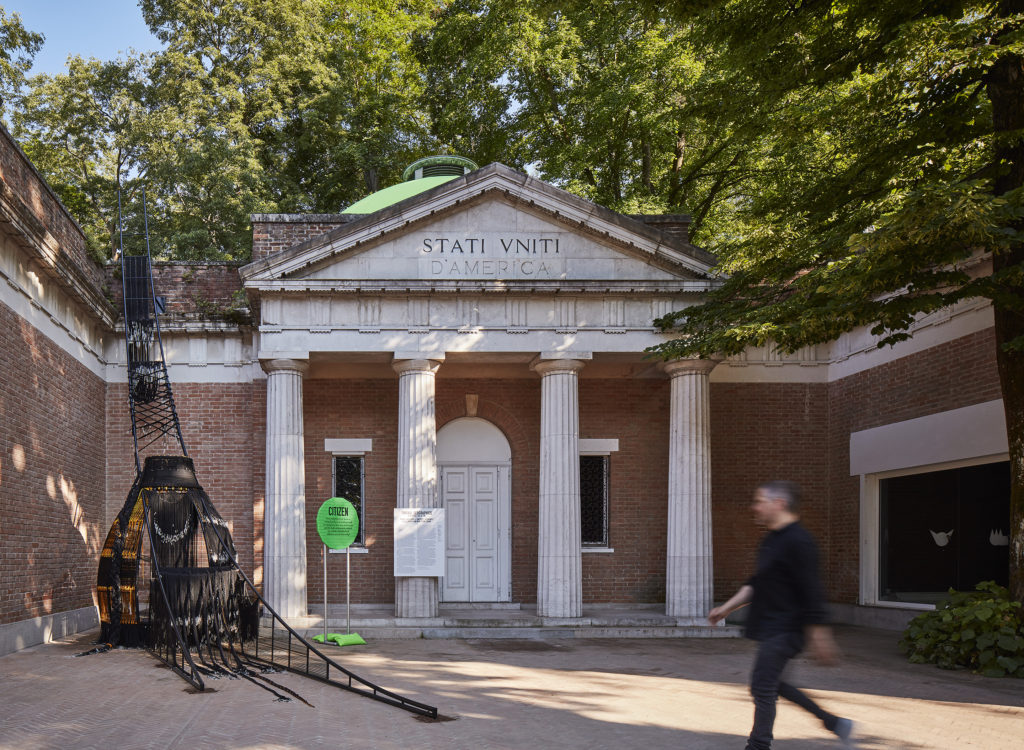
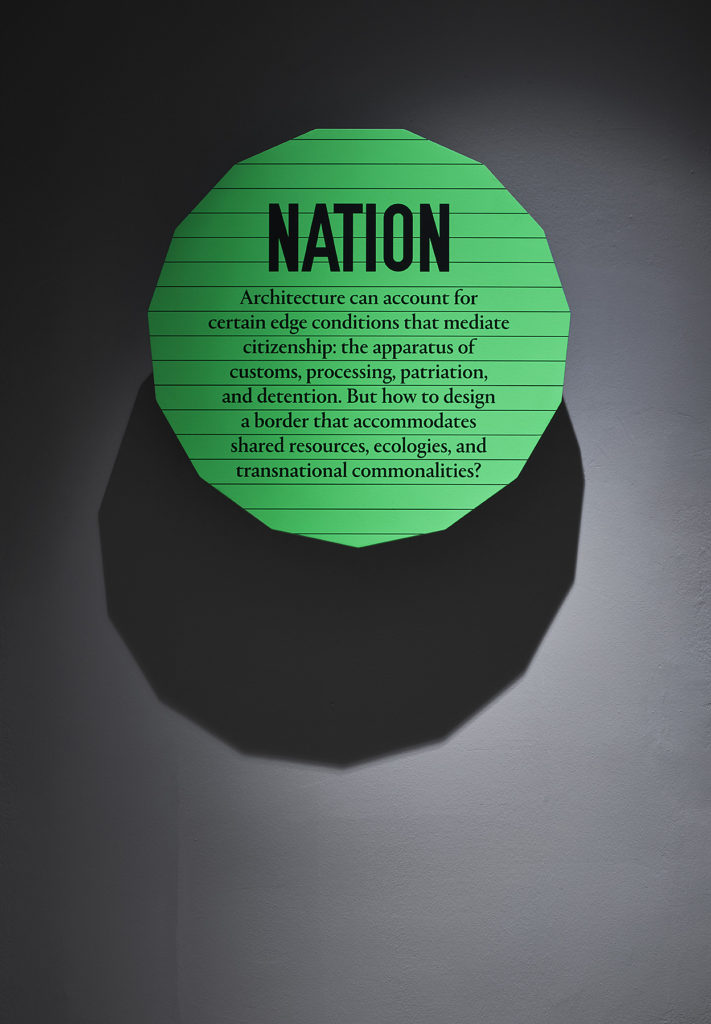
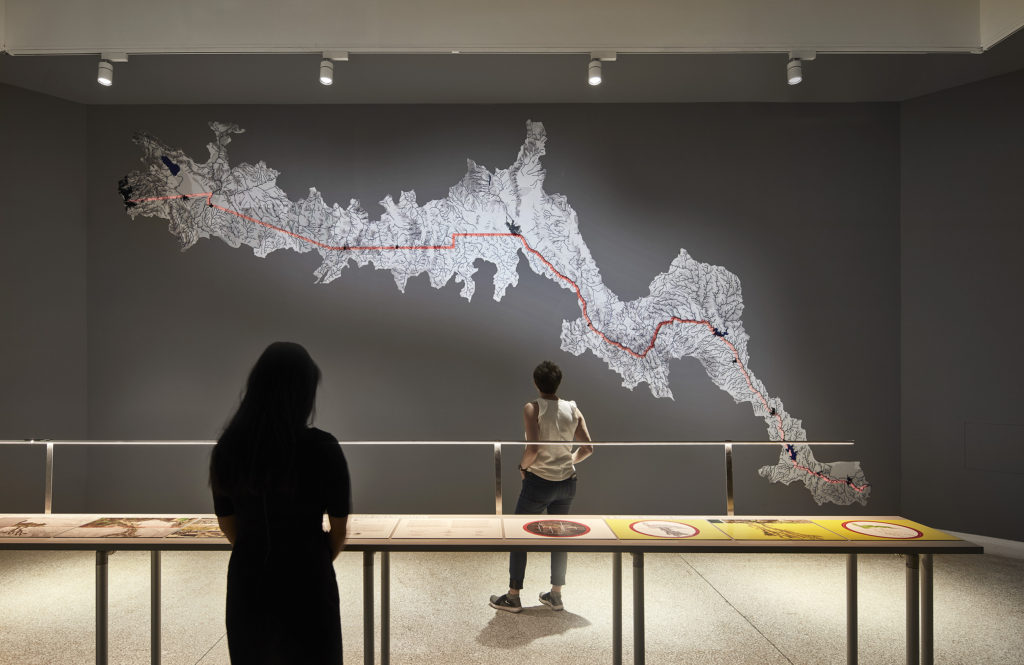
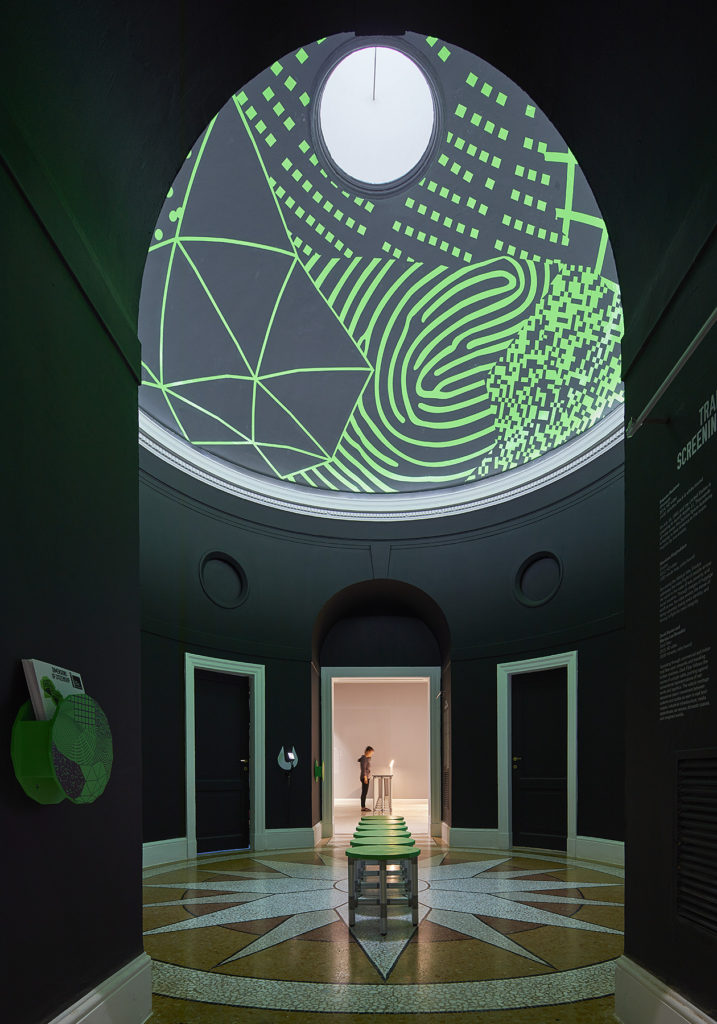
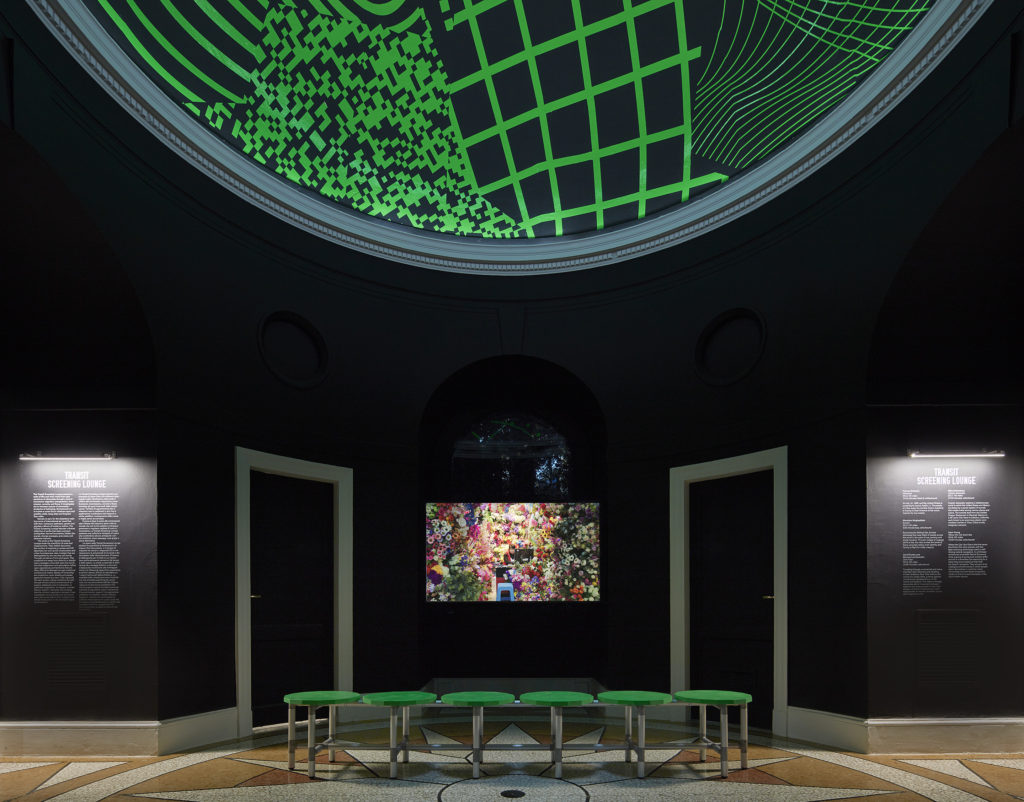
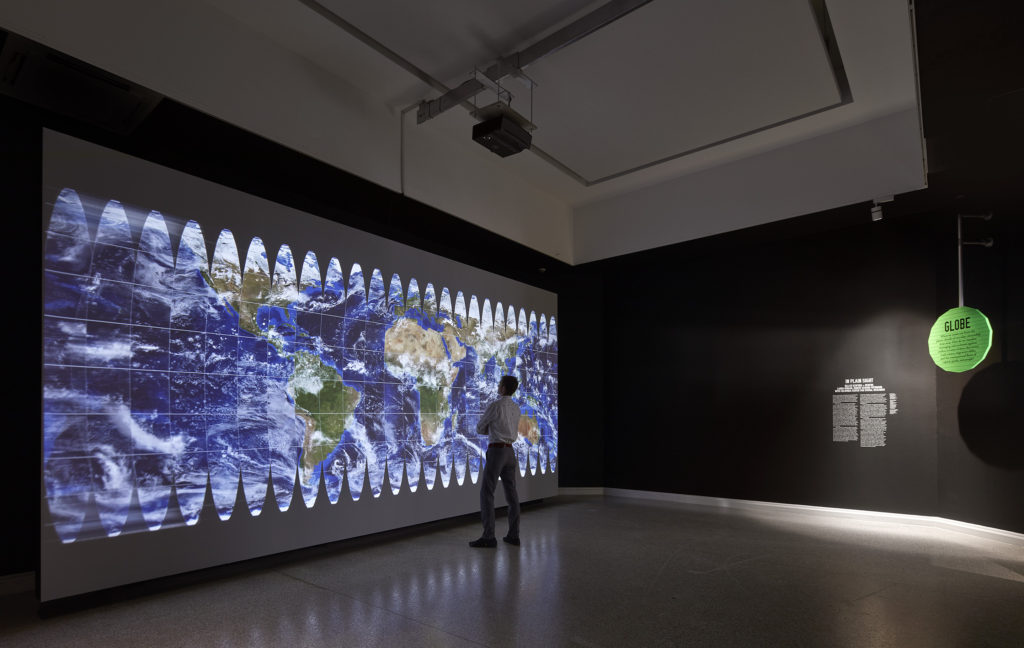
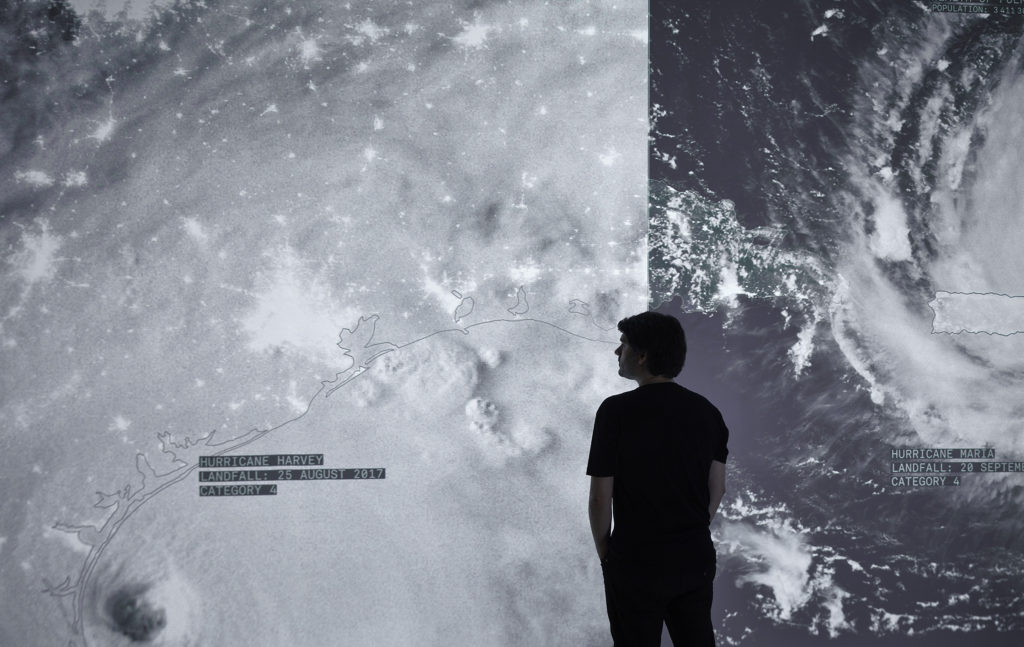
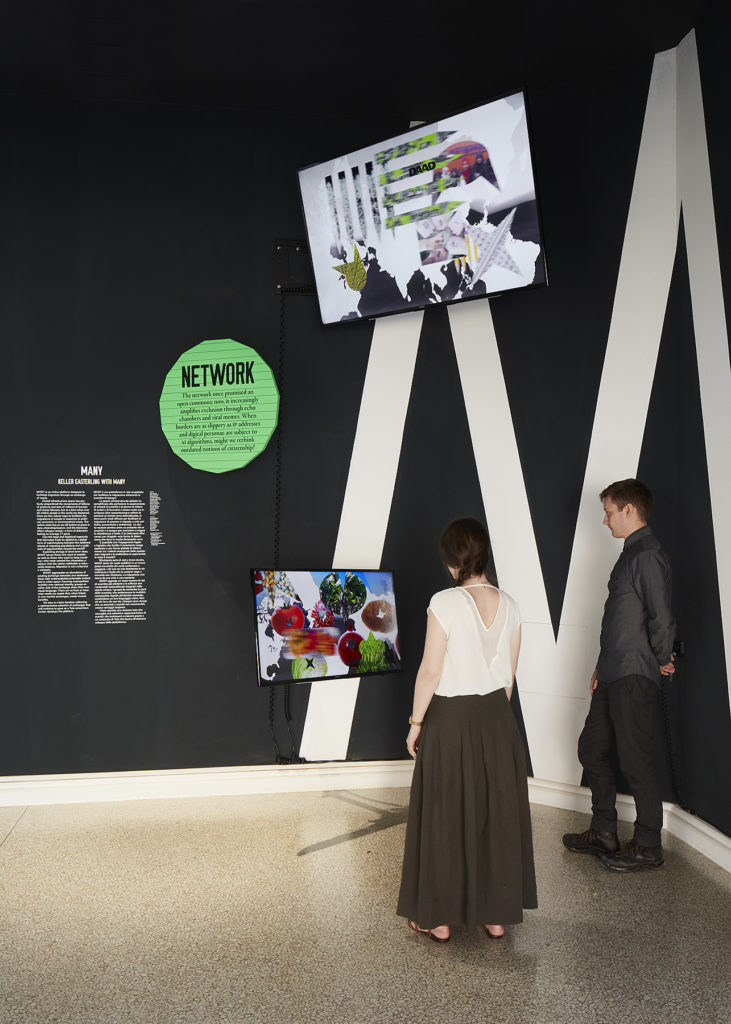
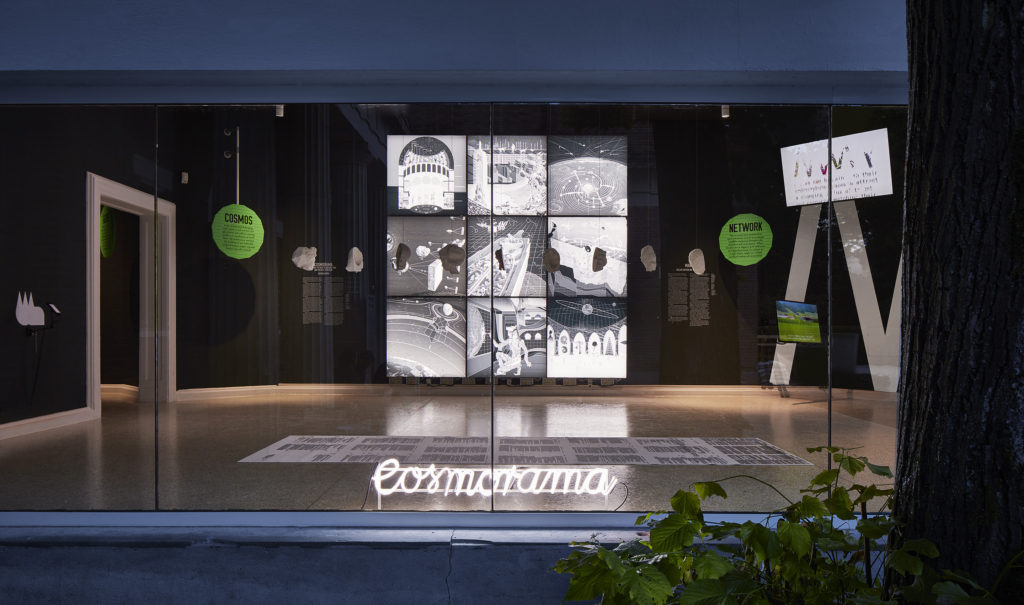
US Pavilion, Venice Architecture Biennale: May 26–November 25, 2018

Wrightwood, Chicago: February 28–April 27, 2019

Curators: Niall Atkinson, Ann Lui, Mimi Zeiger, and Iker Gil

Commissioners: University of Chicago and School of the Art Institute Chicago

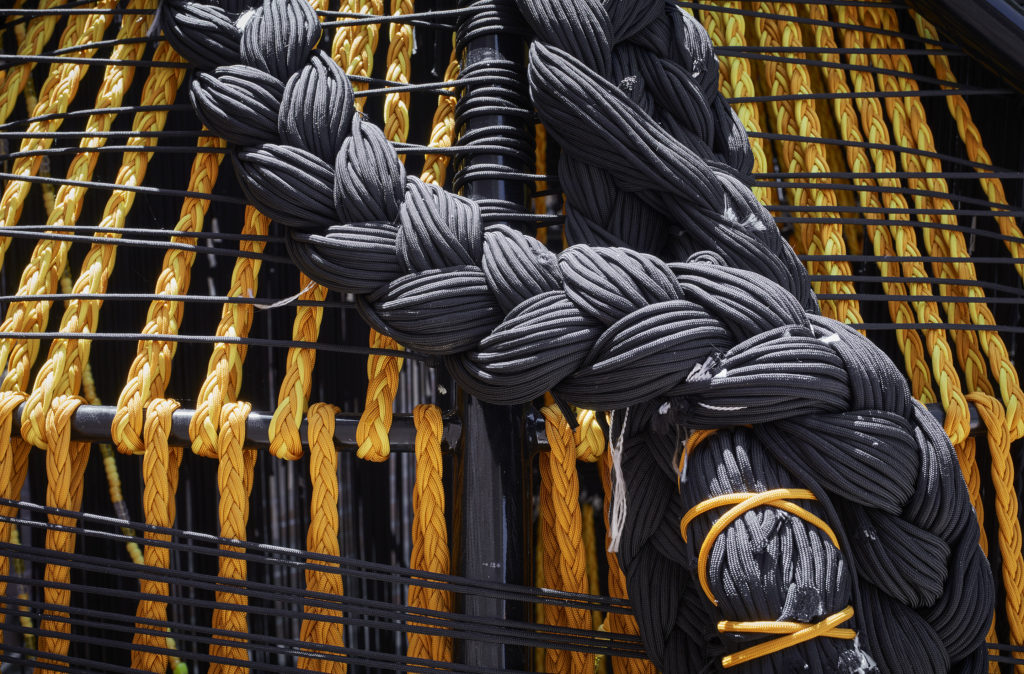
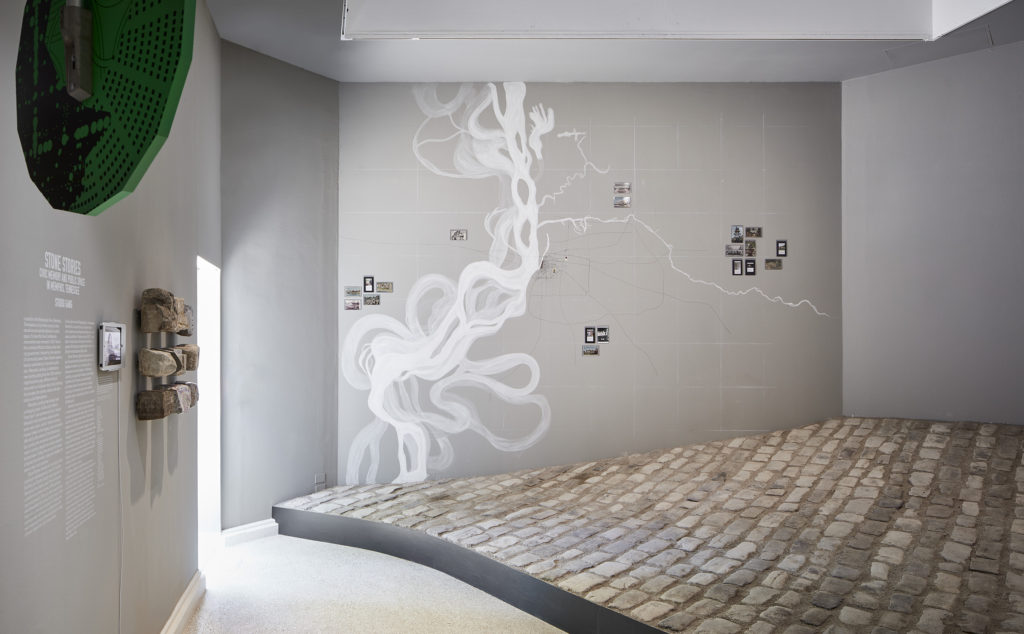
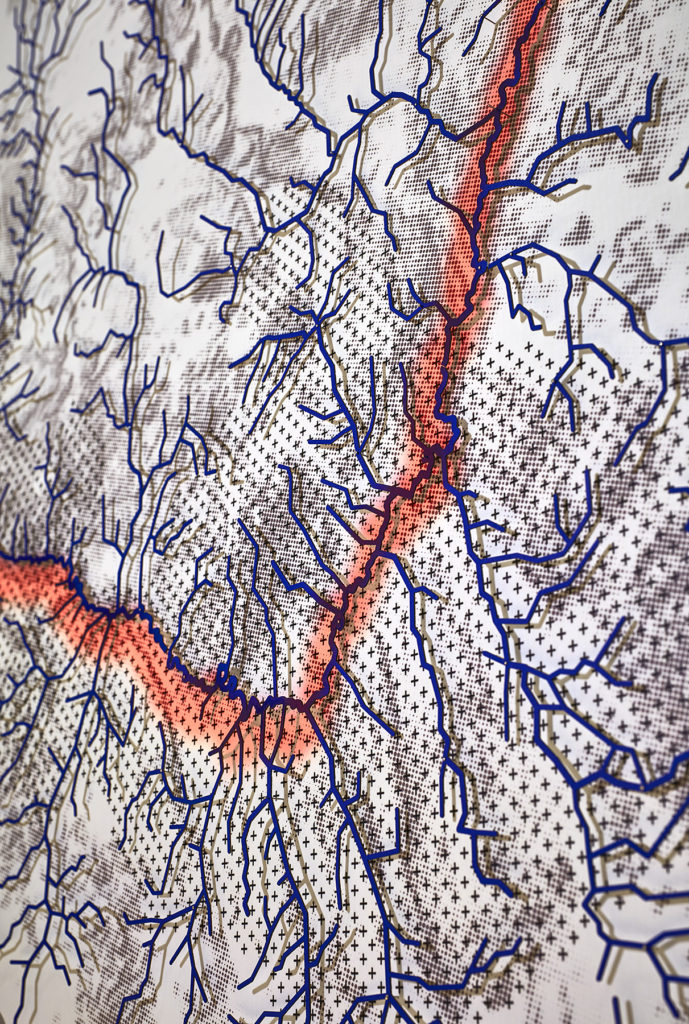
Participants: Amanda Williams + Andres L. Hernandez in collaboration with Shani Crowe, Studio Gang, SCAPE, Estudio Teddy Cruz + Fonna Forman, Diller Scofidio + Renfro, Laura Kurgan, Robert Gerard Pietrusko, with the Columbia Center for Spatial Research, Keller Easterling with MANY, and Design Earth

Films: Frances Bodomo, Mandana Moghaddam, David Rueter and Marissa Lee Benedict, Mika Rottenberg, and Liam Young

Exhibition and graphic design: INFO_CO

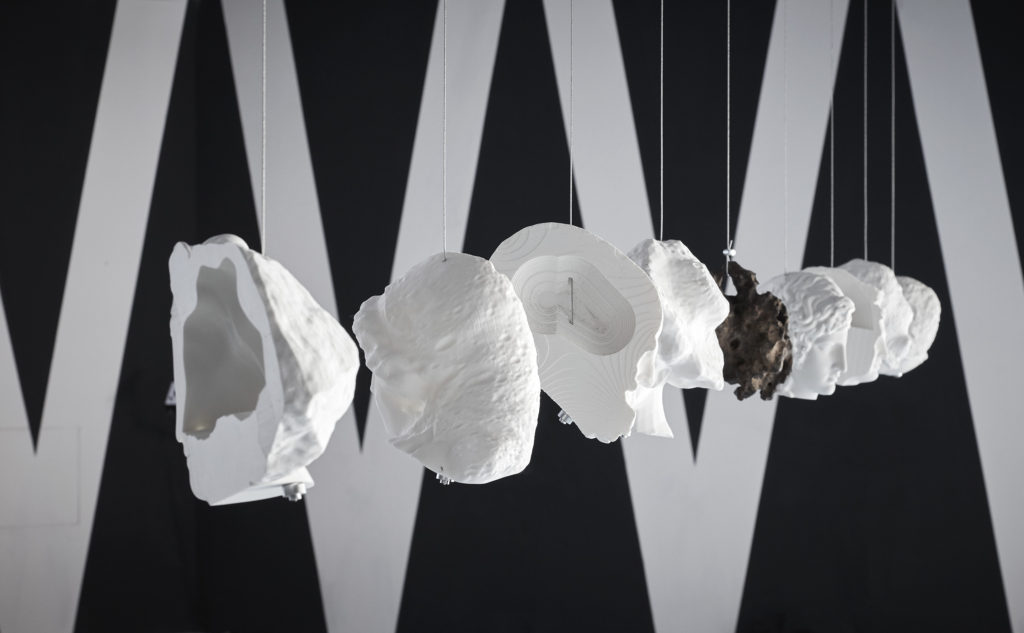
Photos: Tom Harris Read More …

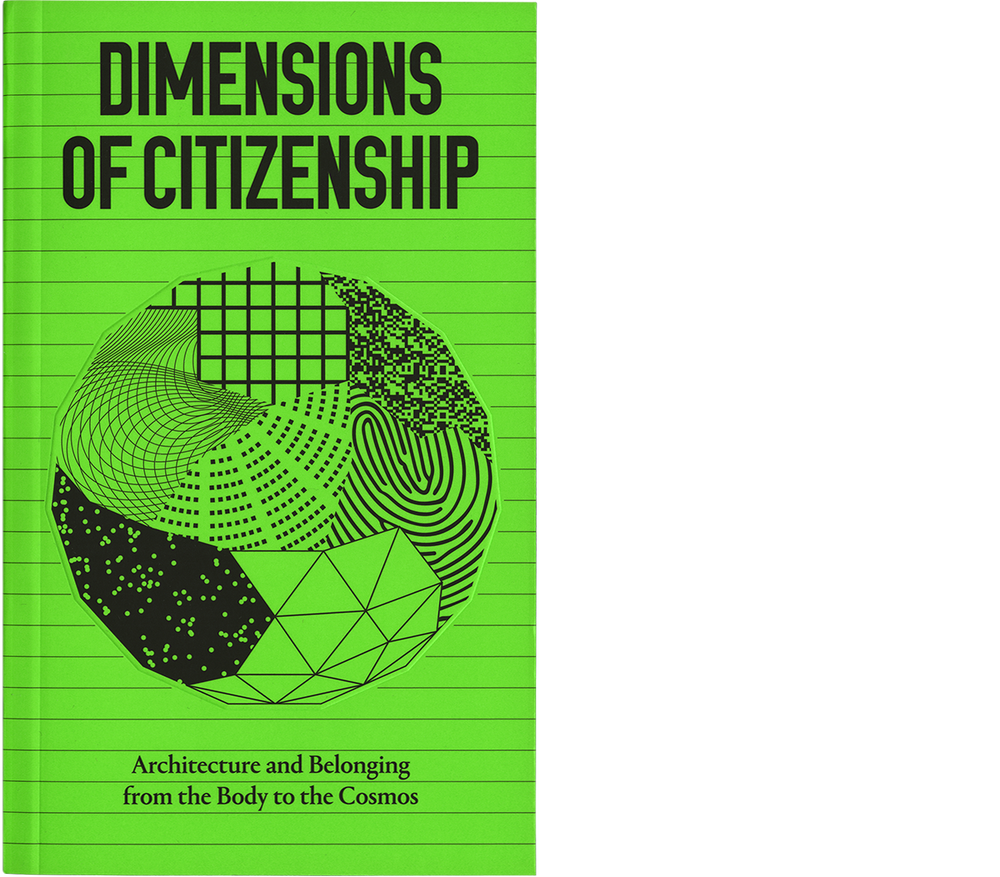
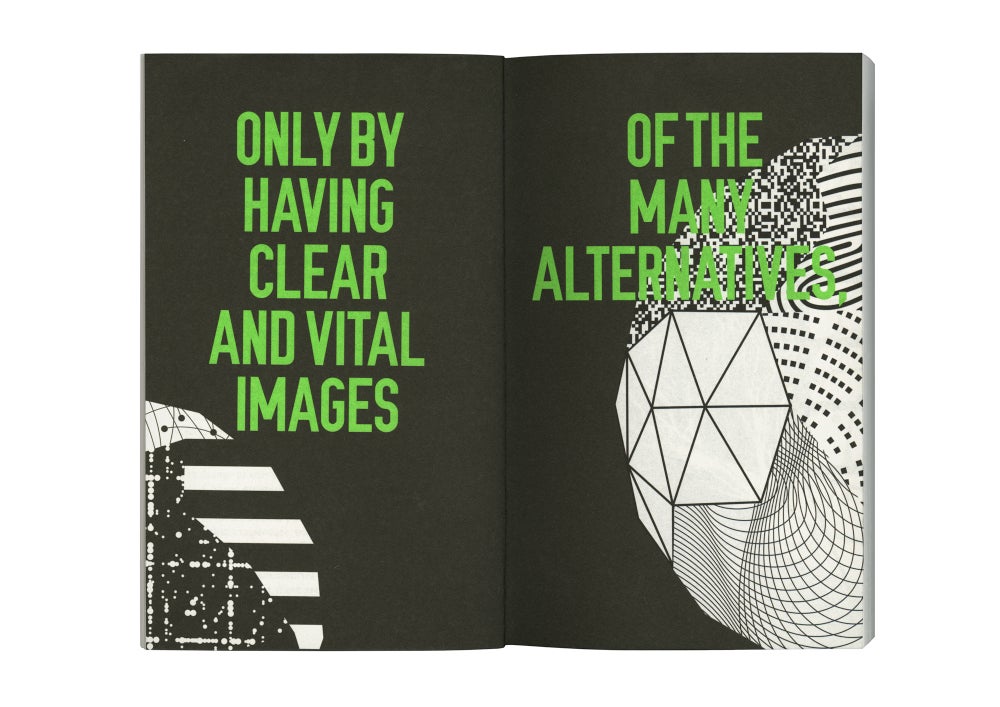
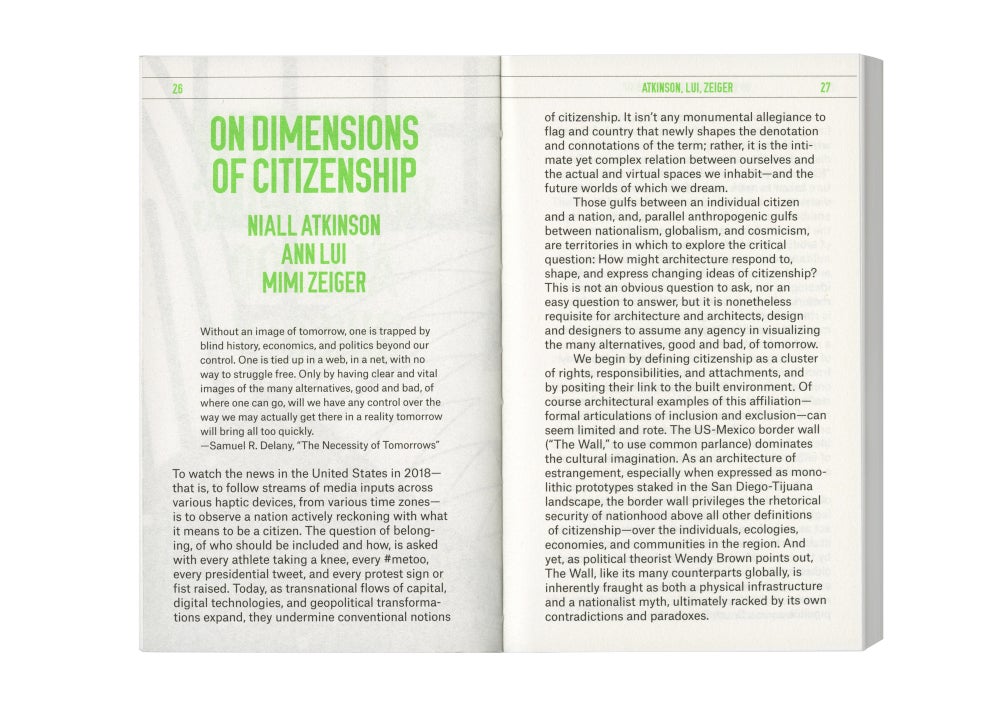
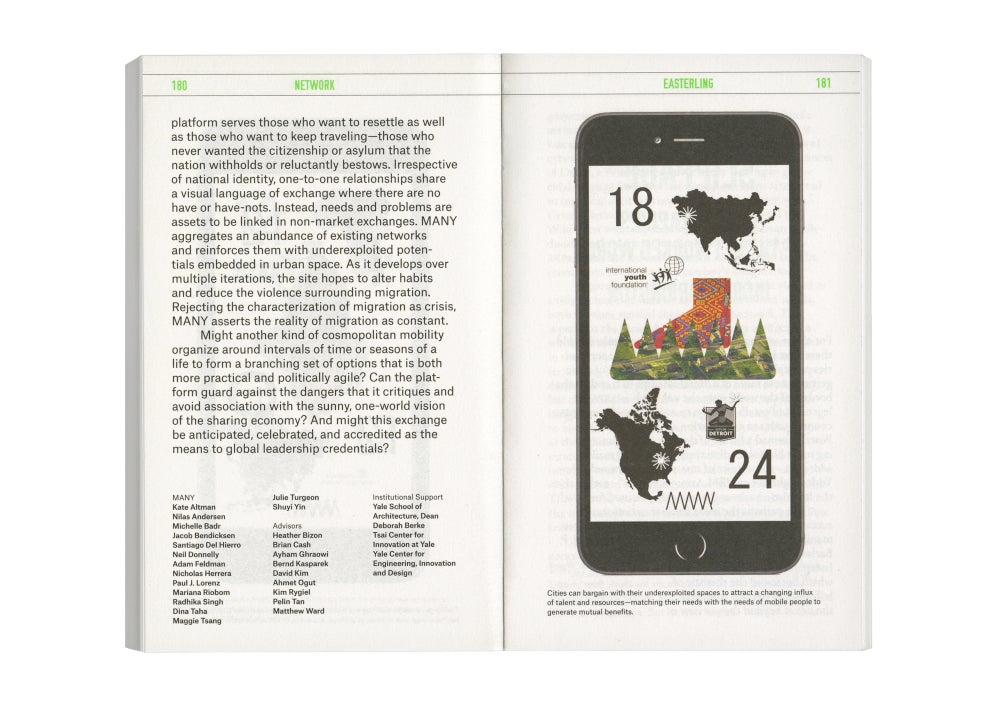
Dimensions of Citizenship
US Pavilion, Venice Architecture Biennale 2018
4 1/4 × 7 inches, 256 pages, softcover
ISBN 978-1-941753-19-4
Edited by Nick Axel, Nikolaus Hirsch, Ann Lui, and Mimi Zeiger
Design by IN-FO.CO

Texts also available at e-Flux Architecture

Globalization, technology, and politics have altered the definition and expectations of citizenship and the right to place. Dimensions of Citizenship documents contributions from the seven firms selected to represent the United States in the 2018 Venice Architecture Biennale. This paperback volume profiles and illustrates each of the US Pavilion contributions and contextualizes them in terms of scale.

Read More …

On a Sunday afternoon this past fall, a small group gathered in Marcus Garvey Park in Harlem, one of the oldest parks in Manhattan. Architects and artists, curators and academics, neighborhood residents and stage moms—all had come for a performance of Marching On, a collaboration between architectural designers and scholars Bryony Roberts and Mabel O. Wilson, and the Marching Cobras of New York, a Harlem-based after-school drum line and dance team.

With a start, the sound of drumbeats cut through the autumn air. Dancers dressed in white and musicians in military-type fatigues filed into the square, their camouflage capes flapping with each high-energy move. For the next few minutes, the audience was united by the beat and transfixed by the performers’ shifting formations. Just as quickly, it was over. After a couple rounds of cheers, the team marched off and the audience dispersed. Read More …

Driving the 101 Freeway from Silver Lake to Calabasas, California, I kick around in my head the literary references I could use to describe this stretch of road bounded by the Sherman Oaks Galleria to the south and the turnoff for the Ronald Regan Presidential Library to the north. Charles Bukowski’s pulp and grit was left back in Hollywood, we’ve crossed out of Reyner Banham’s ecologies, and the hills that so famously burn in Joan Didion’s Letter from Los Angeles are farther east. There’s probably a German term for this landscape of rolling hills, Starbucks, and Lexus dealerships. Certainly Adorno coined some phrase in his critique of the culture industry, written while living in exile in the Pacific Palisades.

It’s tempting to say that we are on the edge — the edge of culture, the edge of suburbia, the edge of rural California and all the narratives that go with it. (The Western High Noon was shot at Warner Bros. Ranch, which is now the Calabasas Golf Club.) But if we leave behind old-fashioned geography and look at our pin on the media map, we find that this is the territory of E!: a pop-cultural space populated by people whose names often start with K.

Read More …

This is the original text of Young’s 1968 speech, interspersed with comments from contemporary practitioners.

If I seem to repeat things you have heard before, I do not apologize, any more than I think a physician would apologize for giving inoculations. Sometimes we have to give repeated vaccinations, and we continue to do so until we observe that it has taken effect. One need only take a casual look at this audience to see that we have a long way to go in this field of integration of the architects. I almost feel like Mr. Stanley looking for Dr. Livingston—in reverse—in Africa. I think I did see one and wanted to rush up and say: Dr. Livingston, I presume! Read More …