Mimi Zeiger

Critic, editor, curator and instigator.

Envision an institution dedicated to making art. It is not a museum, nor is it a gallery. These are the spaces where art meets a public or, more crassly, where art meets its market and is given value. Instead, think of a studio environment. Can that same environment also foster in pupils the canny balance between creativity and pragmatism required to break into the art world today?

Artist Catherine Opie offers a hopeful yes, pointing to the new art center at UCLA School of the Arts and Architecture, where she has taught since 1992. (She was named Lynda and Stewart Resnick Endowed Chair in Art this past December.) “Students are so incredibly vulnerable, and we live in a vulnerable time,” says Opie, whose work as a photographer often draws out the relationships between identity and place. They should feel that their studio building works for them, she adds.
Read More …

As a female writer who writes about female architects, I’m often asked to make lists of female writers and female architects. These requests mostly come from men. Well-meaning men, who want to do right by their differently gendered colleagues.

Although these asks raise the hackles on my back a little, I dutifully reply. However irritated, I’ve internalised my gendered role to be helpful. I want to promote my sisters-in-arms. I want to manifest an equitable field with my recommendations. And I fear that if I don’t answer another panel, lecture series, or exhibition will launch into the world with pitiful representation.

Read More …

Artist Lauren Halsey was born in Los Angeles, and her life and work are intertwined with the city — beauty shops in Watts, neon Colby posters, and the cheesy grin of Cheetos’s Chester Cheetah. Her recent solo exhibition at David Kordansky gallery was both a personal and urban archive. She filled the white-walled space to the roof beams with an installation that alternates between documenting brightly painted signs and black- and Latino-owned businesses in South Central, gone or facing demise due to gentrification, and modeling a speculative, Afrofuturist urbanism full of prismatic light. Halsey’s art world profile has steadily grown over the past few years, with awards and solo shows at Fondation Louis Vuitton in Paris and the Museum of Contemporary Art in Los Angeles. Young, queer, and black, she’s committed to making work that reflects and empowers not just her individual identity, but also her neighborhood, her community, and her friends, with whom she frequently collaborates. PIN–UP met Halsey before the closing of her installation to discuss, among other things, her plans to open a community center and dreams of becoming an architect.

Read More …

Ezra Stoller photographed postwar U.S. architecture with the rigor of a true believer. His images—published widely in numerous trade magazines as well as in House Beautiful and House & Garden—presented modernism not as an avant-garde or utopian vision, but as a movement in situ, one born fully formed like Athena from Zeus’s skull. Yet a global war and an ocean unequivocally separate early twentieth-century experiments undertaken at the Bauhaus and by Le Corbusier from the postwar embrace of modern architecture by corporate leaders and the cultural elite in the United States.

In Stoller’s crisp, black-and-white prints, boxy-shouldered skyscrapers like Ludwig Mies van der Rohe’s Seagram Building (1958) or Skidmore, Owings & Merrill’s building for Union Carbide (1960), both in New York, proudly rise above the city grid—steel and glass curtain walls towering over masonry edifices. These were depicted as the heroes of a new age. Stoller, always precise about natural light and time of day, photographed Mies’s structure at dusk; every floor is illuminated, and the building seems to glow with industry. His image of New York’s Solomon R. Guggenheim Museum (1959), taken looking straight up into the cylindrical belly of the building, freezes Frank Lloyd Wright’s experiential design of spiraling ramps into an iconic composition—modernism’s dynamism temporarily tamed.

Read More …

A symbol of the Freemasons – the architecturally familiar square and compass – decorates the facade of the hastily shuttered Marciano Art Foundation, formerly the Scottish Rite Masonic Temple, on Wilshire Boulevard. The tools, as part of the mysterious Masonic arcana, represent in some interpretations a belief system in which labour is held as an honest universal.

The irony is that foundation founders Maurice and Paul Marciano of Guess fame abruptly closed their museum-cum-tax-haven as visitor-services staff members voted to unionise. An act that left about 70 employees, on Los Angeles minimum wage of $14.25 (£10.83) an hour, out of work.

Read More …

In the eyes of the current administration, the U.S.-Mexico border is violent, in crisis, and must be redundantly fortified, concretized, and policed. But architect Teddy Cruz and political theorist Fonna Forman see that southern boundary as an ecological region—a shared territory of cross-border interdependence and exchange. To them, flow, not heated rhetoric, is the defining character of the San Diego–Tijuana crossing. Most obvious are streams of traffic, goods, and people through the point of entry. What goes unseen is the northward flow of waste and toxins, which disregards the jurisdictional boundaries of nationhood, traveling from the informal settlements in Tijuana’s Laurales Canyon via watersheds and tributaries to the Tijuana River estuary in San Diego and out into the Pacific Ocean. 

“The estuary is already a Federal protected zone—NOAA and the EPA are involved, but it has to be thought of as bioregional,” says Forman. “It is a circular system. Informal settlements recycle and repurpose urban waste, then the trash of the informal settlement ends up back in the estuary.” 

Read More …

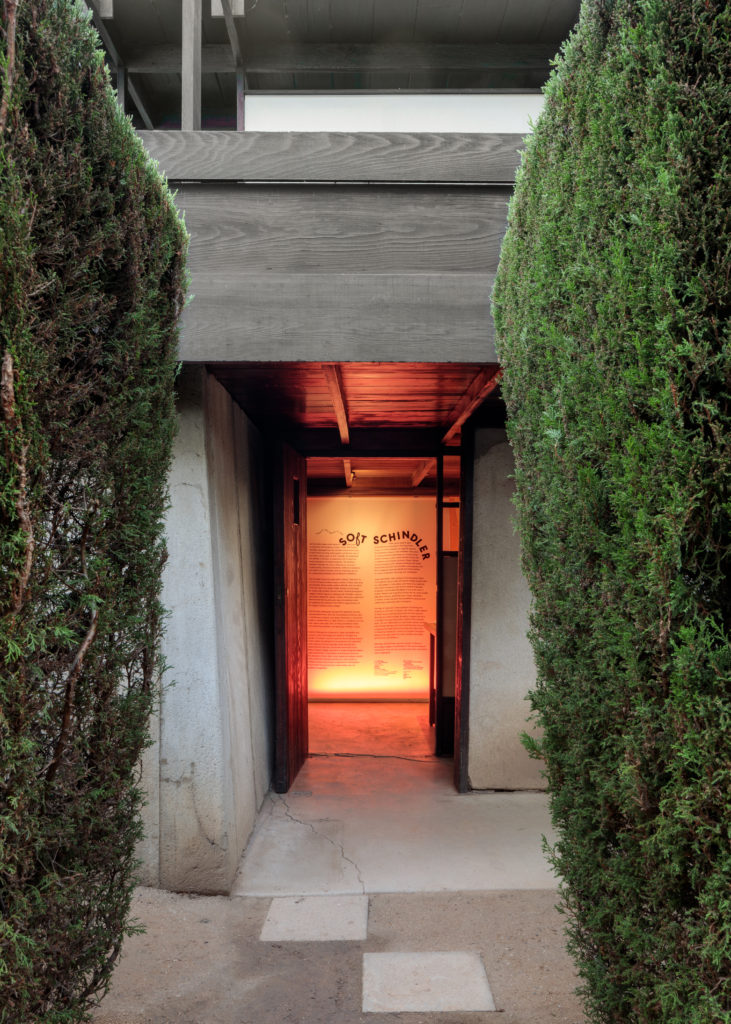
Mimi Zeiger is a Los Angeles-based critic, editor, and curator. Her work is situated at the intersection architecture and media cultures. She was co-curator of the U.S. Pavilion for the 2018 Venice Architecture Biennale and currently curating Soft Schindler at the MAK Center for Art and Architecture, which openened on October 12, 2019. She also teaches at SCI-Arc and the Media Design Practices MFA program at Art Center College of Design. 

She has written for the New York Times, the Los Angeles Times, Architectural Review, Metropolis, and Architect, where she is a contributing editor, and is an opinion columnist for Dezeen. Zeiger is the 2015 recipient of the Bradford Williams Medal for excellence in writing about landscape architecture. She has curated, contributed to, and collaborated on projects that have been shown at the Art Institute Chicago, Venice Architecture Biennale, the New Museum, Storefront for Art and Architecture, pinkcomma gallery, and the AA School. She co-curated Now, There: Scenes from the Post-Geographic City, which received the Bronze Dragon award at the 2015 Bi-City Biennale of Urbanism\Architecture, Shenzhen.

In her interview, Mimi talks about her practice – as writer, editor, and curator – and the precarity at the root of it, advising young architects to not let architecture be their only sustenance.

By Julia Gamolina

Read More …

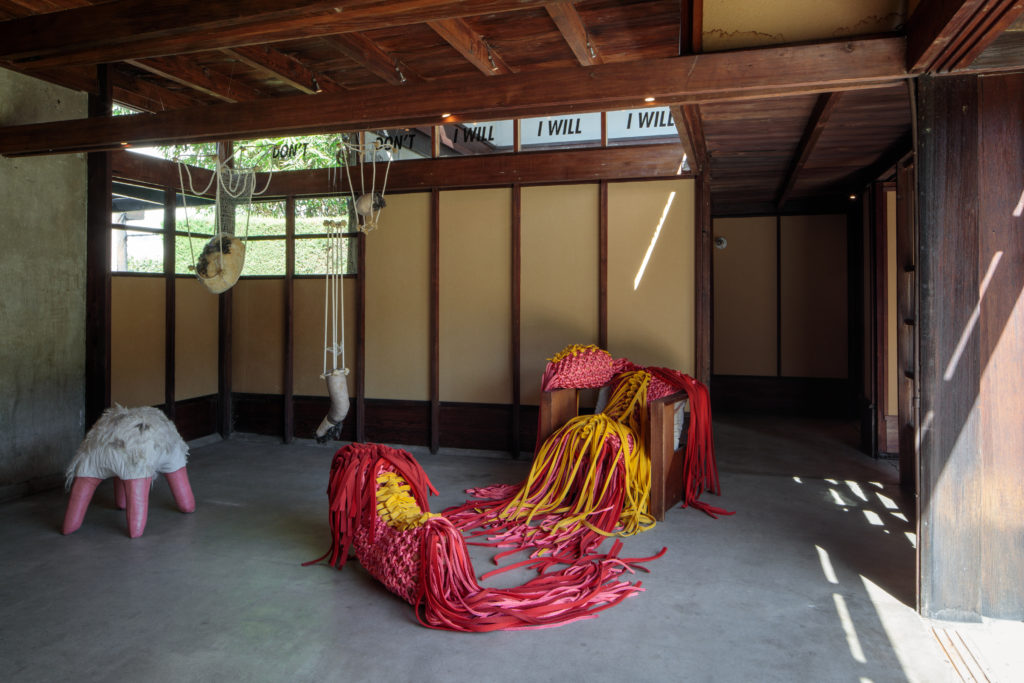
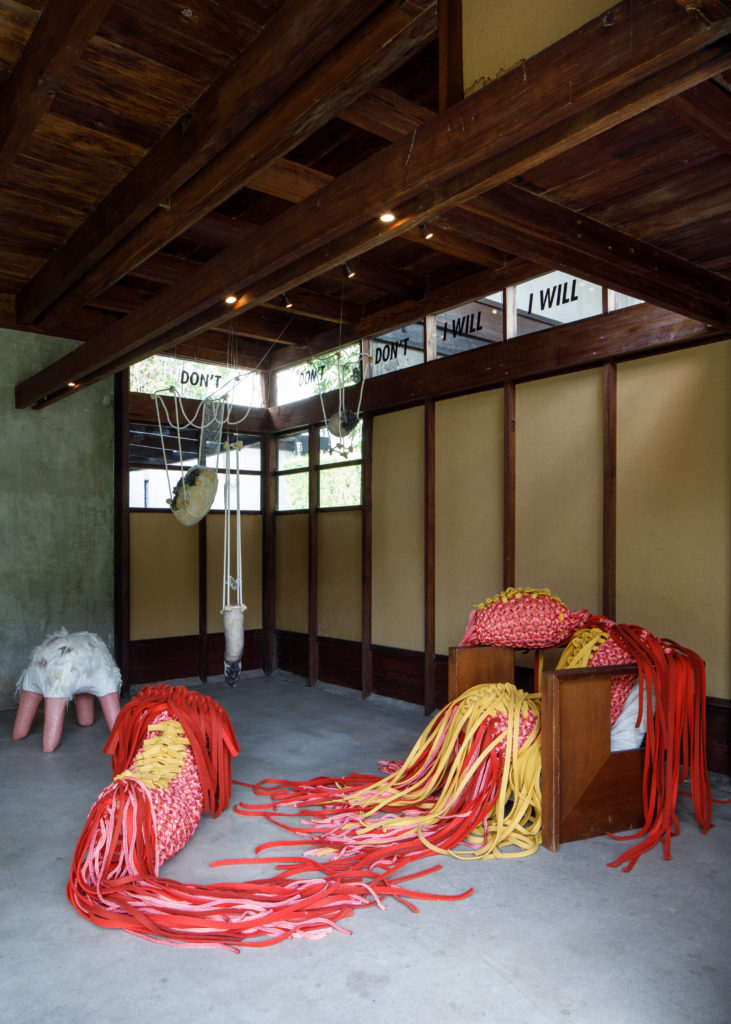
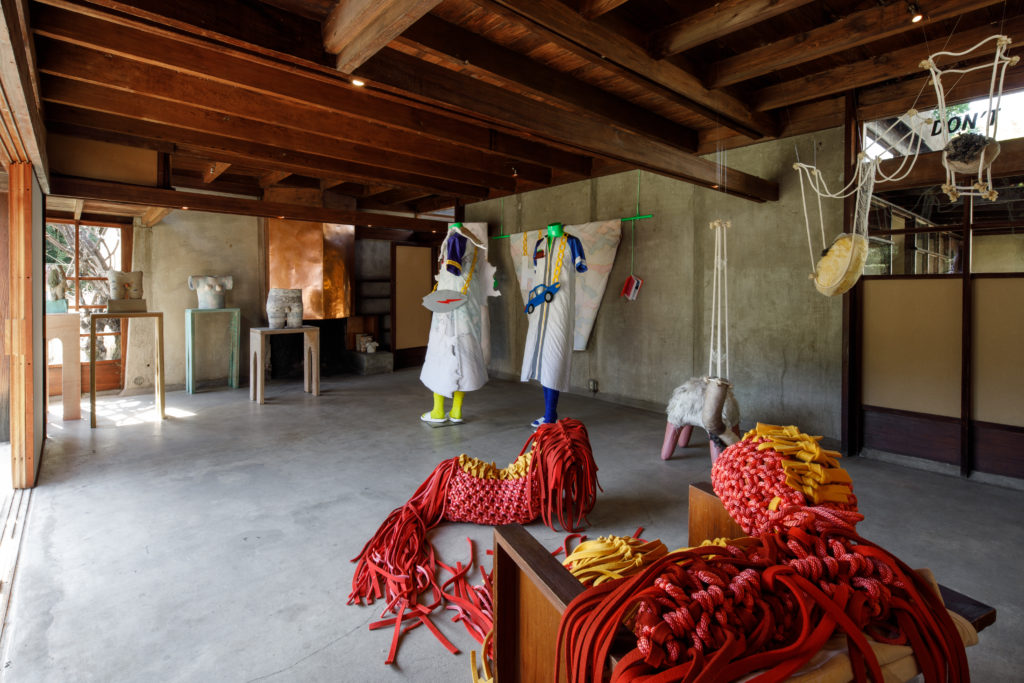
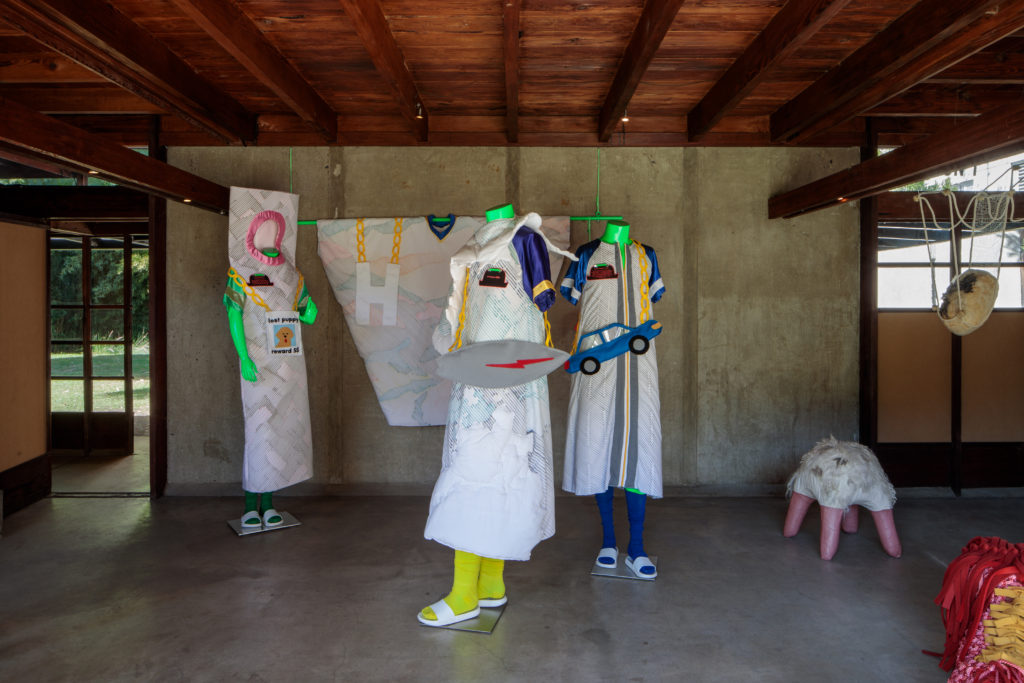
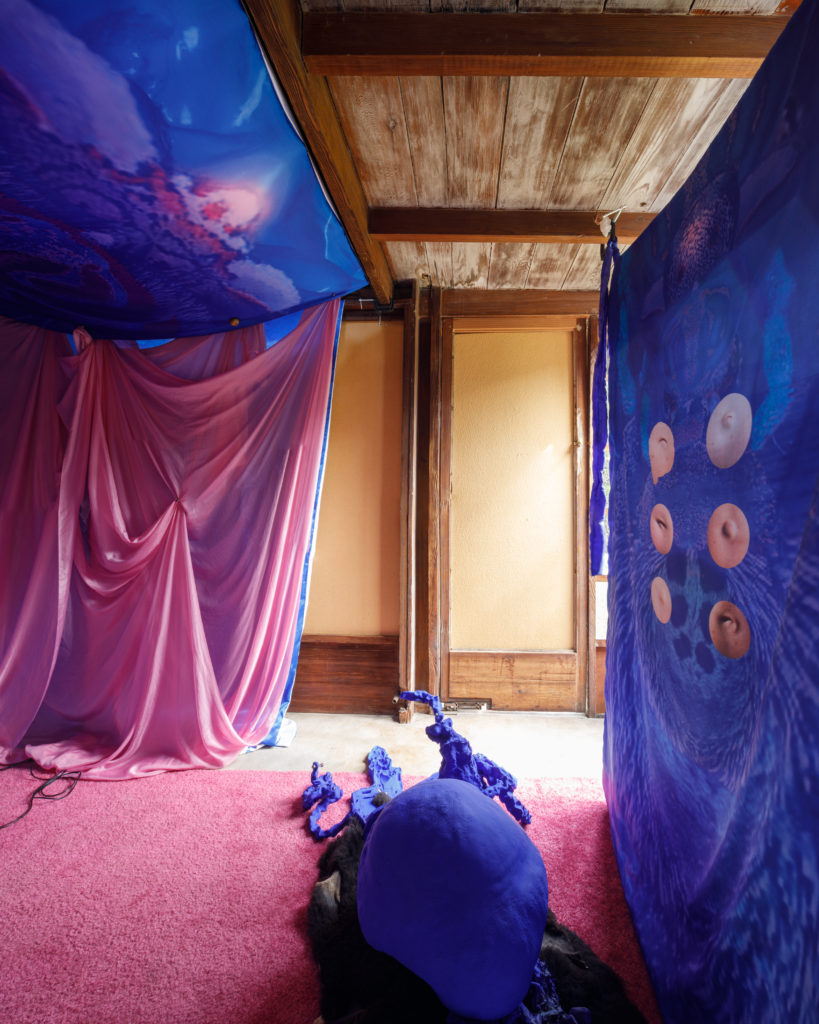
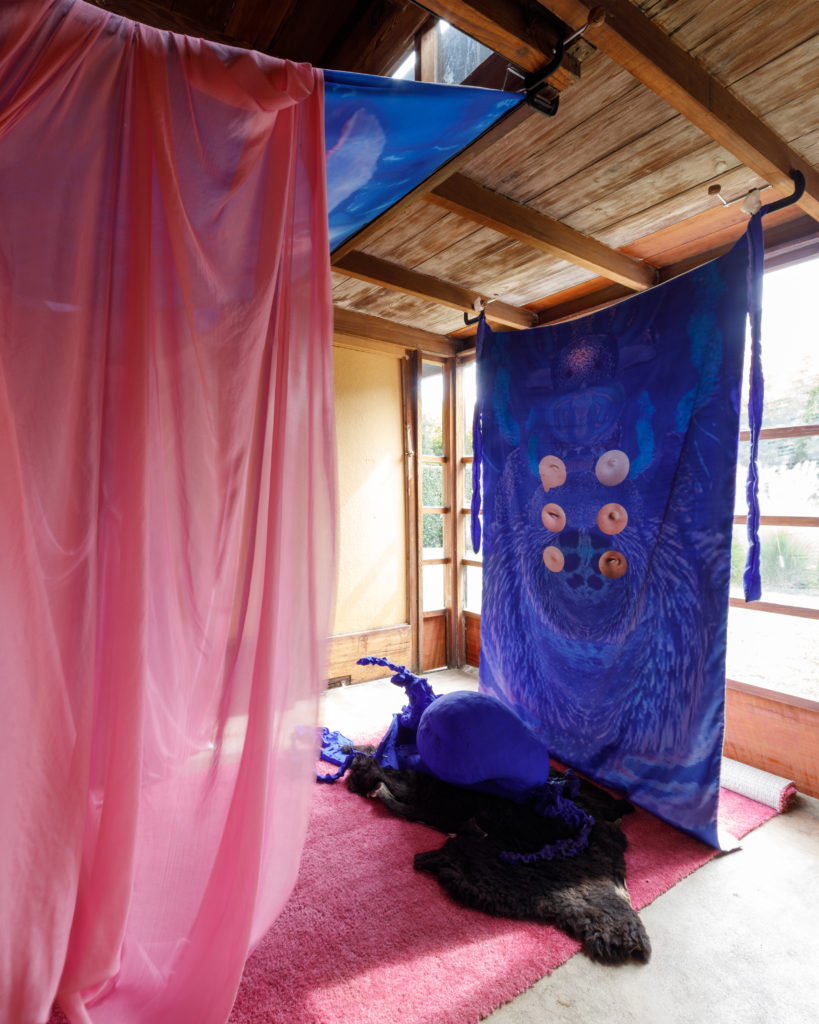
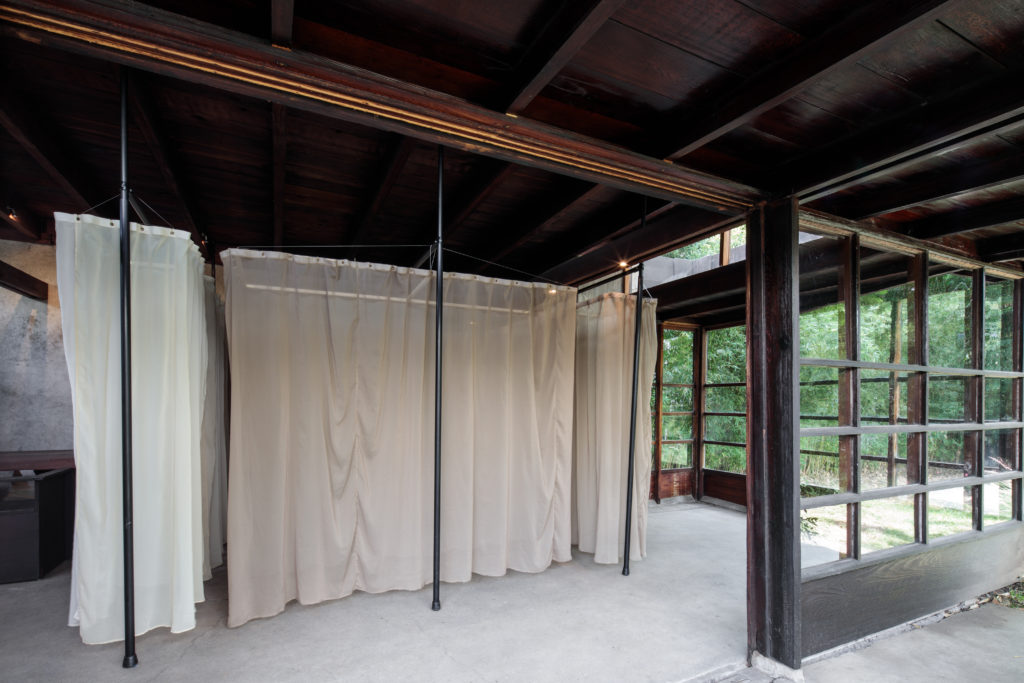
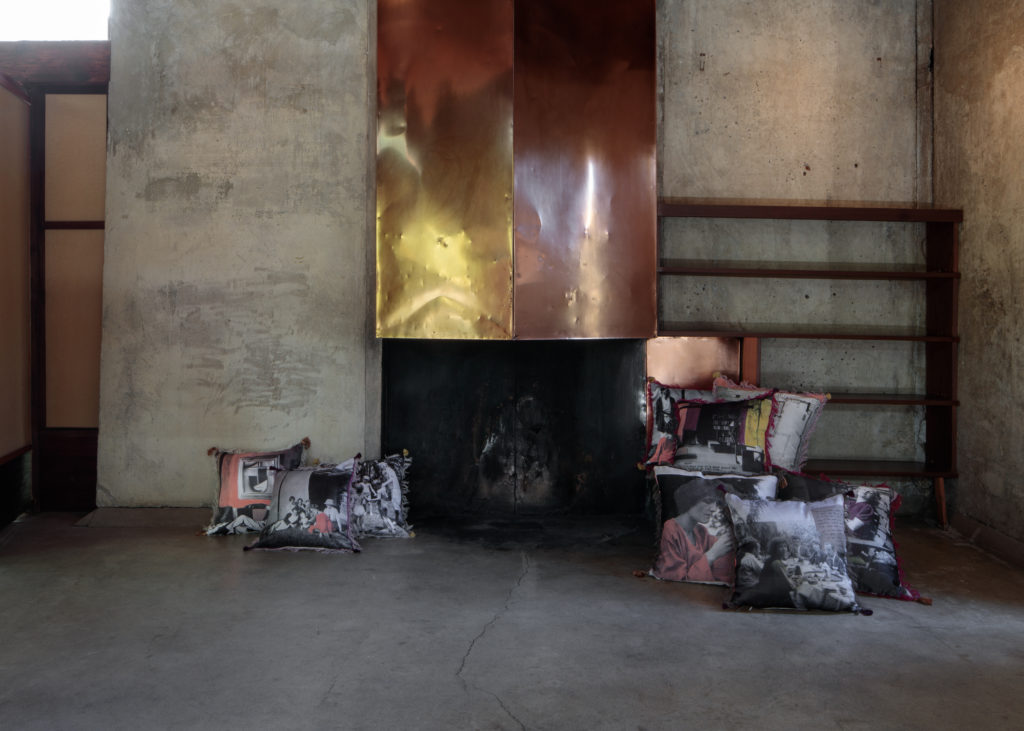
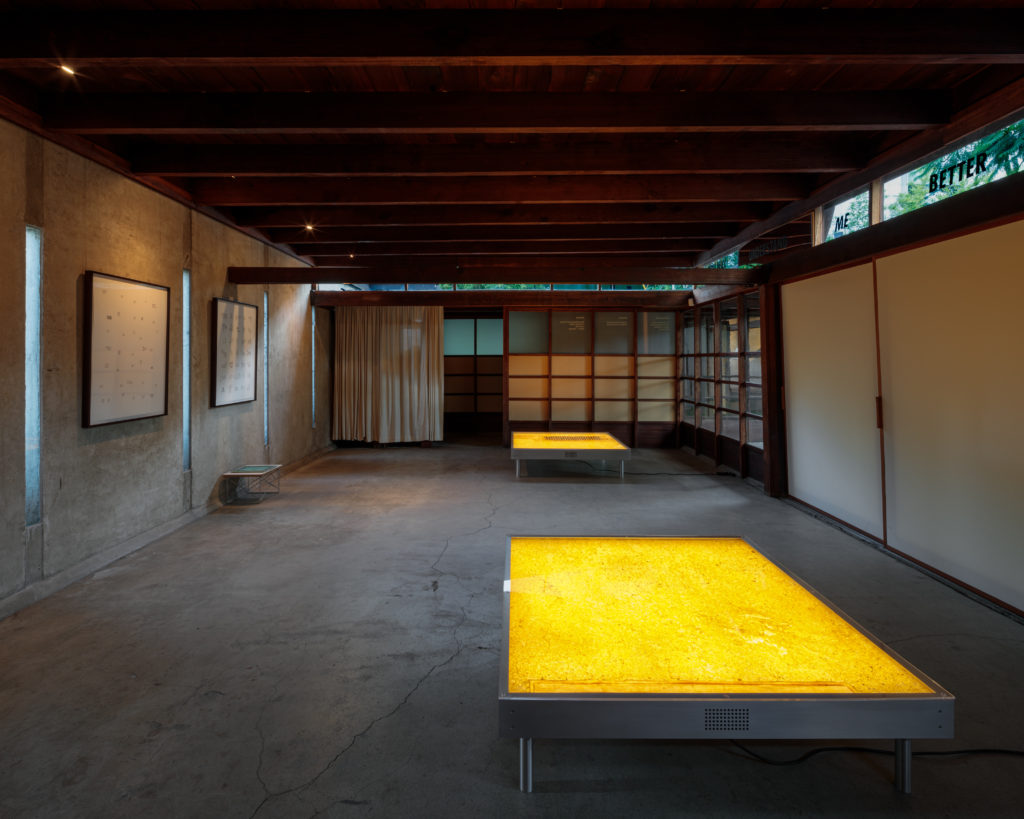
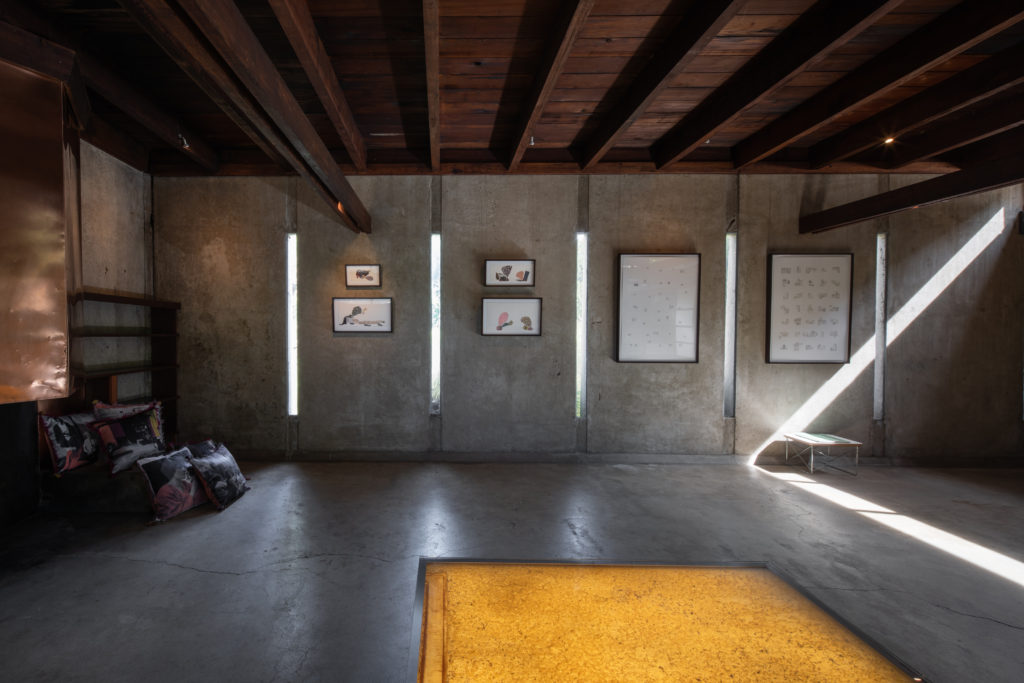
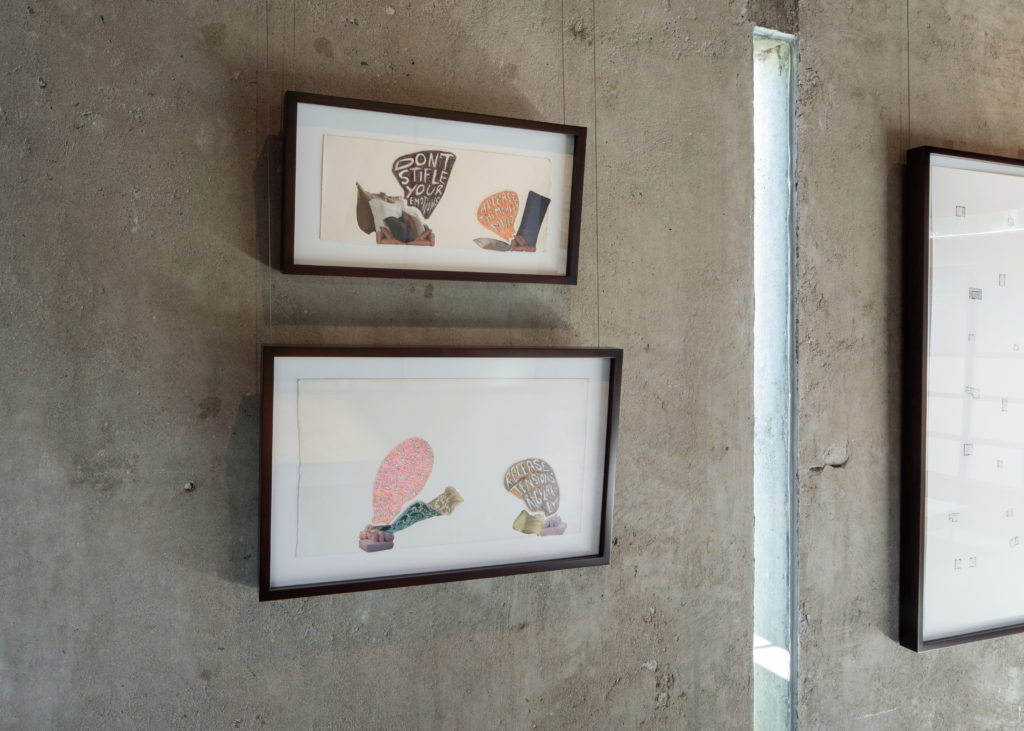
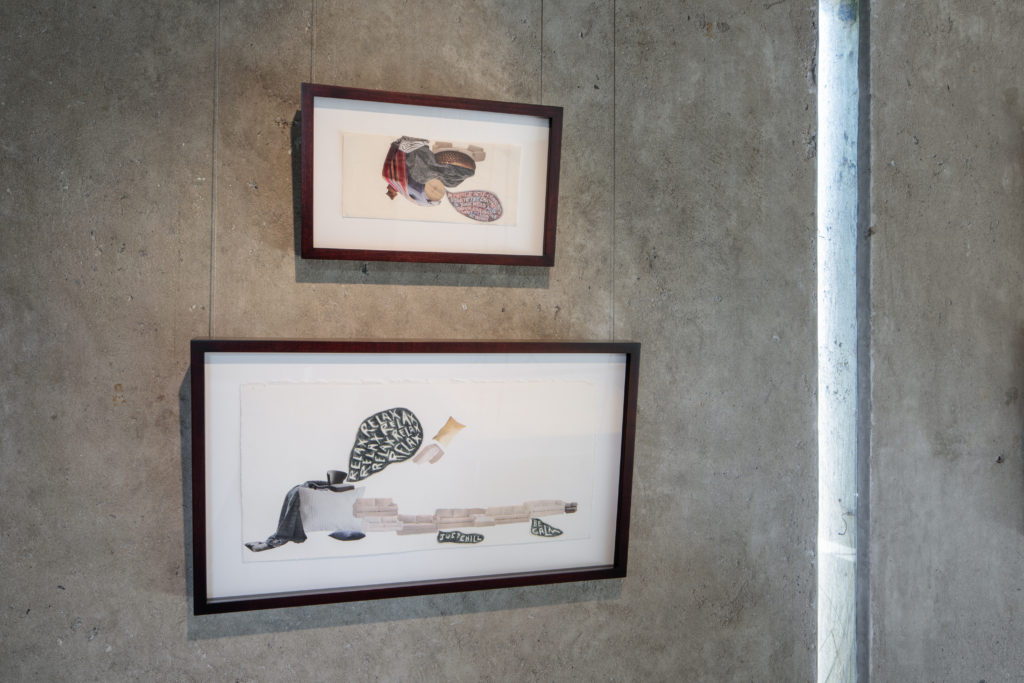
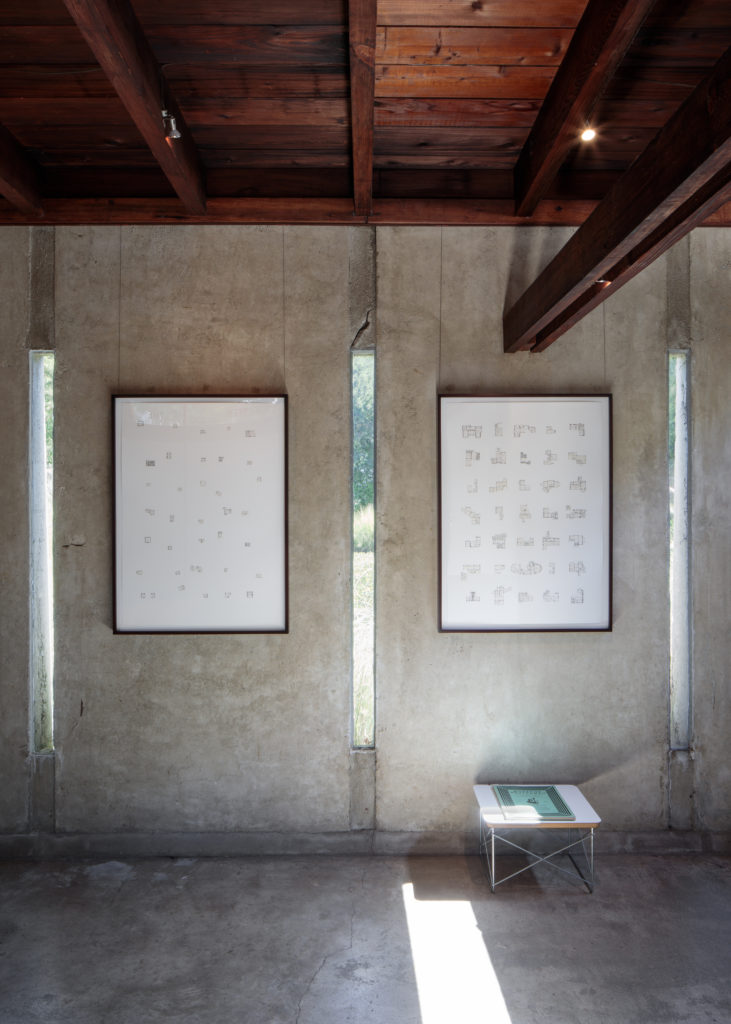
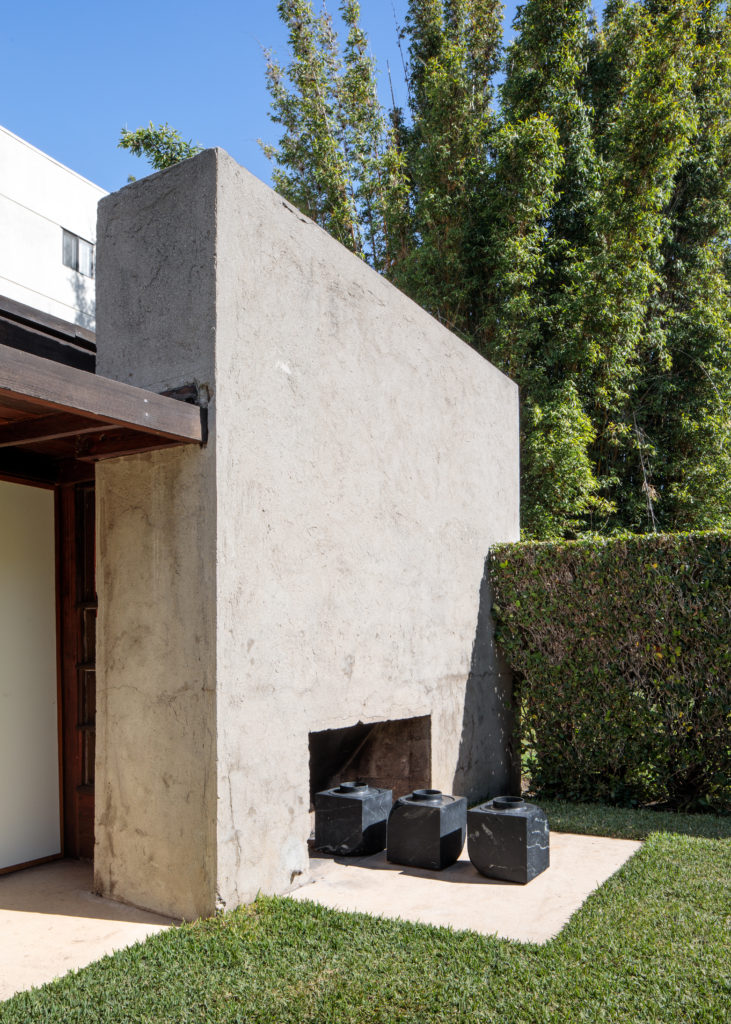
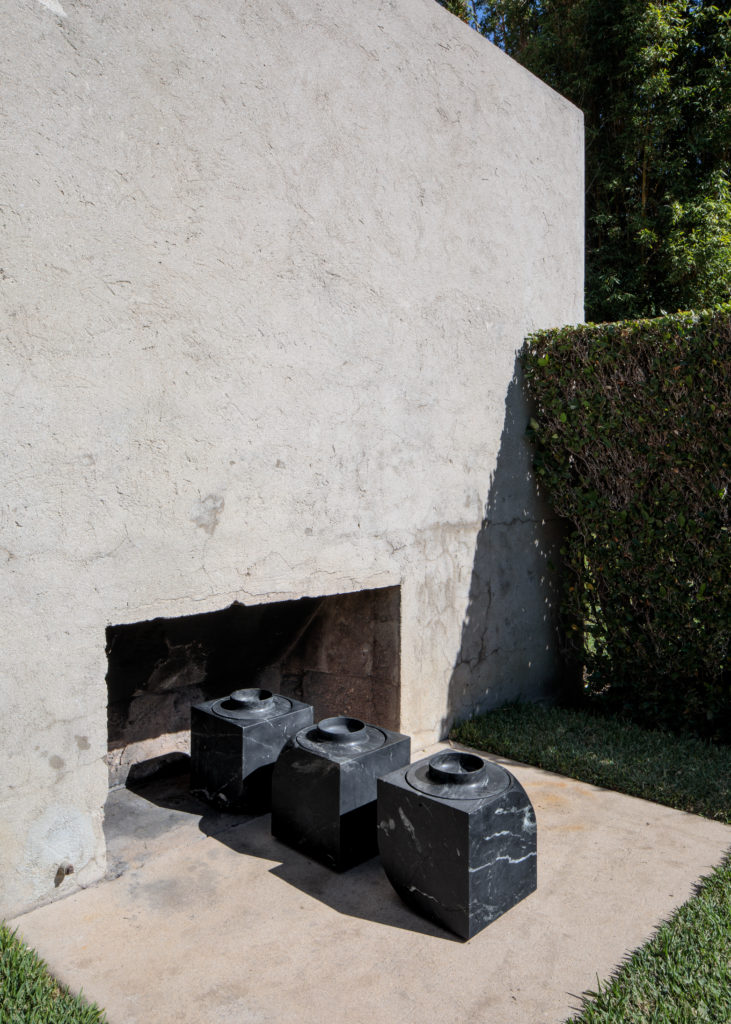
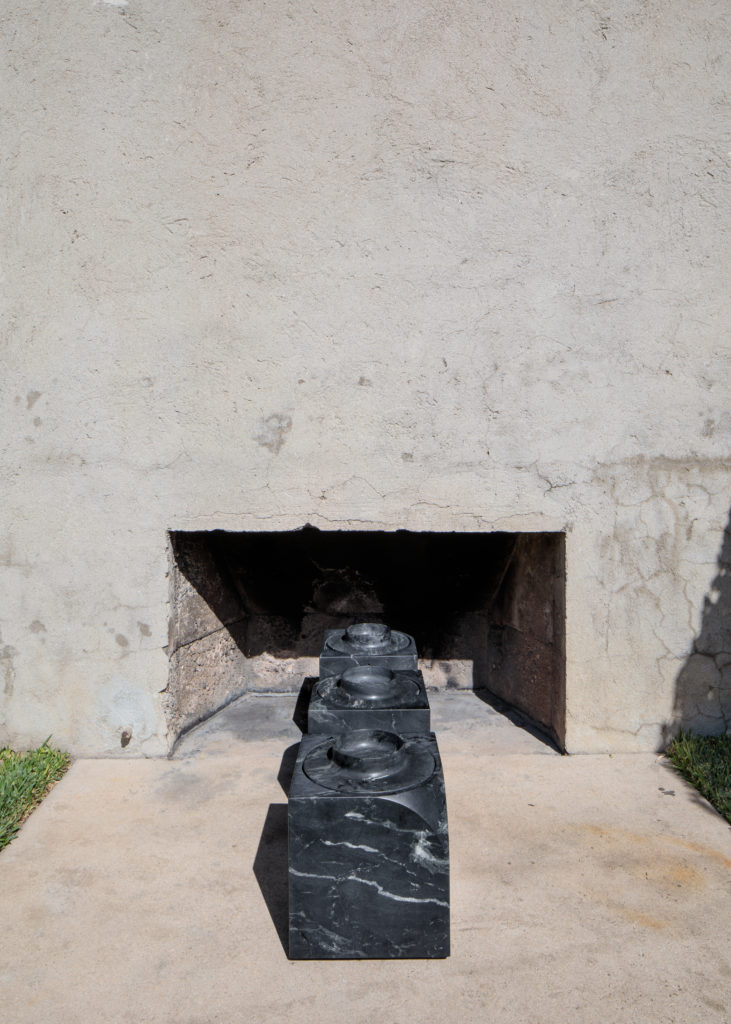
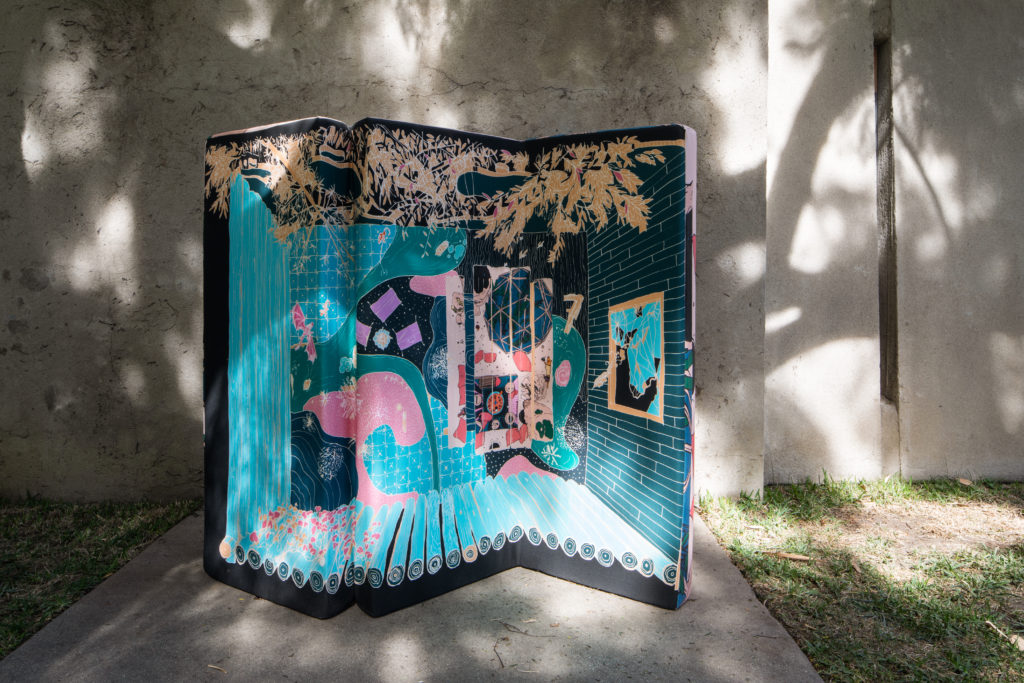
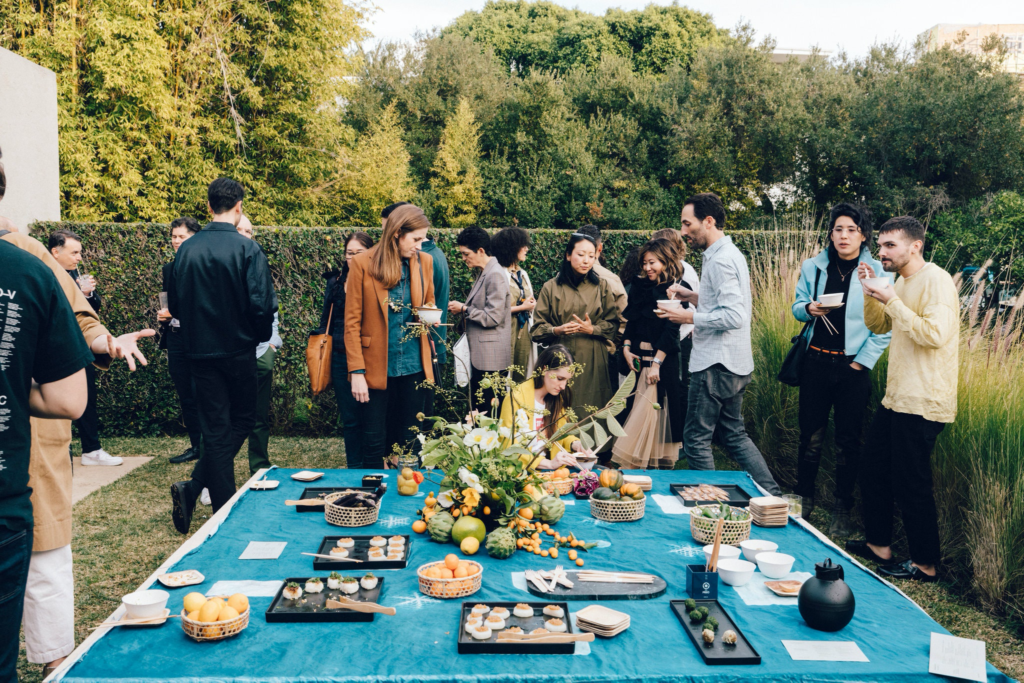
MAK Center for Art and Architecture at the Schindler House: October 12, 2019 – February 16, 2020

Curator: Mimi Zeiger

Participants: AGENdA agencia de arquitectura, Tanya Aguiñiga, Pedro Ignacio Alonso and Hugo Palmarola, Laurel Consuelo Broughton—WELCOMEPROJECTS, Design, Bitches, Sonja Gerdes, Bettina Hubby, Alice Lang, Leong Leong, Jorge Otero-Pailos, Anna Puigjaner—MAIO, Bryony Roberts

Graphic design: still room studio
Catalog: PIN-UP
Catalog contributors:
Leslie Dick
Susan Orlean
Photography: Taiyo Watanabe
Catalog photography: Ian Markell
Exhibition design: Andrea Dietz
Exhibition fabrication/installation: Lauren Gideonse
Coordination and installation: Bedros Yeretzian
Tension bar design: alm project Read More …

Architecture has always had the power to become one of the utmost representations of an epoch: it materially manifests the spirit of its time. As we have edited, produced, and revisited our collection of magazines, events, podcasts, projects, and editorials, the role that criticism and theory have is indispensable for the confirmation of an architecture culture. Now, we are inviting others to join us and add their ideas, curiosities, and sketches. The Criticism Series asks architecture and thinkers to respond to a single question: What is the role of criticism and theory in architecture today? Read More …

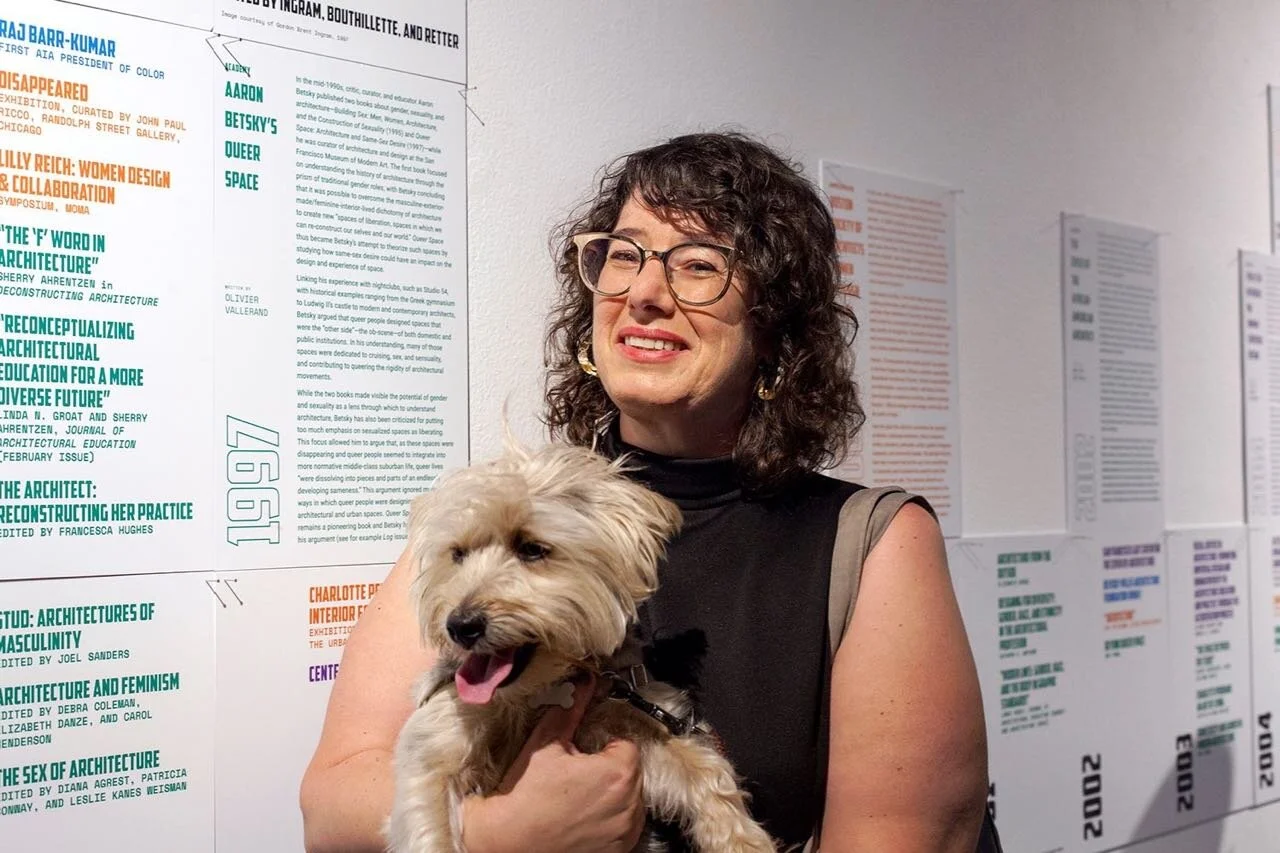
“Queerness is not here yet. Queerness is an ideality,” writes José Esteban Muñoz in his introduction to Cruising Utopia: The Then and There of Queer Utopia.1 Published in 2009, Muñoz argues against the pragmatics of the present and sees radicalism in the potential of an evasive event horizon. As such, he values utopia as a map towards the potentiality of queerness—a future world just beyond reach.

This position, by default, destabilizes notions of queer space in relationship to architecture that were historically tied to acts of desire, transgression, and artifice.2 Texts such as Stud, edited by architect Joel Sanders (1996) and Aaron Betsky’s Queer Space: Architecture and Same-Sex Desire (1997) focused primarily on spaces occupied or designed by gay men and were temporally concerned with observing and theorizing contemporaneous conditions—bars, bathhouses, nightclubs—conditions that Betsky has more recently noted have been largely assimilated out of existence.3

Read More …